
Mask for Broken Nose Soccer: 3 Guards Compared

For soccer after a broken nose, HIAARO QK03B Matte Nose Guard is the clearest fit if your cheekbone spacing measures 3.5 to 4.8 inches. Choose another guard if its fit better matches your face, and get medical clearance before returning to play; a face shield cannot eliminate impact risk.
We earn a commission if you buy through links on this page. As an Amazon Associate I earn from qualifying purchases. Products are compared on manufacturer specifications, not hands-on testing.
- Best overall: HIAARO QK03B Matte Nose Guard – Its cheekbone fit range is 3.5 to 4.8 inches, and it is intended for soccer.
- Best for teen sizing: HIAARO QK01B Nose Guard, Size M – It is sized M for teens and adults and has adjustable straps.
- Best for multi-sport use: Black Polycarbonate Nose Guard, Size M – It is described for soccer, basketball, volleyball, baseball and other training.
| Product | Best for | Cheekbone fit | Shop |
|---|---|---|---|
| HIAARO QK03B Matte Nose Guard | Measured cheek fit | 3.5–4.8 in | Check Price on Amazon |
| HIAARO QK01B Nose Guard, Size M | Teen and adult fit | Measure before purchase | Check Price on Amazon |
| Black Polycarbonate Nose Guard, Size M | Multi-sport training | Size M | Check Price on Amazon |
Soccer Masks for a Broken Nose
Compare cheekbone fit first, then consider material and padding for a secure, comfortable fit.
HIAARO QK03B Matte Nose Guard

HIAARO QK03B Matte Nose Guard is the only option here with a cheekbone-spacing range: 3.5 to 4.8 inches. Its high-strength polycarbonate shell has a matte black finish, and the maker describes it as scratch-resistant, flexible and glare-free. Two sets of soft pads are included; the pads may be attached or left off. Adjustable fit and cushioning make it a candidate for soccer players whose measurements fall within that range. The main limitation is sizing: measure cheekbone spacing before choosing it, since a face outside the range may not fit securely.
Bottom line: Choose this if your cheekbone spacing measures 3.5 to 4.8 inches.
HIAARO QK01B Nose Guard, Size M
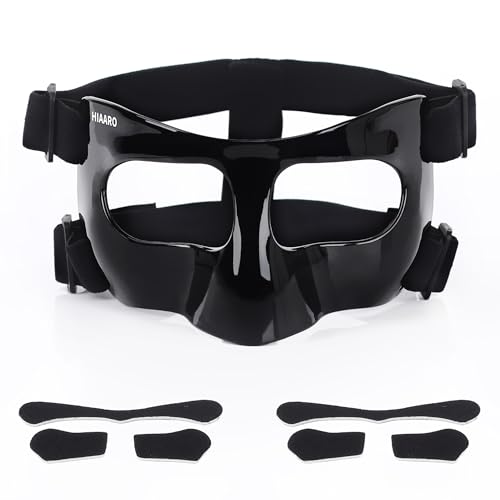
HIAARO QK01B Nose Guard, Size M is sized M for teens and adults, distinguishing it from the one-size guard with a numeric cheekbone range. Its black polycarbonate shell comes with two sets of soft pads, and the maker says the straps are adjustable for head sizes. The product is aimed at soccer, basketball and other sports, so it suits a player looking for a reusable-style sports face shield rather than a soccer-only design. Its limitation is that the size label does not give a cheekbone measurement range; compare the guard against your face before relying on a snug fit.
Bottom line: Pick this if M sizing suits you and adjustable straps are important.
Black Polycarbonate Nose Guard, Size M

Black Polycarbonate Nose Guard, Size M stands out for naming a wider set of intended activities: soccer, basketball, volleyball and baseball training. It has a black polycarbonate shield with large eye openings, adjustable elastic straps and two cushion-pad sets. The maker describes the shell as providing rigid coverage around the nose, cheeks and nearby facial area. This may suit a player who wants one shield for several sports and is comfortable with size M.
Bottom line: Choose this for multi-sport training if size M fits your face securely.
How to choose a soccer nose mask
Start with cheekbone spacing and a stable fit, not color or the number of sports named. Face shields sit across the nose and cheeks; a poor fit can shift during running or contact and obstruct vision. Measure across the cheekbones as the maker directs, then compare that number with a fit range. A model marked only by a general size still needs a fit check. Make sure the eye openings preserve an unobstructed field of view and that straps can hold the mask snugly without painful pressure. No face guard makes a broken nose safe from every collision, so ask a clinician when it is appropriate to return to play.
Fit and strap checks before soccer
A cheekbone measurement is the key sizing check for these guards, and HIAARO QK03B Matte Nose Guard gives a 3.5–4.8-inch range. A labeled size such as M does not by itself tell you the cheekbone span it covers. Before play, adjust straps so the shield stays aligned when you turn your head, look up and jog; stop if it slips, pinches or blocks vision. Padding should sit evenly at contact points rather than leave the shell pressing directly on one spot. Soccer involves both player contact and ball impact, so recheck the fit after any strap adjustment and do not play in a damaged or cracked shield.
Polycarbonate and soccer equipment rules
Polycarbonate is a rigid plastic used for protective face shields; padding helps cushion where a guard rests against the face but does not make the shell impact-proof. Soccer equipment rules prohibit dangerous equipment, and officials can assess whether protective gear is safe to wear. League and youth competition policies may add their own requirements, so check approval with the competition before match day, especially for a rigid mask. Keep the shield clean and inspect the shell, straps and pad attachment points before each use. If a crack, loose strap or shifting fit appears, stop using the guard until it is repaired or replaced.
Returning to play after a broken nose
A mask is protective equipment, not medical clearance. Return timing depends on the fracture, symptoms and clinician advice; do not use a face guard to play through pain, swelling or vision problems. Soccer also includes incidental elbows and head-to-head contact, so wearing a shield cannot guarantee that the nose will avoid another impact. Ask the treating clinician whether contact play is appropriate and whether a particular guard can be used. Confirm league approval in advance, since a referee may reject equipment considered dangerous, and practice with the fitted shield before a match to make sure it stays in place without narrowing vision.
Frequently Asked Questions
How do I measure for a soccer nose guard?
Measure cheekbone spacing across the face and compare it with the guard’s range. For a model without a numeric range, check that it rests evenly and stays aligned when you move your head.
Can I play soccer with a broken nose mask?
A mask may offer facial coverage, but it cannot eliminate the risk of another injury. Get clinician clearance before contact play and confirm the competition permits the guard.
Does polycarbonate make a nose guard impact-proof?
No; polycarbonate is a rigid plastic, not a guarantee against injury. Padding cushions contact points, but the shield can still shift or be damaged by impact.
Can a referee prohibit a face mask in soccer?
Yes, officials can reject equipment they consider dangerous. Check your league’s equipment policy before match day, particularly for a rigid face shield.
How tight should soccer mask straps feel?
The guard should stay aligned when you turn your head or jog without painful pressure or blocked vision. Readjust it or stop using it if it slips, pinches or shifts.