
Best Size Elastic for Bracelets: 3 Options Compared

FIVEIZERO 6-Size Clear Elastic Cord Set suits most bracelet makers because its six round cord sizes, from 0.4 to 1 mm, let you match elastic to different bead holes. Choose a single-size roll if you already know your hole size and want more length of one cord; cord that is too thick will not pass through a bead.
We earn a commission if you buy through links on this page. As an Amazon Associate I earn from qualifying purchases. Products are compared on manufacturer specifications, not hands-on testing.
- Best overall: FIVEIZERO 6-Size Clear Elastic Cord Set – Six round diameters from 0.4 to 1 mm cover a range of bead-hole sizes.
- Best for clear cord: JULIMAIDONG 0.8 mm Clear Elastic Cord – The 0.8 mm clear round cord comes in a 200-foot roll.
- Best for flat cord: Paxcoo Flat Elastic Cord – Its flat cord measures about 1 mm wide and 0.7 mm thick.
| Product | Best for | Cord size | Cord shape | Roll length | Shop |
|---|---|---|---|---|---|
| FIVEIZERO 6-Size Clear Elastic Cord Set | Mixed bead sizes | 0.4–1 mm | Round | — | Check Price on Amazon |
| JULIMAIDONG 0.8 mm Clear Elastic Cord | 0.8 mm cord | 0.8 mm | Round | 200 ft | Check Price on Amazon |
| Paxcoo Flat Elastic Cord | Flat cord | 1 mm wide × 0.7 mm thick | Flat | 328 ft | Check Price on Amazon |
Elastic Sizes for Bracelets
Match the cord dimensions to the bead holes first, then consider roll length and whether you prefer round or flat elastic.
FIVEIZERO 6-Size Clear Elastic Cord Set

Six diameters make this set the most adaptable choice here: it includes round clear cord in 0.4, 0.5, 0.6, 0.7, 0.8 and 1 mm. That range is useful when a craft involves seed beads, pony beads or other beads with different hole openings. The maker says the material resists abrasion and aging, including from sunlight and moisture. The trade-off is that the roll length is not given, so it may not suit a buyer who needs a known amount of one specific size.
Bottom line: Pick this set when bead-hole sizes vary across your projects.
JULIMAIDONG 0.8 mm Clear Elastic Cord

The 0.8 mm round cord is a single-size option for makers who already know their beads can accept that diameter. Each roll contains 200 feet of clear elastic polyester spandex cord, and the maker says it is easy to tie and fine enough to hide knots. That length works for repeated bracelet or jewelry projects without switching between cord sizes. The limitation is its fixed 0.8 mm diameter: check bead holes before choosing it if your project includes very small-hole beads or several bead types.
Bottom line: Choose this roll for projects that consistently fit 0.8 mm cord.
Paxcoo Flat Elastic Cord
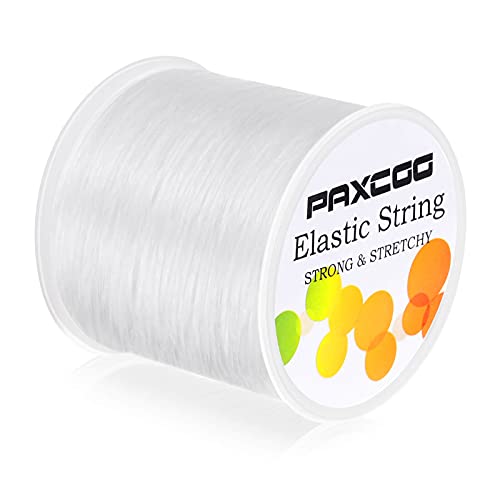
The flat profile distinguishes this cord from the round options: it measures about 1 mm wide and 0.7 mm thick. A 328-foot roll gives makers a long supply in one size, and the maker says the flexible polyester-spandex cord can be knotted and threaded through small or large beads. Its white color is another practical consideration for visible sections. Because a flat cord’s width and thickness are different measurements, confirm that the bead opening can accommodate the 1 mm width rather than judging fit by thickness alone.
Bottom line: Choose this cord when its flat profile and white color suit the project.
How to Choose Elastic Cord Size for Bracelets
Choose the largest cord diameter that passes freely through every bead in the design. Bead holes vary by bead style and manufacturer; even beads that look alike may have different openings, so test a short piece through the smallest hole before stringing the full bracelet. A cord that barely fits can snag during assembly, while a thinner cord can be easier to thread but may leave more visible space inside the hole. Measure round cord by diameter; for flat cord, compare both width and thickness with the opening. If the project mixes bead types, size for the smallest hole, not the largest bead.
Common Elastic Cord Sizes and Bead Fit
Bracelet elastic commonly falls around 0.5 to 1 mm, with thinner cord generally serving smaller bead holes and thicker cord requiring more room. Hole size, bead material and cord construction all affect the fit, so a nominal cord measurement is only a starting point. Use the smallest bead’s hole as the deciding constraint and do a dry test before cutting a long length. This table is a starting guide, not a substitute for checking the actual bead opening.
| Cord diameter | Useful starting point | Fit check |
|---|---|---|
| 0.4–0.6 mm | Small-hole beads | Confirm the cord does not pass too loosely |
| 0.7–0.8 mm | General bracelet beads | Test the smallest hole in the design |
| 1 mm | Larger-hole beads | Ensure the opening clears the full cord |
Round Versus Flat Bracelet Elastic
Round elastic is measured by its diameter, while flat elastic has separate width and thickness measurements. A flat cord that is 1 mm wide and 0.7 mm thick may not pass through a hole that would accept a round cord with a 0.7 mm diameter, because the widest dimension governs passage. Consider how the cord will sit inside the beads as well as whether it can be threaded. For a design with mixed beads, test all bead types before tying the bracelet; matching only the largest opening can leave the smaller beads unusable. Clear cord can blend into translucent beads, while white cord may show more against dark or transparent beads.
Cutting and Knotting Stretch Bracelet Cord
Leave working length at both ends when cutting elastic so there is enough cord to tie and handle without pulling the bracelet tight during assembly. Stretch cord can lose resilience if it is repeatedly overextended, so size the loop for a comfortable fit rather than relying on maximum stretch. A secure knot should sit inside a bead when the hole is large enough to conceal it, but the knot must not force a bead or cord to bind. Before trimming the ends, gently check that the knot holds and the bracelet returns to its shape; avoid sharp tools against the elastic itself.
Frequently Asked Questions
What size elastic works for most bead bracelets?
Cord around 0.7 to 0.8 mm is a practical starting range for many bracelet beads. The smallest bead hole decides whether that size will pass, so test it before stringing the whole design.
How do I know whether elastic fits a bead hole?
Pass a short piece through the smallest bead hole in the project before cutting the full cord length. If the cord catches or must be forced, choose a thinner size; if it moves very loosely, consider a thicker size that still fits every bead.
Is 1 mm elastic too thick for bracelets?
One-millimeter cord works only when every bead opening clears its full diameter or width. For beads with smaller holes, try a thinner cord such as 0.7 or 0.8 mm and verify the fit.
Does flat elastic fit the same as round elastic?
No; compare a flat cord’s width and thickness with the opening, since the wider dimension controls whether it passes through. Test it directly through the smallest hole rather than relying on its thickness measurement alone.
How much elastic should I leave for tying?
Leave several inches of extra working cord beyond the bracelet’s intended length so the ends can be held and knotted comfortably. The exact allowance depends on bead size and knot style, so avoid cutting close until the knot is secure.