
Best V Belt Brand: 4 Belts Compared by Size and Type

uxcell A20 / 4L220 Belt 4-Pack is the strongest fit for most buyers seeking a V belt brand because its four-pack provides A-profile belts with a 20-inch inside circumference. Choose a different option if your drive needs a 3L size, a 45-inch belt or an adjustable linked belt.
V belts transmit power between pulleys through friction along their angled sides, so profile and length must match the drive.
We earn a commission if you buy through links on this page. As an Amazon Associate I earn from qualifying purchases. Products are compared on manufacturer specifications, not hands-on testing.
- Best overall: uxcell A20 / 4L220 Belt 4-Pack – Four A-profile rubber belts, each with a 20-inch inside circumference.
- Best for adjustable length: 5-Foot Power Twist A-Type Belt – The linked belt can be assembled to the length needed, up to its 5-foot supply.
- Best for 3L drives: uxcell 3L240 Wrapped Belt – A single wrapped rubber belt with 3L profile and 24-inch outside circumference.
- Best for longer A drives: Top Drive A43 / 4L450 Belt – A 45-inch classic wrapped belt with A/4L designation.
| Product | Best for | Belt measure | Profile | Material | Shop |
|---|---|---|---|---|---|
| uxcell A20 / 4L220 Belt 4-Pack | A profile replacement | 20 in inside circumference | A | Rubber | Check Price on Amazon |
| 5-Foot Power Twist A-Type Belt | Adjustable belt length | 60 in supply length | A type | Polyurethane/polyester composite | Check Price on Amazon |
| uxcell 3L240 Wrapped Belt | 3L profile drives | 24 in outside circumference | 3L | Rubber | Check Price on Amazon |
| Top Drive A43 / 4L450 Belt | 45-inch A drives | 45 in length | A / 4L | Rubber | Check Price on Amazon |
V Belts by Brand and Drive Fit
Match the belt profile and the maker’s length convention to your pulley drive before choosing a replacement.
uxcell A20 / 4L220 Belt 4-Pack

For an A-profile replacement in a short loop, this four-pack pairs a 20-inch inside circumference with a 22-inch outside circumference. Each belt is rubber, and the maker says the belts meet RMA IP-20. The package quantity makes it a practical choice when you need several belts of the same size for compatible machinery. Confirm the old belt’s profile and measurement convention before ordering; a matching circumference alone does not make an A belt interchangeable with a 3L belt.
Bottom line: Choose this set when your drive calls for an A-profile belt with a 20-inch inside circumference.
5-Foot Power Twist A-Type Belt
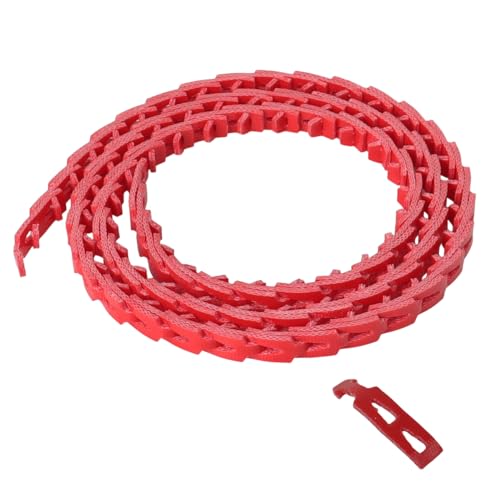
Unlike fixed-loop belts, this A-type linked belt lets you build a loop to the needed length from a 60-inch supply. Its polyurethane and polyester composite links are designed for joining without dismantling machinery, a useful distinction on equipment where access is tight. The maker says the belt reduces vibration and elongation under load. It is not the choice for a fixed molded loop if you need a conventional rubber belt; check pulley profile and required length before assembly.
Bottom line: Pick this when adjustable length and easier installation matter more than a fixed-loop belt.
uxcell 3L240 Wrapped Belt

This single 3L-profile belt is the option for a narrow-profile drive rather than the A-profile loops in this group. It measures 24 inches around the outside, with a 3/8-inch width and 7/32-inch height. The rubber construction is intended for wrapped belt applications. Its limitation is the fixed length and one-piece quantity, so it does not suit a drive requiring an A-profile or a different loop size. Match both the old belt’s profile and outside circumference.
Bottom line: Choose it for a drive that specifically calls for a 24-inch outside-circumference 3L belt.
Top Drive A43 / 4L450 Belt

This fixed 45-inch belt fills the longer A/4L size need in the group, unlike the short uxcell loops or the linked option. It has a rubber core and polyester cords. The maker says the cords provide minimal elongation and that the belt is designed for stable operation under demanding workloads. The name identifies it as A43/4L450, so verify that designation against the machine’s required belt rather than choosing by length alone.
Bottom line: Pick this for a compatible drive requiring the 45-inch A/4L designation.
How to Choose a V Belt Brand
Choose by cross-section and length before comparing brand names. Classical A belts have a nominal 1/2-inch top width and 5/16-inch height; narrow 3L belts are about 3/8-inch wide and 7/32-inch high. The angled sides must seat in the pulley groove, so a belt with the wrong section can ride too high or bottom out. Length labels may use inside, outside or datum circumference, and those values are not interchangeable. For instance, a belt marked 20 inches inside can measure 22 inches outside. Read the machine label or old belt marking, then match the same profile and measurement convention.
V Belt Size and Pulley Fit
Correct fit means matching the profile, loop length and pulley groove, not merely selecting a belt that can be stretched over the shafts. A belt that is too loose slips and heats; one that is too tight increases bearing and shaft load. A V belt should sit in the groove with its sides making contact, not bottom against the groove floor. For a two-pulley drive, center distance and pulley diameters affect the required loop length, so the old belt marking is a better starting point than measuring a loose, stretched belt. Confirm the required belt code when replacement access is limited.
Fixed-Loop and Linked V Belts
Fixed-loop rubber belts suit drives with a known profile and length; linked belts can be assembled to length, which can help where removing a shaft or guard is difficult. A linked belt is not a universal substitute: the link section still has to match the pulley groove and power requirement. This table separates the choice by the condition that matters most.
| Drive need | Choose this type |
|---|---|
| Known profile and loop size | Fixed-loop wrapped belt |
| Need to build a loop on the machine | Adjustable linked belt |
| Different groove width | Correct profile first, then length |
For a standard drive with a readable belt code, keep to that code rather than switching construction solely for installation convenience.
V Belt Installation and Safety
Disconnect and lock out the machine’s power before inspecting or replacing a belt; rotating pulleys can catch fingers, clothing or tools. Check pulley grooves for oil, debris and wear, since contamination and worn grooves undermine traction even with a correctly sized belt. Align pulley faces and set tension to the equipment maker’s specification; excessive tension strains bearings, while low tension encourages slip. Many drives use a deflection-and-force tension method, but the required force depends on belt section, span and equipment. Recheck alignment and tension after installation, and use the machine’s guard before restarting.
Frequently Asked Questions
How do I read a V belt size code?
The code usually identifies a belt section and a length series or nominal length, but the length convention can differ. A belt marked A20 can have a 20-inch inside circumference and a 22-inch outside circumference.
Can I replace an A belt with a 3L belt?
No, not by assuming the lengths match: A and 3L have different cross-sections. Classical A belts are about 1/2 inch wide, while 3L belts are about 3/8 inch wide, so match the pulley groove profile.
How tight should a new V belt be?
Use the machine maker’s tension specification, because correct tension depends on belt section, span and drive load. Too little tension promotes slip; too much raises bearing and shaft loads.
Why does a new V belt keep slipping?
Common causes include incorrect tension, a mismatched belt profile, oil on the belt or worn pulley grooves. A belt should contact the groove sides rather than bottoming out.
How often should a V belt be replaced?
There is no universal interval because duty cycle, heat, contamination and tension affect wear. Inspect the belt regularly for cracking, fraying, glazing or loss of tension, and replace it when wear appears or the equipment schedule calls for it.