
Debrox Earwax Removal: Drops and Kits Compared

For most people seeking Debrox earwax removal, Debrox Drops + Bulb Syringe Kit is the clearest fit because it specifies 6.5% carbamide peroxide drops and includes a bulb syringe. Choose Debrox Earwax Removal Kit, 3-Pack if you want three 0.5-ounce bottles; LIPO Peroxide-Free Earwax Drops is a non-Debrox, peroxide-free drop alternative, and Clinere Ear Cleaners, 36 Count is a tool rather than a liquid treatment.
Earwax drops soften wax, while irrigation flushes softened wax from the canal; neither approach is appropriate for every ear condition.
We earn a commission if you buy through links on this page. As an Amazon Associate I earn from qualifying purchases. Products are compared on manufacturer specifications, not hands-on testing.
- Best overall: Debrox Drops + Bulb Syringe Kit – The single-bottle kit specifies 6.5% carbamide peroxide and includes a soft bulb syringe.
- Best for multipacks: Debrox Earwax Removal Kit, 3-Pack – The Debrox kit includes three 0.5-ounce bottles.
- Best for peroxide-free drops: LIPO Peroxide-Free Earwax Drops – The 0.5-fluid-ounce liquid is identified as peroxide-free.
| Product | Best for | Format | Quantity | Key component | Shop |
|---|---|---|---|---|---|
| Debrox Drops + Bulb Syringe Kit | Single-kit use | Drops + syringe | 0.5 fl oz | 6.5% carbamide peroxide | Check Price on Amazon |
| Debrox Earwax Removal Kit, 3-Pack | Multiple bottles | Drops + ear syringe bulb | 3 × 0.5 oz | — | Check Price on Amazon |
| LIPO Peroxide-Free Earwax Drops | Peroxide-free drops | Drops | 0.5 fl oz | Peroxide-free | Check Price on Amazon |
| Clinere Ear Cleaners, 36 Count | Reusable tool | Flexible scoop and fin | 36 tools | Reusable | Check Price on Amazon |
Debrox Earwax Removal Products and Alternatives
Compare the Debrox kits by drops and included tools, then consider the different format of each alternative.
Debrox Drops + Bulb Syringe Kit

The single-bottle Debrox kit is the only option here that gives a specific active ingredient concentration and names a soft bulb syringe. Its 0.5-fluid-ounce bottle contains 6.5% carbamide peroxide, which the maker says uses microfoaming action to soften and loosen wax; the kit also includes a syringe for flushing. The maker says it is for adults and children over 12, while children under 12 should consult a doctor. It is a good match if you want both drops and an irrigation tool in one kit. The limitation is its one-bottle quantity.
Bottom line: Choose this if you want a specified-strength Debrox drop bottle and bulb syringe together.
Debrox Earwax Removal Kit, 3-Pack

The three-pack stands out for quantity: it provides three 0.5-ounce bottles, alongside drops and an ear syringe bulb. That makes it the Debrox option to consider when you prefer several small bottles instead of one. Its main limitation is that three bottles may be more than needed for someone seeking a single treatment kit.
Bottom line: Pick this when having three small Debrox bottles matters more than a specified concentration.
LIPO Peroxide-Free Earwax Drops

LIPO is the liquid alternative for someone specifically seeking peroxide-free earwax drops rather than a Debrox-branded product. The maker describes a two-part action that dissolves and cleanses wax, and reports that a laboratory test showed dissolving began within minutes; that is a maker claim, not a guarantee of results in an individual ear. The bottle holds 0.5 fluid ounces. This choice makes sense when avoiding peroxide is the priority, but it does not include the bulb syringe supplied with Debrox Drops + Bulb Syringe Kit and is not a Debrox product.
Bottom line: Choose these drops if a peroxide-free formula matters more than the Debrox brand.
Clinere Ear Cleaners, 36 Count
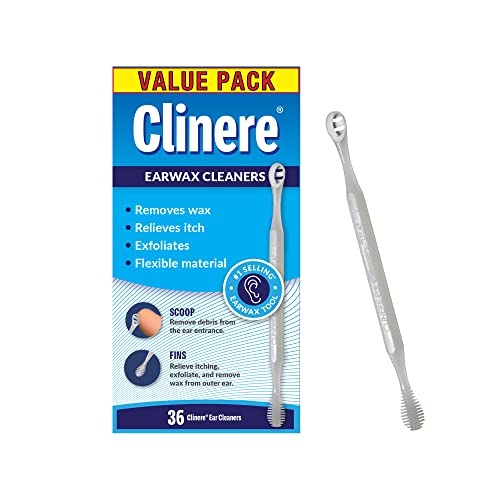
Clinere differs from the liquid choices because it is a flexible scoop-and-fin cleaning tool, supplied in a 36-count pack and intended for reuse when cleaned according to its guidelines. The maker says the flexible design helps reduce the risk of pushing wax deeper and offers itch relief; it is not a peroxide drop or irrigation kit. This format may suit someone looking for a manual tool rather than liquid wax softening.
Bottom line: Select this only if you want a reusable manual cleaner instead of drops.
How to choose earwax removal drops
Choose a drop formula by active ingredient and by whether you also need a way to flush softened wax. Carbamide peroxide products commonly use a 6.5% concentration; the Debrox single-bottle kit gives that figure, while the three-pack does not identify a concentration in its features. A dropper applies liquid, whereas a bulb syringe irrigates with water after softening. If you want an all-in-one format, choose a kit that explicitly includes both. Avoid inserting cotton swabs or other objects into the canal: they can push wax farther in. Do not use drops or irrigation when you have ear pain, drainage, a perforated eardrum, ear tubes, or recent ear surgery; seek medical advice instead.
How to use drops and bulb irrigation safely
Use the product’s dosing directions rather than increasing the amount or repeating treatment more often. Debrox Drops + Bulb Syringe Kit calls for 5 to 10 drops in each ear and flushing, and limits unsupervised use to adults and children over 12. For irrigation generally, use body-temperature water; cold or hot water can trigger dizziness. Keep the stream gentle and aim it along the canal wall, never directly at the eardrum. Stop if pain, bleeding, worsening blockage, or dizziness occurs. Irrigation is not suitable for ears with tubes, a known or suspected eardrum hole, active infection, or prior ear surgery unless a clinician approves it.
Earwax drops, irrigation kits, and manual tools compared
Liquid drops soften wax, bulb syringes rinse it out, and manual cleaners physically collect wax near the opening; these methods are not interchangeable. Carbamide peroxide drops can create bubbling as they break up wax, but a syringe adds an irrigation step. Peroxide-free liquid formulas are a different ingredient approach, while flexible tools do not soften impacted wax. The practical decision rule is to choose drops when you want wax softening, a drop-and-syringe kit when you also want irrigation, and a manual cleaner only for gentle cleaning at the outer ear. Nothing should be inserted deeply into the ear canal.
The table maps each format to its function and a key limitation.
| Format | Main role | Key limitation |
|---|---|---|
| Carbamide peroxide drops | Soften wax | May require flushing |
| Drop-and-bulb kit | Soften, then rinse | Not for every ear condition |
| Peroxide-free drops | Liquid wax cleansing | No bulb syringe in this option |
| Manual cleaner | Clean near the opening | Does not soften wax |
When earwax blockage needs medical care
Seek medical care rather than attempting home removal when blockage comes with pain, drainage, bleeding, sudden hearing change, or dizziness. Earwax protects the canal, and the goal is not to remove every trace; excess removal can irritate the skin. People with diabetes, immune suppression, ear tubes, a history of eardrum perforation, or previous ear surgery should ask a clinician before using drops or irrigation. A clinician can inspect the ear and remove impacted wax with instruments or suction when home methods are unsafe or ineffective. Do not use ear candles: they do not reliably remove wax and can cause burns or injury.
Frequently Asked Questions
How many drops of Debrox should I use?
The single-bottle kit directs users to apply 5 to 10 drops in each ear and flush. Its maker identifies the drops as 6.5% carbamide peroxide and advises children under 12 to consult a doctor.
Can I use a bulb syringe without earwax drops?
A bulb syringe can irrigate loose wax, but it is not suitable if you have ear tubes, a perforated eardrum, active infection, or prior ear surgery. Use body-temperature water and a gentle stream; stop for pain or dizziness.
How often should earwax be removed?
Most ears move wax outward naturally, so routine deep cleaning is unnecessary. If blockage persists after using an over-the-counter product as directed, arrange an ear exam rather than repeating irrigation indefinitely.
Are cotton swabs safe for removing earwax?
Cotton swabs should not be pushed into the ear canal because they can compact wax deeper and injure the canal or eardrum. Clean only the outer ear with a cloth.
When should I avoid over-the-counter ear drops?
Avoid self-treatment if you have ear pain, drainage, a known or suspected eardrum perforation, ear tubes, or recent ear surgery. A clinician should advise on removal because drops or irrigation may worsen some conditions.