
Resinol for Diaper Rash: 3 Zinc Oxide Options Compared

For diaper rash, choose a diaper-area ointment such as Triple Paste 3X Max Strength, 2 oz, Desitin Maximum Strength, 4.8 oz or Aquaphor Baby Diaper Rash Paste, 3.5 oz; each contains 40% zinc oxide, a skin protectant that helps form a barrier. Resinol is a general-purpose rash ointment rather than a diaper-specific product, so choose a diaper rash formula instead when that is the main need.
Change wet or soiled diapers promptly and apply protectant to clean, dry skin. Contact a pediatrician if the rash worsens, does not improve after a few days, or comes with fever or blisters.
We earn a commission if you buy through links on this page. As an Amazon Associate I earn from qualifying purchases. Products are compared on manufacturer specifications, not hands-on testing.
- Best overall: Triple Paste 3X Max Strength, 2 oz – Its 40% zinc oxide formula is specifically made as a diaper rash ointment.
- Best for overnight use: Desitin Maximum Strength, 4.8 oz – Its thick paste is described as protecting for up to 12 hours.
- Best for sensitive skin: Aquaphor Baby Diaper Rash Paste, 3.5 oz – The formula is fragrance-free, odor-free, paraben-free and talc-free.
| Product | Best for | Package size | Formula feature | Shop |
|---|---|---|---|---|
| Triple Paste 3X Max Strength, 2 oz | Serious diaper rash | 2 oz | Fragrance-free; alcohol-free | Check Price on Amazon |
| Desitin Maximum Strength, 4.8 oz | Overnight protection | 4.8 oz | Up to 12-hour protection | Check Price on Amazon |
| Aquaphor Baby Diaper Rash Paste, 3.5 oz | Sensitive skin | 3.5 oz | Fragrance-, odor- and paraben-free | Check Price on Amazon |
Diaper Rash Ointments Compared
Compare the zinc oxide concentration, package size and formula features to find a diaper-area protectant suited to your routine.
Triple Paste 3X Max Strength, 2 oz

Triple Paste 3X Max Strength, 2 oz is the diaper-specific option here that pairs 40% zinc oxide with a focus on serious rash. The 2-ounce ointment has a thick consistency intended to form a protective barrier and soothe existing irritation. Its formula is described as free from fragrance, alcohol, talc and dyes, which may suit caregivers avoiding those ingredients. The main limitation is the smaller package size compared with Desitin Maximum Strength, 4.8 oz; households applying paste at many changes may prefer a larger tube. Use a thin layer on clean, dry skin and keep the ointment out of a child’s reach.
Bottom line: Choose this for a diaper-specific formula aimed at serious rash.
Desitin Maximum Strength, 4.8 oz
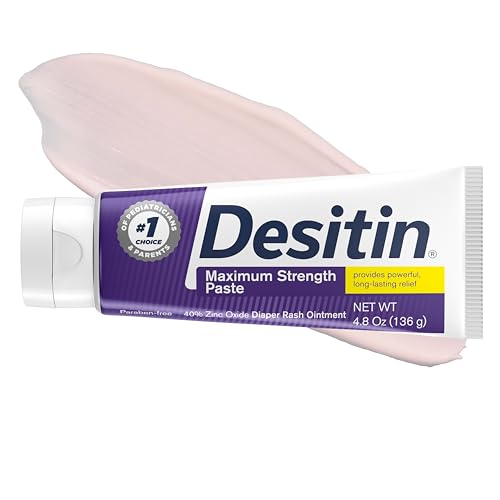
Desitin Maximum Strength, 4.8 oz stands out for its protection duration: the thick zinc oxide paste is described as staying in place for up to 12 hours, making it an option for longer stretches between diaper changes. The 4.8-ounce container is also larger than the other compared packages. The formula is positioned for stubborn, persistent rash, but its emphasis on a long-lasting, heavy paste may not suit caregivers who prefer a lighter-feeling product for frequent daytime changes. Apply it as a barrier on the diaper area, and change soiled diapers promptly rather than relying on paste to replace routine changes.
Bottom line: Pick this when a thicker paste and longer overnight barrier matter.
Aquaphor Baby Diaper Rash Paste, 3.5 oz

Aquaphor Baby Diaper Rash Paste, 3.5 oz combines 40% zinc oxide with shea butter and is the option here with several explicit formula exclusions: fragrance, odor, parabens and talc. That makes it a reasonable match for caregivers seeking those specific attributes, while still providing a diaper-area barrier paste. The 3.5-ounce package falls between the smaller tube in Triple Paste 3X Max Strength, 2 oz and the larger package in Desitin Maximum Strength, 4.8 oz. The formula’s sensitive-skin positioning does not guarantee that every child will tolerate it; stop use and seek medical advice if irritation worsens or an unexpected reaction develops.
Bottom line: Choose this if avoiding fragrance, odor, parabens and talc is a priority.
How to choose diaper rash ointment
Start with the purpose: a diaper rash ointment should protect the diaper area from moisture and friction, while a general rash ointment may be intended for other skin irritations. Zinc oxide is a common active skin protectant in diaper pastes; these three options each contain 40%. Consider texture and package size next: thicker pastes can form a more persistent barrier, while a smaller package is easier to carry. Use the product label to identify active and inactive ingredients, especially if your child has reacted to a particular ingredient before. With open sores, significant pain, fever, or a rash that fails to improve after a few days, ask a pediatrician rather than switching products repeatedly.
How to apply diaper rash paste
Apply barrier paste to clean, dry skin after changing the diaper; moisture trapped beneath a barrier can undermine comfort. Gently clean the area with water or a fragrance-free wipe, then pat dry instead of rubbing irritated skin. A visible protective layer is generally more useful than rubbing the ointment completely away at every change. When cleaning off a prior layer, remove only what is soiled and add fresh paste over the remaining clean barrier if appropriate for the product label. Change wet or soiled diapers promptly, and allow brief air-drying when practical. Do not use a diaper product on a different body area unless its label permits that use.
When a diaper rash needs medical advice
Seek medical advice if a rash worsens, spreads, develops blisters or open sores, or comes with fever; those signs need more than a routine barrier choice. Many mild diaper rashes improve with frequent changes, gentle cleaning and keeping the area dry, but persistent irritation can have causes that zinc oxide paste alone will not address. Contact a pediatrician if the rash is not improving after a few days of home care, or sooner if the baby seems unwell or uncomfortable. Avoid adding powders, scented products or multiple medicated creams without guidance, since layering products can irritate skin and make it harder to identify the cause of a reaction.
Frequently Asked Questions
Is Resinol made specifically for diaper rash?
No; Resinol is presented as a general-purpose ointment for rashes and irritated skin, while the compared zinc oxide pastes are specifically diaper rash products. For a baby’s diaper area, choose a product labeled for that use and follow its directions.
How often should I change a wet diaper?
Change wet or soiled diapers promptly to limit prolonged skin contact with moisture and stool. Check frequently, including after feeding and before sleep, rather than relying on an ointment’s protection duration.
Should I remove all the paste at every change?
No; gently remove soiled ointment and avoid scrubbing clean skin just to remove every trace. Pat the area dry and apply a fresh protective layer as directed on the product label.
When should I call a pediatrician about diaper rash?
Call if the rash worsens, does not improve after a few days, or includes blisters, open sores or fever. Seek care sooner if the baby seems ill or is in substantial discomfort.