
Best Left Hand Golf Drivers: 3 Models Compared

The Powerbilt TPS Blackout Max suits most golfers seeking a left hand driver because its 460cc head combines a high-MOI design with a 45-inch length. Choose another model if you prefer a 44.5-inch club or want a different head construction.
A driver is the longest club in most golf bags and is generally used for tee shots; all three options here are left-handed, 10.5-degree drivers.
We earn a commission if you buy through links on this page. As an Amazon Associate I earn from qualifying purchases. Products are compared on manufacturer specifications, not hands-on testing.
- Best overall: Powerbilt TPS Blackout Max Driver – Its 460cc head and high-MOI design are aimed at forgiveness, with a 45-inch regular-flex graphite shaft.
- Best for a shorter club: Extreme Golf 460cc Driver – At 44.5 inches, it is half an inch shorter than the two 45-inch Powerbilt drivers.
- Best for aluminum construction: Powerbilt TPS Supertech Driver – Its head is military-grade aluminum and the 45-inch club includes a headcover.
| Product | Best for | Club length | Head construction | Shop |
|---|---|---|---|---|
| Powerbilt TPS Blackout Max Driver | Forgiving design | 45 in | Alloy | Check Price on Amazon |
| Extreme Golf 460cc Driver | Shorter club length | 44.5 in | — | Check Price on Amazon |
| Powerbilt TPS Supertech Driver | Aluminum head | 45 in | Military-grade aluminum | Check Price on Amazon |
Left Hand Golf Drivers
Compare these left-handed 10.5-degree drivers by club length and head construction before choosing a fit for your game.
Powerbilt TPS Blackout Max Driver

The TPS Blackout Max pairs its 460cc head with a high-moment-of-inertia design, setting it apart for golfers who want an off-center-hit forgiveness focus. The club has 10.5 degrees of loft, a 45-inch regular-flex graphite shaft, a rubber grip and a matching headcover. Powerbilt describes the design as providing maximum forgiveness on off-center shots. Its audience is beginners and infrequent golfers, so it is a practical fit for those players. The limitation is the single stated loft and flex; golfers who need a different launch or shaft feel should compare other specifications before deciding.
Bottom line: Choose this if you want a beginner-oriented driver with a high-MOI design.
Extreme Golf 460cc Driver
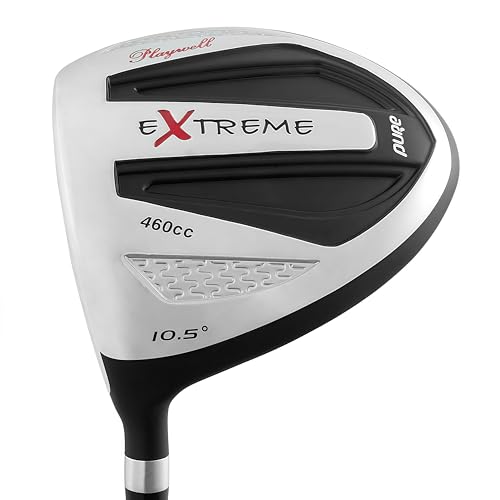
The Extreme Golf driver is the shortest of these three at 44.5 inches, making its length the clearest reason to consider it over the 45-inch options. It is a left-handed 460cc driver with 10.5 degrees of loft, a graphite regular-flex shaft and a black-and-silver finish. The maker says its aerodynamic shape is designed to reduce drag and promote speed and forgiveness, and describes its weight design as balancing power and control.
Bottom line: Choose this if the shorter 44.5-inch length is your priority.
Powerbilt TPS Supertech Driver

The TPS Supertech stands apart with a military-grade aluminum head, rather than the alloy construction identified for the other Powerbilt option. This left-handed driver has a 460cc head, 10.5 degrees of loft, a 45-inch graphite shaft with regular flex, a rubber grip and an included headcover. Powerbilt notes the large face area as a confidence feature at address. Beginner and casual golfers are the audience. The model shares its length and basic loft and flex with the Blackout Max, so the aluminum head construction—not a different fit specification—is the main distinction to weigh.
Bottom line: Choose this if you specifically want the aluminum-head construction.
How to Choose a Left Hand Golf Driver
Start with handedness, then compare loft, shaft and length; a left-handed club is made for a left-handed swing, not simply a right-handed club held differently. These choices all have 10.5 degrees of loft, so the meaningful fit differences here are the 44.5- or 45-inch length and the shaft and head specifications. Loft affects launch and spin, while shaft flex should suit swing speed and tempo; a fitting can help assess both. As a practical decision rule, if you prefer a club half an inch shorter than a 45-inch option, the 44.5-inch model is the only one in this group that meets that condition. Do not assume that the longest club automatically produces the best result for your contact.
What 460cc Means in a Driver
A 460cc driver head is at the maximum volume permitted under the USGA Rules of Golf, and all three left-handed options meet that size. Volume alone does not guarantee forgiveness: head shape, center of gravity and moment of inertia also affect how a driver responds to off-center contact. A higher moment of inertia generally resists twisting more on mishits, which is why the high-MOI design is a meaningful feature to compare. The head materials differ or are unknown across these choices, but material by itself does not establish performance. Focus on fitting and stated design features rather than treating a large head as proof that every miss will fly straight.
Driver Loft and Shaft Fit
Driver loft and shaft flex both influence launch, but a 10.5-degree marking does not predict the same ball flight for every golfer. Swing speed, delivery and strike location all matter; golfers who launch the ball too low may need to compare higher-loft options, while golfers with excessive spin may need a fitting before changing loft. Regular flex appears on all three models, but shaft flex labels are not standardized precisely across manufacturers, so a regular shaft from one brand may not feel identical to another. Compare the actual shaft and test fit where possible. These three choices do not provide a loft or flex alternative to the 10.5-degree regular-flex setup.
Driver Length and Control
Standard retail drivers commonly fall around 45 to 46 inches, while a shorter club can be easier for some golfers to control and center at impact. The 44.5-inch option is half an inch shorter than the two 45-inch drivers here. There is no universal best length: posture, arm length and swing pattern can change the fit, and shorter is not automatically more accurate for every player. When comparing clubs, use actual playing length rather than package dimensions, which can measure the box or product footprint. If you are unsure whether a half-inch difference suits your swing, a club fitting or supervised range session can help you evaluate contact and direction.
Frequently Asked Questions
Does a left-handed driver differ from a right-handed driver?
Yes. The clubhead orientation is built for a left-handed swing, so choose handedness based on how you swing rather than your writing hand. Confirm that the club is marked left-handed before buying.
Is 10.5 degrees a good driver loft for beginners?
A 10.5-degree loft is a common driver option, but it is not right for every beginner. Launch depends on swing speed and impact, so compare a higher-lofted club if you struggle to get the ball airborne.
How much difference does half an inch of driver length make?
Half an inch can change how a driver feels and where you make contact, but the effect depends on your setup and swing. Compare the 44.5-inch club with 45-inch options if control or centered contact is a concern.
What does 460cc mean on a golf driver?
460cc is the volume of the driver head, and it is the maximum head volume allowed under the USGA Rules of Golf. Head volume does not by itself determine forgiveness or distance.
Should I choose regular or stiff flex in a driver?
Choose flex based on your swing speed and tempo, not a label alone. Regular flex is specified for these three choices, but golfers who need a different feel should compare shaft options or seek a fitting.