
Bosch 14.4V Batteries Compared by Capacity and Fit

The PERSEVER BAT140 2-pack suits many older Bosch 14.4V tools, with 4.8Ah Ni-MH capacity and compatibility across BAT038, BAT040, BAT041, BAT140 and BAT159 models. Choose a different pack if your tool uses the BAT607 or BAT614 family, or if it requires lithium-ion rather than Ni-MH.
Power-tool batteries store energy for cordless tools; matching voltage, battery chemistry and the exact tool battery model matters more than the brand name alone.
We earn a commission if you buy through links on this page. As an Amazon Associate I earn from qualifying purchases. Products are compared on manufacturer specifications, not hands-on testing.
- Best overall: PERSEVER BAT140 14.4V Ni-MH 2-Pack – Offers 4.8Ah Ni-MH capacity and compatibility with several older Bosch 14.4V BAT models.
- Best for BAT614 tools: WTYXIYUN 14.4V 6.0Ah Replacement – A 6.0Ah lithium-ion replacement designed for specified BAT614 and BAT607 models.
- Best for a two-pack: Two 14.4V 1.3Ah Replacement Batteries – Includes two 14.4V replacement batteries rated at 1.3Ah each.
| Product | Best for | Capacity | Chemistry | Compatible battery models | Shop |
|---|---|---|---|---|---|
| PERSEVER BAT140 14.4V Ni-MH 2-Pack | Older BAT models | 4.8Ah | Ni-MH | BAT038, BAT040, BAT041, BAT140, BAT159 | Check Price on Amazon |
| WTYXIYUN 14.4V 6.0Ah Replacement | BAT614 family | 6.0Ah | Lithium-ion | BAT607, BAT607G, BAT614, BAT614G | Check Price on Amazon |
| Two 14.4V 1.3Ah Replacement Batteries | Two-pack replacement | 1.3Ah each | — | 32614, BAT040, 33614, BAT140, PSR 14.4VE-2 | Check Price on Amazon |
Bosch 14.4V Batteries
Match the battery chemistry and model family to your tool before comparing capacity.
PERSEVER BAT140 14.4V Ni-MH 2-Pack

The PERSEVER BAT140 stands out for its 4.8Ah capacity and broad compatibility with several Bosch 14.4V battery families. The two-pack uses Ni-MH cells and is intended for compatible cordless drills, saws and other power tools. That makes it a candidate for owners whose tools use one of the BAT models and whose charger supports Ni-MH packs. The tradeoff is chemistry: this is not a lithium-ion battery, so buyers replacing a lithium-ion pack should choose a chemistry-compatible option instead.
Bottom line: Choose this pair for a compatible older Bosch 14.4V tool that takes Ni-MH batteries.
WTYXIYUN 14.4V 6.0Ah Replacement
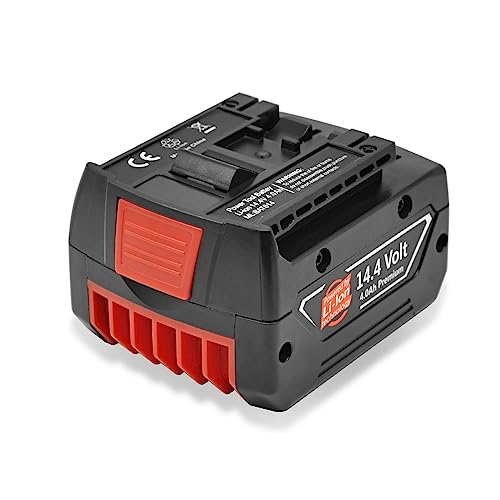
The WTYXIYUN pack is the lithium-ion choice here, with a 6.0Ah capacity and compatibility focused on Bosch BAT607 and BAT614 models. Its 1.21-pound weight and compact dimensions may matter when comparing replacement packs, though fit still depends on the exact tool and battery interface. The maker describes built-in overcharge, over-discharge and overheating protection; those claims do not establish compatibility with other Bosch batteries. Confirm that your tool uses one of the supported battery models and a lithium-ion pack before ordering.
Bottom line: Pick this pack for a compatible BAT607 or BAT614 tool requiring lithium-ion.
Two 14.4V 1.3Ah Replacement Batteries

The UpStart Battery option is a two-pack for a different set of Bosch 14.4V tools, including 32614, BAT040, 33614, BAT140 and PSR 14.4VE-2. Each replacement is rated at 1,300mAh, or 1.3Ah, so it has less stated capacity per pack than the other battery choices here. The pair suits buyers who need two packs for a model; the limited capacity is a drawback for longer work sessions between charges. Check both the tool model and the pack chemistry requirement before choosing it.
Bottom line: Choose this pair when your listed Bosch tool needs a 1.3Ah 14.4V replacement.
How to choose a Bosch 14.4V battery
Choose by exact battery model and chemistry first, then use amp-hour capacity to compare runtime potential. A 14.4V label alone does not guarantee a fit: manufacturers use different housings, contacts and tool families at the same voltage. Battery capacity is measured in amp-hours (Ah); a 4.8Ah pack holds more rated charge than a 1.3Ah pack, although actual runtime changes with tool load, battery age and work conditions. Check the model printed on your old pack against the replacement’s compatibility list. Also confirm that your charger supports the replacement chemistry, because 14.4V Ni-MH and 14.4V lithium-ion packs use different charging profiles. If the old pack’s model is unreadable, identify the tool model before buying.
| Need | What to match |
|---|---|
| Replacement fit | Exact BAT or tool model |
| Charger compatibility | Battery chemistry and voltage |
| Longer work between charges | Higher Ah capacity, if compatible |
Ni-MH and lithium-ion 14.4V batteries
Ni-MH and lithium-ion packs share a nominal 14.4V rating but are not interchangeable on that basis alone. A nominal 14.4V lithium-ion pack commonly uses four 3.6V cells and reaches 16.8V when fully charged; a Ni-MH pack commonly uses twelve 1.2V cells. Those chemistries need different charge control, so a charger must be rated for the battery chemistry as well as its voltage. Ni-MH is the chemistry in the PERSEVER option, while the WTYXIYUN pack is lithium-ion. The UpStart two-pack’s chemistry should be verified against the tool and charger before purchase because its capacity and voltage alone do not establish its charging requirements.
What battery capacity tells you
Amp-hours measure electrical charge capacity, not a guaranteed number of minutes in a tool. For the same voltage and similar conditions, a 4.8Ah pack has about 3.7 times the rated capacity of a 1.3Ah pack; a 6.0Ah pack has about 4.6 times the rated capacity. Tool motor demand, cutting or drilling resistance, temperature and battery age all affect usable runtime. Use capacity as a relative comparison only among packs that fit and work with your charger. A higher Ah number cannot make an incompatible battery suitable, and a physically fitting pack still needs the correct contacts and battery management. For frequent high-load work, prioritize a compatible higher-capacity pack; for intermittent use, matching the exact tool family may matter more.
Compatibility and battery care
Check the model number on the tool’s existing battery and compare it character-for-character with the replacement’s supported models. Similar names can refer to separate battery families, and a replacement for BAT040 is not automatically suitable for every Bosch 14.4V tool. Store rechargeable packs in a cool, dry place and keep terminals from contacting metal objects; short circuits can create heat and fire risk. Avoid using a damaged, swollen or unusually hot battery, and use only a charger designed for its chemistry and voltage. If a battery or charger becomes hot, stop charging and let it cool in a safe, ventilated area away from combustible materials. Correct fit and charging equipment are basic safety checks, not optional capacity tradeoffs.
Frequently Asked Questions
Can a Bosch 14.4V battery fit every 14.4V Bosch tool?
No. The voltage label does not guarantee that the battery housing and contacts match. Compare the exact BAT model or tool model with the replacement’s compatibility list before buying.
Can I use a Ni-MH charger with lithium-ion batteries?
Only if the charger is explicitly designed for that battery chemistry and voltage. A nominal 14.4V lithium-ion pack commonly reaches 16.8V when full, and its charge control differs from Ni-MH.
Does a higher amp-hour rating mean longer runtime?
Usually, a higher Ah rating means more rated charge when voltage and compatibility are equal. Actual runtime also changes with tool workload, temperature and battery condition.
How do I identify the right replacement battery model?
Read the model printed on the old battery or identify the tool’s model number, then match it to the replacement’s compatibility list. Do not rely on 14.4V alone because model families can use different housings and contacts.
How should I store a cordless tool battery safely?
Store it dry and away from extreme heat, and keep its terminals away from loose metal objects that could cause a short. Do not charge a damaged or swollen pack; battery shorts and overheating can create fire hazards.