
Tankless Underwater Breathing Apparatus: 4 Systems Compared

HQLYZJDV Battery Diving Ventilator is the clearest fit for recreational divers who want a tankless underwater breathing apparatus with a 23-foot depth and 45-minute runtime. Choose another system if its depth or hose setup better matches your planned dive, but do not treat a maker’s depth claim as proof of safe or certified operation.
These battery-powered systems supply breathing air through a hose rather than a carried scuba cylinder. Its maker does not replace recognized diver training, equipment checks, or a plan for emergencies.
We earn a commission if you buy through links on this page. As an Amazon Associate I earn from qualifying purchases. Products are compared on manufacturer specifications, not hands-on testing.
- Best overall: HQLYZJDV Battery Diving Ventilator – Its 23-foot limit and 45-minute runtime give a clear recreational-use frame.
- Best for longer hose reach: Xyuee D1 Diving System – The product name specifies a 50-foot hose and the maker mentions a 3-liter air reserve.
- Best for replaceable batteries: DGLUYUDV Scuba Diving Ventilator – The maker says each battery runs for one hour and can be replaced.
- Best for depth range: TUDIVING Upgraded Diving Ventilator – The maker claims dives up to 12 meters with a 60 L/min flow rate.
| Product | Best for | Maximum depth | Airflow | Hose length | Shop |
|---|---|---|---|---|---|
| HQLYZJDV Battery Diving Ventilator | Shallow recreational dives | 23 ft | 51 L/min | 23 ft hose | Check Price on Amazon |
| Xyuee D1 Diving System | Long hose reach | — | — | 50 ft | Check Price on Amazon |
| DGLUYUDV Scuba Diving Ventilator | Replaceable batteries | 23 ft | 51 L/min | — | Check Price on Amazon |
| TUDIVING Upgraded Diving Ventilator | Higher stated airflow | 39.4 ft | 60 L/min | — | Check Price on Amazon |
Tankless Underwater Breathing Apparatus Systems
Compare the operating limits and practical differences, then confirm that any system is appropriate for your training and planned dive.
HQLYZJDV Battery Diving Ventilator
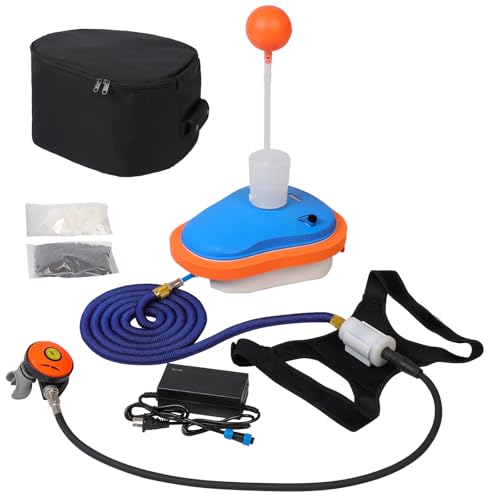
HQLYZJDV gives the clearest combination of stated depth, airflow, and duration among these options: the maker says it supports dives to 23 feet for 45 minutes at 51 L/min. Its 8,700 mAh battery and 23-foot breathing hose make it a shallow-water-oriented choice for recreational diving, fishing, or boat cleaning. The maker also describes a power display for monitoring battery status. The 23-foot depth is a limit claimed by the maker, not evidence of independent certification or a substitute for checking whether the equipment suits your training and dive plan.
Bottom line: Pick this for shallow recreational use when its 23-foot limit fits your plan.
Xyuee D1 Diving System
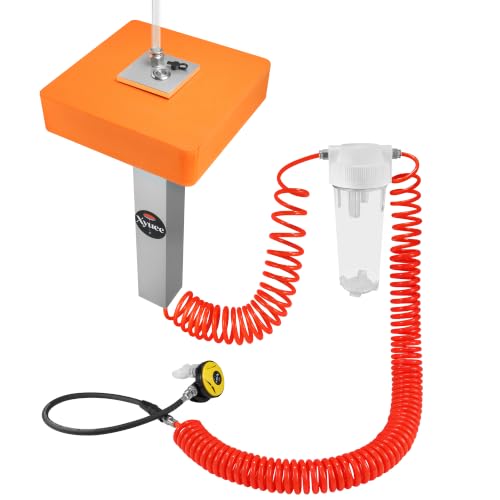
Xyuee D1 stands apart with a 50-foot hose and a claimed 3-liter extra air storage, giving it the longest explicitly named hose in this comparison. The product name specifies a 10,000 mAh battery, and the maker describes a 6063 aluminum alloy body with an anti-rollover buoyancy ring. Those construction claims may matter to buyers considering a surface-supported setup, but the maker does not establish a maximum depth or airflow figure to compare against the other systems. Confirm compatibility and operating limits with a qualified dive professional before relying on the system underwater.
Bottom line: Choose this when a 50-foot hose is the deciding requirement.
DGLUYUDV Scuba Diving Ventilator

DGLUYUDV is the option with an explicit replaceable-battery arrangement: the maker says one battery runs the device for one hour, and the package includes one battery. Its maximum depth is 23 feet and its airflow is 51 L/min. That makes it a potential match for buyers who value swapping a battery between sessions, provided replacement packs are available separately. The maker’s depth and runtime should not be treated as a safe operating guarantee; verify hose reach and independent equipment approval before planning a dive.
Bottom line: Pick this if replacing the battery between sessions matters most.
TUDIVING Upgraded Diving Ventilator
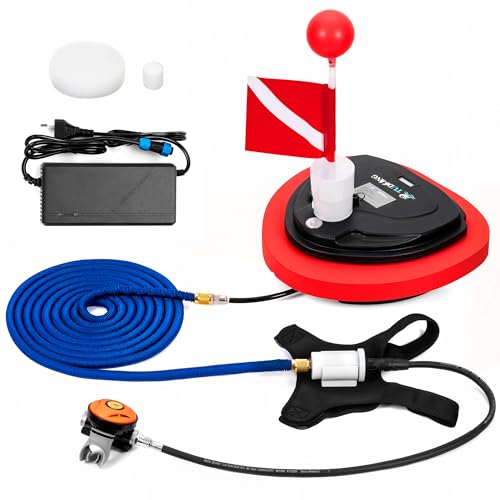
TUDIVING’s upgraded ventilator has the highest airflow in this group at 60 L/min, and the maker claims a maximum depth of 39.4 feet. Its claimed depth and airflow do not establish suitability for a particular diver or condition.
Bottom line: Consider this when the 60 L/min airflow and 39.4-foot depth are relevant.
How tankless underwater breathing systems work
Battery-powered tankless systems use a motorized air source and hose to deliver breathing air, unlike scuba cylinders carried by the diver. The surrounding water pressure rises by about 1 atmosphere for every 10 meters of seawater, so a diver’s breathing gas must be delivered at the pressure of the surrounding water; depth ratings alone do not show how a device manages every operating condition. A surface-supplied or hose-fed setup also introduces hose routing, power, and air-supply failure considerations that differ from conventional scuba. Before choosing one, verify the system’s operating limits, reserve-air provisions, and intended use with a qualified dive professional. Treat maker-claimed depth and runtime as product claims, not a substitute for diver training or equipment approval.
How to compare depth, airflow, and runtime
Match the equipment’s maximum depth to the planned dive, but do not plan to use a device right at its limit. In seawater, pressure increases by roughly 1 atmosphere per 10 meters, and exertion, water conditions, and breathing demand can affect the usable margin. Airflow figures also need context: a flow rate in liters per minute is not, by itself, proof that a system supplies adequate breathing gas at a given depth or under workload. Runtime is similarly conditional on battery state and operating conditions; an advertised maximum does not guarantee the same duration for every dive. As a decision rule, if your plan requires a depth beyond a system’s claimed maximum, rule it out rather than stretching the limit. Confirm the conflicting runtime claim on TUDIVING Upgraded Diving Ventilator before relying on its duration.
Hose-fed systems compared with scuba cylinders
Hose-fed battery units avoid carrying a conventional scuba cylinder, but they add a tether that can snag, restrict movement, or be damaged. A conventional scuba setup carries its breathing-gas supply with the diver and is used within formal training and equipment practices; these battery systems should not be assumed interchangeable with it. A longer hose can extend reach from the air source, but it also creates more line to manage around boats, rocks, and other divers. This table summarizes the practical distinction to consider, not a safety ranking.
| Setup | Air source position | Main planning concern |
|---|---|---|
| Battery-powered hose system | Connected by hose | Hose routing and power/air interruption |
| Scuba cylinder | Carried by diver | Gas supply, buoyancy, and trained cylinder handling |
Choose by the complete system and your training, not by the word “tankless” alone.
Safety checks before using a tankless breathing device
Use breathing equipment only within recognized diver training and the manufacturer’s operating limits; a claimed maximum depth is not a certification. Never dive alone, and do not rely on a single battery-powered air source without understanding the system’s emergency plan and an appropriate alternate-air procedure. Before entering the water, inspect the hose, regulator, seals, battery state, and any reserve-air feature, and confirm that the setup is suitable for the planned depth and conditions. Avoid entanglement hazards by keeping the hose clear of boat propellers, lines, and sharp edges. If the device’s certification, reserve method, or emergency procedure cannot be verified, do not use it for a dive; consult a qualified instructor or dive professional first.
Frequently Asked Questions
How deep can tankless underwater breathing systems go?
The systems have maker-claimed maximums ranging from 23 feet to 39.4 feet, while one has no depth figure. A claimed maximum is not a recommended target; keep the dive within verified equipment limits and your training.
How long does a battery-powered dive system run?
Runtime varies by model and operating conditions, and the claims here range from one hour per battery to 45 minutes for a named recreational system. Treat maximum runtime as a planning estimate, not a guarantee, and verify conflicting runtime claims before use.
Does a longer breathing hose let me dive deeper?
No, hose length describes reach, not a system’s approved depth. Pressure rises by about 1 atmosphere per 10 meters of seawater, so depth capability depends on the complete air-delivery system, not hose length alone.
Can I use a tankless dive device without scuba training?
No; breathing underwater carries serious risks even in shallow water, and these devices do not replace recognized diver training. Learn the equipment’s failure procedures and use it only within your training and verified operating limits.
What should I inspect on a hose-fed dive system?
Check the hose and regulator for damage, confirm battery status, and understand how the system provides reserve air and responds to interruption before entering the water. Keep the hose clear of propellers, sharp edges, and entanglement hazards.