
Besti Monk Fruit Allulose Blend: 4 Options Compared

For a Besti monk fruit allulose blend that can go from drinks to baking, Wholesome Yum Besti Granulated Blend is the most versatile choice: it is a granulated blend that the maker says measures and bakes like sugar. Choose Wholesome Yum Besti Packets instead for single-serve drinks; the other blends offer different package sizes and brands.
Monk fruit allulose sweeteners combine allulose with monk fruit extract, but formats and package weights matter when choosing one for recipes or daily drinks.
We earn a commission if you buy through links on this page. As an Amazon Associate I earn from qualifying purchases. Products are compared on manufacturer specifications, not hands-on testing.
- Best overall: Wholesome Yum Besti Granulated Blend – Granulated format is presented for both baking and general sugar replacement.
- Best for single-serve drinks: Wholesome Yum Besti Packets – Packets are made for coffee, tea, and other hot or cold drinks.
- Best for larger batches: Lakanto Classic Monk Fruit with Allulose – The 3-pound bag has the largest package weight among these options.
| Product | Best for | Format | Package weight | Erythritol | Shop |
|---|---|---|---|---|---|
| Wholesome Yum Besti Granulated Blend | Baking and cooking | Granulated | 12 oz | None, maker says | Check Price on Amazon |
| Wholesome Yum Besti Packets | Drinks on the go | Single-serve packets | 6.3 oz | None, maker says | Check Price on Amazon |
| BetterBody Foods Monk Fruit Allulose Blend | One-pound pantry bag | Blend | 16 oz | — | Check Price on Amazon |
| Lakanto Classic Monk Fruit with Allulose | Large pantry supply | Blend | 48 oz | None, maker says | Check Price on Amazon |
Besti Monk Fruit Allulose Blend Options
Compare the formats and package sizes first, then match the sweetener to how you plan to use it.
Wholesome Yum Besti Granulated Blend

For the widest range of uses, Wholesome Yum Besti Granulated Blend is a granulated Besti blend rather than a drink-only packet. The maker says it measures like sugar and is suited to baking, where it dissolves, browns, and caramelizes; the blend contains monk fruit and allulose and is made without erythritol. Its 12-ounce package is smaller than the 1-pound and 3-pound alternatives, so frequent bakers may prefer a larger bag. The maker also claims zero calories and zero carbs per serving; check the serving size on the package when comparing nutrition labels.
Bottom line: Pick this for a granulated Besti sweetener intended for baking as well as general use.
Wholesome Yum Besti Packets
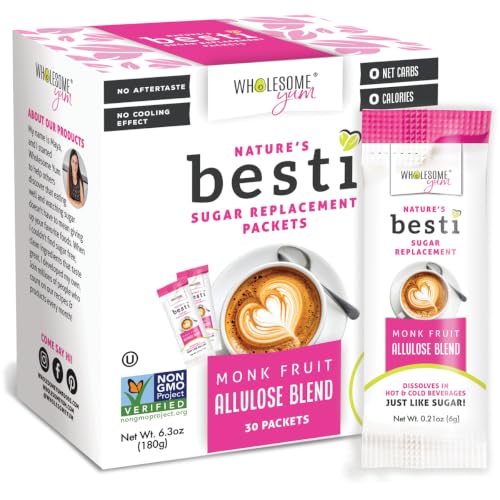
Unlike the granulated Besti option, Wholesome Yum Besti Packets comes in 30 single-serve packets focused on drinks. The maker says the packets dissolve in hot and cold beverages, including coffee and tea, and measure like sugar packets; this format is convenient when carrying a container of granulated sweetener is impractical. The package weighs 6.3 ounces, and the maker describes the blend as erythritol-free and zero calorie with zero net carbs. Packets are less suited to recipes that call for measuring larger quantities of a granular ingredient.
Bottom line: Choose this for individually portioned sweetener in hot or iced drinks.
BetterBody Foods Monk Fruit Allulose Blend

At 16 ounces, BetterBody Foods Monk Fruit Allulose Blend offers a one-pound package, which is larger than the 12-ounce granulated Besti bag but smaller than the 3-pound alternative. The maker says the blend uses a 1:1 ratio in place of sugar and can be used in baking, smoothies, coffee, lemonade, and tea. It is described as gluten-free and non-GMO, and the maker claims zero calories. The maker does not establish whether this blend contains erythritol, so buyers who specifically want an erythritol-free formula should verify the ingredient label before choosing it.
Bottom line: Pick this if a one-pound package and the maker’s 1:1 recipe guidance suit your needs.
Lakanto Classic Monk Fruit with Allulose
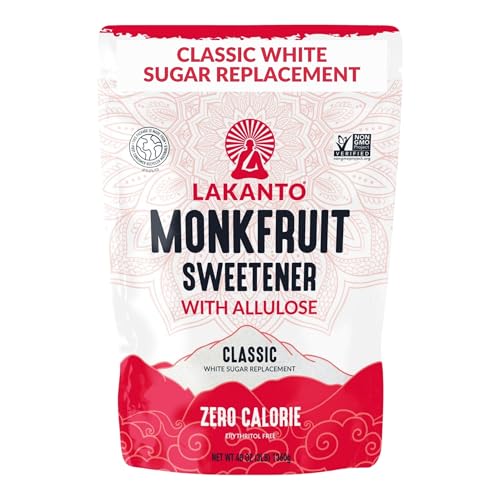
For the largest package here, Lakanto Classic Monk Fruit with Allulose provides 48 ounces, or 3 pounds, in a bag. The maker says this erythritol-free monk fruit and allulose sweetener dissolves quickly in liquids and keeps baked goods moist, making it a larger-format alternative to the Besti options. It is presented for baking, coffee, tea, and everyday use. The 3-pound quantity may be more than needed for occasional use, and the package is a blend rather than a single-serve format. The maker claims zero calories; use the package nutrition panel for serving-specific comparisons.
Bottom line: Choose this when you want a larger bag of an erythritol-free blend.
How to Choose a Monk Fruit Allulose Blend
Start with the format you use most: granulated blends suit recipes, while packets are portioned for drinks. Allulose is a sugar that occurs naturally in small amounts in foods such as figs and raisins; monk fruit extract supplies sweetness in these blends. In baking, sugar contributes bulk, moisture, browning, and structure, so a sweetener that replaces sweetness may not reproduce every role of sugar in every recipe. A practical decision rule is to choose packets if your usual serving is one cup of coffee or tea, and granules if your recipes call for measuring spoonfuls or cups. Check whether the package gives a 1:1 substitution ratio before replacing sugar in a recipe; only some products here make that specific claim.
Using Allulose Blends in Baking
Allulose can brown and retain moisture differently from table sugar, which matters most in cookies, cakes, and recipes where color or crispness is a target. Sugar also helps create structure and can affect spread, so a 1:1 sweetness ratio does not guarantee identical baking results. For a first batch, replace sugar in a recipe only when the product maker gives a ratio, and watch the bake near the recipe’s finish time rather than assuming the same color. Recipes that depend on sugar for a hard candy texture or a crisp finish may need a formulation designed for that job. Make one small test batch before scaling a recipe for an event.
Granulated Sweetener Versus Packets
Granules are easier to measure in volume for recipes, while packets make individual drink portions portable. A tablespoon contains 3 teaspoons, but packet weights vary, so a packet should not automatically be treated as one teaspoon or one serving of another brand. Use the package’s own serving measure when comparing sweetness or nutrition figures. For cold drinks, dissolving granules while stirring can help reduce clumps; packet claims about iced drinks apply to the particular formula named by its maker. The table below shows which formats are represented among these choices.
| Format | Useful for | Measure to check |
|---|---|---|
| Granulated blend | Recipes and larger drink batches | Recipe substitution ratio |
| Single-serve packets | Individual hot or cold drinks | Packet serving equivalence |
Portion Size and Digestive Comfort
Allulose can cause digestive discomfort for some people, particularly when consumed in larger amounts; individual tolerance varies. Start with a small portion if you have not used an allulose sweetener before, then increase only if it agrees with you. Nutrition claims such as zero calories or zero net carbs are not a measure of how much sweetener is in a serving, so compare the labeled serving size as well as the ingredient list. People managing a medical condition should not use a sweetener’s marketing claims as a substitute for individualized dietary guidance. Keep the package closed and dry as you would other powdered or granulated pantry ingredients.
Frequently Asked Questions
Can I replace sugar one for one with monk fruit allulose?
Only when the specific product provides a 1:1 substitution direction; BetterBody Foods makes that claim for its blend. Sweetness equivalence does not ensure the same browning, structure, or texture in every recipe.
Does allulose brown like regular sugar in baking?
Allulose can brown during baking, though the result may differ from table sugar. Check baked goods as they approach the recipe’s usual finish time, since extra browning can happen before the center is done.
Will monk fruit allulose blend dissolve in iced coffee?
Granules may take stirring to dissolve in a cold drink, while the Besti packet maker says its formula dissolves in hot and cold drinks. Add the sweetener gradually and stir before adding more.
Can allulose cause stomach discomfort?
Yes, allulose may cause digestive discomfort in some people, especially in larger amounts. Start with a small serving if you are unfamiliar with it and pay attention to your own tolerance.
Are monk fruit allulose packets equal to a teaspoon?
Not necessarily; packet weights and serving directions differ by product. Use the packet’s own serving measure rather than assuming one packet equals a teaspoon of granulated sweetener.