
Best 2 Ohm 6×9 Speakers: 3 Models Compared

For most buyers, Cerwin-Vega V692 is the clearest pick because its maker gives a 140-watt RMS rating per speaker and includes fitment adapters. Choose PowerBass OE-692T instead when shallow mounting is the priority, or PowerBass OE-690D if you want a 3-way design and can use its dual voice coil impedance options.
A 2-ohm speaker is a car speaker with a nominal 2-ohm load; confirm your head unit or amplifier supports that load before connecting it.
We earn a commission if you buy through links on this page. As an Amazon Associate I earn from qualifying purchases. Products are compared on manufacturer specifications, not hands-on testing.
- Best overall: Cerwin-Vega V692 – A 140-watt RMS rating per speaker, 2-way coaxial layout and included fitment adapters make its key specs clear.
- Best for shallow spaces: PowerBass OE-692T – Its thin-mount design is intended for OEM replacement installations with limited mounting depth.
- Best for 3-way sound: PowerBass OE-690D – Its 3-way layout and dual voice coil options suit buyers seeking those specific design features.
| Product | Best for | Impedance | Speaker layout | Mounting notes | Shop |
|---|---|---|---|---|---|
| Cerwin-Vega V692 | Everyday coaxial upgrade | 2 ohms | 2-way coaxial | Fitment adapters included | Check Price on Amazon |
| PowerBass OE-692T | Shallow mounting | 2 ohms | Coaxial | Shallow-mount design | Check Price on Amazon |
| PowerBass OE-690D | Three-way layout | 2 or 8 ohms | 3-way | OEM replacement woofer | Check Price on Amazon |
Best 2 Ohm 6×9 Speakers
Compare speaker layouts and mounting designs, then match impedance and physical fit to your vehicle audio system.
Cerwin-Vega V692
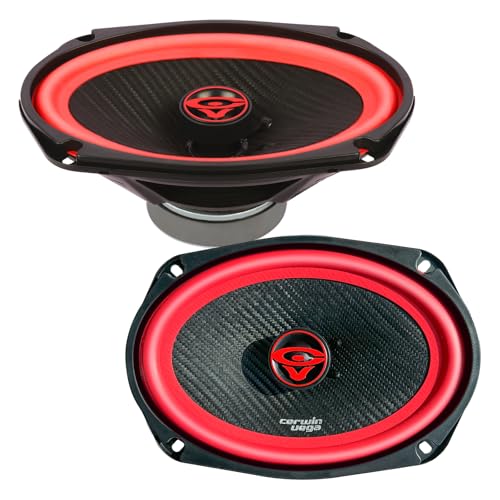
Cerwin-Vega V692 stands out with a 140-watt RMS rating per speaker, a 2-way coaxial layout and fitment adapters in the pair. Its maker says the hybrid carbon fiber/polypropylene cones and Santoprene surrounds support midrange and bass, while silk-dome tweeters handle high frequencies. The integrated crossover includes tweeter protection, and the maker gives a 90 Hz–20 kHz frequency range and 89 dB sensitivity. This pair suits buyers who want a defined power rating and included fitment pieces. The main limitation is compatibility: the amplifier must be stable at 2 ohms, and adapters do not guarantee a fit in every vehicle.
Bottom line: Choose this pair if the 140-watt RMS rating and included fitment adapters match your setup.
PowerBass OE-692T

PowerBass OE-692T is the shallow-mount option among these pairs, with an OEM drop-in replacement design and a 6×9-inch coaxial format. Its cone is injection-molded polypropylene/carbon fiber, and the surround is butyl rubber. Those construction details distinguish it from the other choices, but the dimensions provided are package measurements rather than a speaker mounting depth, so do not use them to judge clearance. This pair suits buyers prioritizing a thin-mount design; the limitation is that no power-handling rating is available for matching it to an amplifier. Measure the vehicle opening and confirm usable depth before ordering.
Bottom line: Pick this pair when a shallow-mount design is the deciding fit requirement.
PowerBass OE-690D
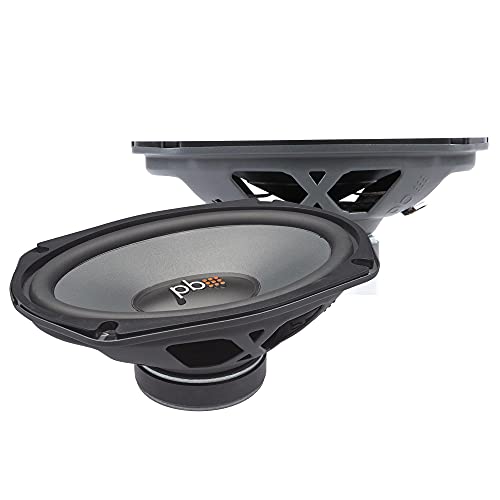
PowerBass OE-690D differs with its 3-way format and dual voice coil design, with the maker identifying 2-ohm or 8-ohm impedance options. Its OEM replacement woofer uses a grey injection-molded polypropylene/carbon fiber cone, an efficient-flux-field motor structure and a rigid, flat-gray basket. That makes the pair relevant when a 3-way configuration and selectable impedance are more important than a shallow-mount specification or included adapters. The pair is rated for 100 watts RMS and 300 watts maximum, but those numbers do not replace checking amplifier compatibility. Verify the intended impedance configuration and fit before installation.
Bottom line: Choose this pair if you want a 3-way design and can match its impedance configuration.
How to choose 2 ohm 6×9 speakers
Start by confirming that the head unit or amplifier is stable at a 2-ohm speaker load; a lower impedance can draw more current and may overheat equipment that is not designed for it. A speaker’s impedance is nominal and can vary with frequency, so it is not a fixed resistance reading. Next, compare RMS power handling with the amplifier’s RMS output per channel, not its peak or maximum figure. For a system rated at 100 watts RMS per channel, a speaker with a 140-watt RMS rating has a closer stated power range than one with no stated rating, but gain and crossover settings still matter. Finally, check opening dimensions, mounting depth and connector fit.
How 6×9 speaker fit works
A 6×9 label refers to a nominal speaker size, not a promise that every 6×9 basket or mounting hole will match your vehicle. Factory openings, screw locations, grille clearance and available depth can differ, particularly when a door window or body panel sits behind the speaker. Measure the opening and mounting depth in inches, and compare the screw pattern and wiring access before choosing a replacement. With less than 3 inches of depth available, prioritize a product explicitly designed for shallow mounting, then verify its actual depth against the vehicle. Fitment adapters can help bridge some mounting differences, but they do not solve clearance or wiring conflicts.
Two-way and three-way coaxial designs
A coaxial speaker places multiple drivers in one assembly; a 2-way model typically separates woofer and tweeter duties, while a 3-way design adds another driver for a frequency band. The number of drivers alone does not establish sound quality or compatibility. A crossover directs frequency ranges to appropriate drivers, and its design affects how the speaker integrates with a factory or aftermarket system. If retaining a factory head unit, check whether it includes equalization or speaker-specific filtering that may affect replacement performance. A separate amplifier can offer more control, but it must support the speaker load and have suitable RMS output. Choose layout based on system fit and desired components, not the driver count alone.
Impedance and safe installation
A 2-ohm load can demand more current than a 4-ohm load from the same amplifier, so confirm the minimum stable impedance in the amplifier manual before connecting speakers. Never assume every factory radio or amplifier can safely drive 2-ohm speakers; overheating, shutdown or damage can result when the load is too low. Disconnect the vehicle battery before working on speaker wiring, and avoid shorting positive and negative leads against metal. For multi-coil speakers, use the maker’s wiring diagram to identify the intended final impedance; wiring changes the total load. If the system has multiple speakers on one channel, calculate their combined load rather than checking each speaker in isolation.
Frequently Asked Questions
Can I use 2 ohm speakers with a factory radio?
Only if the factory radio is designed for a 2-ohm load. Check its minimum supported impedance before connecting the speakers, since a load below its rating can cause overheating or shutdown.
Does a 2 ohm speaker play louder than a 4 ohm speaker?
Not automatically; loudness also depends on amplifier output, speaker sensitivity and installation. A 2-ohm load may let a compatible amplifier deliver more power, but an incompatible amp can overheat.
How much clearance does a 6×9 speaker need?
There is no universal mounting depth for every 6×9 speaker or vehicle. Measure the opening and available depth in inches, including clearance for the window, grille and wiring, before selecting a speaker.
What does RMS power mean for car speakers?
RMS power is the continuous power-handling figure used for amplifier matching, unlike a peak or maximum figure. Compare amplifier RMS output per channel with the speaker’s RMS rating and keep the system load within the amplifier’s limits.