
Pete & Gerry’s Organic Eggs: 3 Options Compared

For Pete & Gerry’s organic eggs, choose the pasture-raised 12-count carton if you want USDA organic certification alongside a pasture-raised claim; the free-range 12-count carton is the other certified organic option. Choose a different carton if you specifically want free-range wording or an 18-count package, which is not labeled organic here.
We earn a commission if you buy through links on this page. As an Amazon Associate I earn from qualifying purchases. Products are compared on manufacturer specifications, not hands-on testing.
- Best overall: Pete & Gerry’s Organic Pasture-Raised Large Eggs – Combines USDA organic certification, a pasture-raised claim and a 12-count carton.
- Best for free-range: Pete & Gerry’s Organic Free-Range Large Brown Eggs – Has USDA organic certification and a Certified Humane free-range claim.
- Best for 18 eggs: Pete & Gerry’s Pasture-Raised Large Eggs, 18 Count – Provides 18 large pasture-raised eggs, but is not labeled organic.
| Product | Best for | Raising claim | Organic certification | Count | Shop |
|---|---|---|---|---|---|
| Pete & Gerry’s Organic Pasture-Raised Large Eggs | Organic pasture-raised | Pasture-raised | USDA certified organic | 12 | Check Price on Amazon |
| Pete & Gerry’s Organic Free-Range Large Brown Eggs | Organic free-range | Free-range | USDA certified organic | 12 | Check Price on Amazon |
| Pete & Gerry’s Pasture-Raised Large Eggs, 18 Count | Larger carton | Pasture-raised | Not labeled organic | 18 | Check Price on Amazon |
Pete & Gerry’s Organic Eggs Compared
Compare the cartons by organic certification, raising claim and how many eggs each contains.
Pete & Gerry’s Organic Pasture-Raised Large Eggs
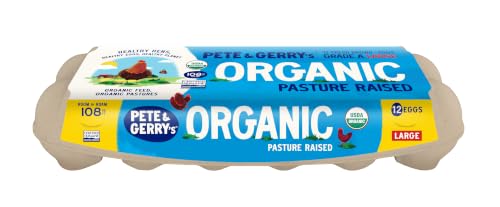
This carton pairs a pasture-raised claim with USDA organic certification, making it the clearest match if you want both attributes. It contains 12 large brown eggs and also carries a Certified Humane pasture-raised claim. The brand says the eggs come from family farms and that the packaging is earth-friendly; it also says there are no added hormones or antibiotics. Choose this carton when organic certification is essential. Its main trade-off is the 12-egg count, so it may not suit a household that wants a larger carton.
Bottom line: Choose this carton if you want organic certification and a pasture-raised claim in a dozen.
Pete & Gerry’s Organic Free-Range Large Brown Eggs

This is the free-range alternative to the brand’s organic pasture-raised carton. It contains 12 large brown eggs and carries both USDA Certified Organic and Certified Humane Free Range claims. The brand also says the eggs come from small family farms and contain no added hormones or antibiotics. Pick this one if the free-range wording is important to you. It is not the pasture-raised-labeled choice, so buyers specifically seeking that claim should compare it with the other organic carton.
Bottom line: Choose this carton when you prefer the free-range claim over a pasture-raised claim.
Pete & Gerry’s Pasture-Raised Large Eggs, 18 Count

This carton stands apart with 18 large eggs, six more than the two organic 12-count options. It carries a Certified Humane pasture-raised claim, and the brand says the eggs come from family farms, use earth-friendly packaging and have no added hormones or antibiotics. The key distinction is that this carton is not labeled organic, unlike the other two choices. Choose it if a larger carton and the pasture-raised claim matter more than organic certification; skip it if organic is a requirement.
Bottom line: Choose this carton for 18 eggs and a pasture-raised claim when organic certification is not required.
How to choose Pete & Gerry’s organic eggs
Start with the claim that matters most: organic certification, free-range wording or pasture-raised wording. USDA organic rules require organic feed and access to the outdoors; organic certification does not by itself mean hens meet a pasture-raised standard. Certified Humane’s pasture-raised standard calls for at least 108 square feet of outdoor space per hen, while its free-range standard requires outdoor access but does not set that same per-hen pasture area. If both organic and pasture-raised are priorities, select a carton carrying both claims. If only organic is essential, either certified organic carton fits; then decide which raising claim you prefer.
| Priority | What to look for |
|---|---|
| Organic feed and production rules | USDA organic certification |
| Outdoor access claim | Free-range |
| Pasture area claim | Pasture-raised |
What egg size and carton count mean
Large eggs are a weight class, not a promise that every egg in a carton has identical dimensions: USDA’s large class averages 24 ounces per dozen, or 2 ounces per egg. A 12-count carton contains a dozen; an 18-count carton contains a dozen and a half. Choose by how many eggs you use before the carton reaches its date, rather than assuming a larger count is automatically more convenient. Keep eggs refrigerated at 40°F or below, and avoid leaving them at room temperature for more than two hours. For recipes that specify large eggs, use large eggs to keep the expected liquid-to-dry balance.
Organic, free-range and pasture-raised claims
Organic, free-range and pasture-raised describe different things, so one claim does not replace the others. Organic concerns production rules, including feed and outdoor access; free-range refers to outdoor access; pasture-raised certification can add a defined outdoor-area requirement. These terms are not interchangeable, and packaging can carry more than one claim. For a side-by-side decision, check which claims appear together on the carton rather than inferring one from another. If a carton is not labeled organic, do not treat its pasture-raised claim as a substitute for organic certification.
Safe storage and handling for eggs
Refrigerate shell eggs at 40°F or colder and keep them in their carton to limit moisture loss and protect against odor absorption. USDA guidance gives raw shell eggs a refrigerated storage window of three to five weeks; use the carton date and your storage conditions as practical checks. Discard cracked eggs, wash hands and surfaces after contact with raw egg, and cook eggs until both whites and yolks are firm. For dishes containing eggs, cook to 160°F. These precautions matter regardless of whether eggs are organic, free-range or pasture-raised.
Frequently Asked Questions
Does organic mean eggs are pasture-raised?
No. USDA organic standards require organic feed and outdoor access, but the organic label alone does not establish a pasture-area standard. Look for a separate pasture-raised claim if that distinction matters.
How long can shell eggs stay refrigerated?
Raw shell eggs generally keep for three to five weeks in a refrigerator at 40°F or colder. Keep them in their carton and discard any with cracked shells.
What does large mean on an egg carton?
Large eggs average at least 24 ounces per dozen under USDA size standards, or 2 ounces each on average. Individual eggs in a carton can vary in size while meeting the class.
What temperature should eggs reach when cooked?
Cook egg dishes to 160°F, and cook individual eggs until both the white and yolk are firm. Keep raw egg away from ready-to-eat foods and wash hands and utensils after handling.