
Sun Joe Leaf Blowers: 5 Models Compared by Fit

For most cordless yard cleanup, the Sun Joe ECOSHARP X20 Compact Leaf Blower Sun Joe ECOSHARP X20 20V Compact Blower stands out for its 400 CFM airflow and six settings. Choose a corded model for an outlet-based setup, or compare the included battery and charger before picking a cordless option.
Leaf blowers move debris with directed airflow; CFM measures air volume, while MPH measures air speed, so neither number alone describes every cleanup task.
We earn a commission if you buy through links on this page. As an Amazon Associate I earn from qualifying purchases. Products are compared on manufacturer specifications, not hands-on testing.
- Best overall: Sun Joe ECOSHARP X20 20V Compact Blower – Its maker says it delivers up to 400 CFM across six variable settings, and two batteries are included.
- Best for corded use: Sun Joe SBJ597E 6-Amp Corded Blower – The 6-amp corded model weighs 3.9 pounds and is intended for patios, driveways, decks and garages.
- Best for tool-only buyers: Sun Joe 24V-TB-CT Compact Turbine Blower – This 24-volt cordless model produces up to 280 CFM and 100 MPH, with battery and charger sold separately.
| Product | Best for | Airflow and air speed | Power source | Weight | Shop |
|---|---|---|---|---|---|
| Sun Joe ECOSHARP X20 20V Compact Blower | Variable-speed cleanup | 400 CFM; 21–40 m/s | 20V; two 2.0 Ah batteries included | 4.2 lb with tube | Check Price on Amazon |
| Sun Joe SBJ597E 6-Amp Corded Blower | Corded patio cleanup | 260 CFM; 155 MPH | 6-amp corded electric | 3.9 lb | Check Price on Amazon |
| Sun Joe 24V-TB-LTE Cordless Jet Blower | Battery-included cordless | 280 CFM; 100 MPH | 24V; battery and charger included | 4.0 lb | Check Price on Amazon |
| Sun Joe X20 StormJet 20V Turbo Blower | High-airflow cordless | 340 CFM | 20V; 3.0 Ah battery and charger included | — | Check Price on Amazon |
| Sun Joe 24V-TB-CT Compact Turbine Blower | Existing 24V owners | 280 CFM; 100 MPH | 24V; tool only | 4.2 lb | Check Price on Amazon |
Sun Joe Leaf Blowers Compared
Compare airflow, power setup and included batteries to find a blower that matches your yard and cleanup routine.
Sun Joe ECOSHARP X20 20V Compact Blower

The ECOSHARP X20 is the only option here with six variable settings and two included 2.0 Ah batteries. Sun Joe says its 775W brushed motor produces up to 400 CFM, with speeds from 21 to 40 m/s. That combination suits buyers who want to adjust airflow for leaves, grass clippings, pollen or workshop debris rather than use one fixed setting. Its 4.2-pound weight includes the tube.
Bottom line: Choose it if variable airflow and two batteries matter more than a published MPH figure.
Sun Joe SBJ597E 6-Amp Corded Blower
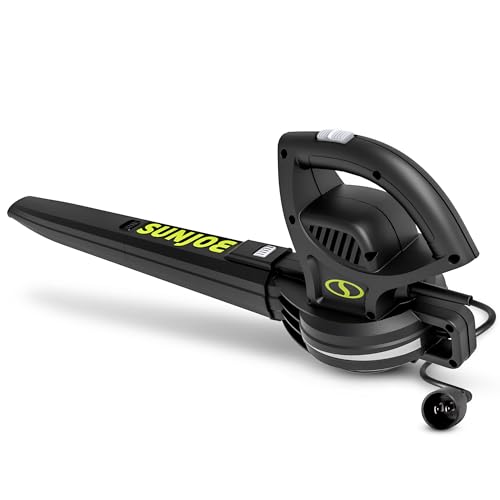
The SBJ597E is the only corded model in this group, so it avoids battery charging but requires access to an outlet and a suitable extension cord. Sun Joe gives its 6-amp motor a no-load speed of 14,000 RPM and claims 155 MPH and 260 CFM. At 3.9 pounds, it is a light option for sweeping patios, driveways, decks and garages. The cord is also its main limitation: it constrains reach and can snag around furniture or landscaping, making a cordless blower a better fit for yards without convenient outlet access.
Bottom line: Pick it for short, outlet-accessible cleanup where avoiding battery charging is the priority.
Sun Joe 24V-TB-LTE Cordless Jet Blower

The 24V-TB-LTE combines cordless operation with a battery and charger in the package, unlike the tool-only 24V-TB-CT. Sun Joe says its 350W turbine motor delivers 280 CFM and 100 MPH, and its rechargeable 24V battery fully charges in 30 minutes. The 4-pound handheld design suits buyers who want a ready-to-use cordless setup for routine yard cleanup. Its airflow is below the 340 and 400 CFM figures in this group, so it is less compelling for someone prioritizing maximum listed air volume.
Bottom line: Choose it when you want a cordless kit with battery and charger included.
Sun Joe X20 StormJet 20V Turbo Blower

The X20 StormJet pairs a 340 CFM airflow claim with an included 20V 3.0 Ah battery and charger, setting it apart from the tool-only 24V option. Sun Joe says its 330W motor reaches 32,000 RPM and describes a one-touch switch that starts the blower and stops when released. This setup suits buyers seeking a cordless blower with a larger airflow figure than the 280 CFM models. The maker gives no usable weight, so shoppers who need a specific carry-weight limit should confirm the assembled weight before choosing.
Bottom line: Pick it for a cordless kit with a 340 CFM airflow claim and one-touch operation.
Sun Joe 24V-TB-CT Compact Turbine Blower

The 24V-TB-CT is the tool-only choice: the battery and charger are sold separately, which makes it suited to buyers who already have compatible equipment. Sun Joe says its 350W turbine motor produces up to 100 MPH and 280 CFM, and the blower weighs 4.2 pounds. Its cordless, compact format is meant for leaves and dirt, with the maker also mentioning light snow. The catch is that it is not a complete cordless kit, so factor in battery and charger compatibility before buying if you do not already own them.
Bottom line: Choose it if you already have a compatible 24V battery and charger.
How to Choose a Sun Joe Leaf Blower
Choose by power source first, then compare airflow for the debris and area you need to clear. CFM measures the volume of air moved, while MPH measures air speed; a narrow nozzle can raise air speed, so a higher MPH number does not automatically mean more overall air volume. For patios, walkways and small piles, a lighter handheld unit can be easier to maneuver; for broader areas, prioritize airflow and a usable speed control. Check whether a cordless model includes its battery and charger: a tool-only blower needs a compatible battery system to operate. A corded blower avoids charging breaks but needs an outlet and cord reach suited to the work area.
Keep leaves and dust away from people, pets, open doors and traffic, and wear eye protection when blowing debris. Do not direct airflow at anyone, and avoid using a blower near dry, loose material that could become airborne.
CFM, MPH and Battery Setup
CFM and MPH describe different parts of a blower’s airflow, so compare both when a product gives both figures. CFM is useful for judging how much air the blower moves, while MPH indicates air velocity; debris weight, dampness, nozzle shape and distance from the ground also affect how easily material moves. A higher airflow figure can be useful over a wider area, while controlled lower output is better for keeping light debris from scattering into beds or neighboring spaces.
Use this comparison to match common tasks to a feature rather than treating one measurement as a complete performance score.
| Need | Useful feature | Tradeoff to consider |
|---|---|---|
| Small patio or garage | Lightweight handheld format | Airflow may be lower than higher-output options |
| Adjust airflow for mixed debris | Variable speed settings | More settings require choosing the right level |
| Work far from outlets | Cordless battery operation | Battery capacity and charging affect work time |
| Long continuous sessions near an outlet | Corded power | Reach and cord routing can limit movement |
Corded Versus Cordless Leaf Blowers
A corded blower is a practical fit when the cleanup area stays within reach of an outlet and extension cord. Cordless models allow movement without a trailing cord, but runtime depends on battery capacity, airflow setting and debris load; higher output generally draws more power. Check whether the battery and charger are included or sold separately, and confirm battery compatibility if you own tools from the same voltage platform. Avoid pulling a cord tight around corners or walking through it while working. For cordless use, charge batteries with the charger and store them away from heat and moisture.
When choosing between similar handheld units, weight affects how long you can comfortably hold the tool, while balance and grip shape also influence control. If weight is not provided, verify it before choosing based on a strict carry limit.
Safe Leaf Blower Use and Common Mistakes
Eye protection matters because blower airflow can launch grit, twigs and other debris toward the face. Keep other people and pets clear of the direction of airflow, and do not aim debris into roads, open windows or neighboring yards. Work at the lowest setting that moves the material; maximum airflow can scatter dry leaves and dust instead of gathering them. Damp, matted leaves are heavier and may need raking or repeated passes rather than stronger airflow alone.
Avoid using a blower around dry, combustible debris near ignition sources, and do not use electric equipment in wet conditions unless its instructions explicitly allow it. Clear the intake and tube of accumulated debris only with the blower switched off and unplugged or with the battery removed.
Frequently Asked Questions
What does CFM mean on a leaf blower?
CFM means cubic feet per minute and measures air volume. MPH measures air speed, so compare both figures when a blower provides them rather than relying on one number alone.
Is higher CFM or higher MPH more important?
Neither figure is enough by itself: CFM reflects volume and MPH reflects speed. For broad piles, airflow volume is useful; nozzle shape, debris weight and distance also affect how well leaves move.
Can a cordless leaf blower handle wet leaves?
Wet, matted leaves are heavier than dry leaves and are harder to move with a handheld blower. Use a rake or make repeated passes, and do not assume a higher MPH claim guarantees wet-leaf performance.
How should I choose a battery-powered leaf blower?
Check whether the battery and charger are included, then compare voltage, battery capacity and airflow. A tool-only model requires a compatible battery, and higher output can shorten runtime.
What safety gear should I wear when using a leaf blower?
Wear eye protection because airflow can send grit and twigs toward your face. Keep people and pets away from the airflow path, and avoid blowing debris toward traffic or open windows.