
Cody James Work Boots: 5 Models Compared by Fit

Among these Cody James work boots, the 11-inch Decimator Nano with a waterproof bootie and puncture-resistant insole suits the widest range of jobsite needs. Choose a different model if you need a shorter lace-up boot, a wide size, or a soft toe rather than a safety toe.
We earn a commission if you buy through links on this page. As an Amazon Associate I earn from qualifying purchases. Products are compared on manufacturer specifications, not hands-on testing.
- Best overall: Cody James 11-Inch Decimator Nano – Pairs an 11-inch shaft and Nano composite toe with a waterproof bootie and puncture-resistant insole.
- Best for broad toe fit: Cody James 11-Inch Decimator Broad Square Nano – Its broad square Nano composite safety toe is a distinct choice for a roomier toe shape.
- Best for shorter lace-up fit: Cody James 6.5-Inch Xero Lite Moc – The 6.5-inch shaft and lace-up design differ from the taller pull-on boots.
| Product | Best for | Toe | Shaft height | Protection or design | Shop |
|---|---|---|---|---|---|
| Cody James 11-Inch Decimator Nano | Waterproof protection | Nano composite | 11 in | Waterproof bootie; puncture-resistant insole | Check Price on Amazon |
| Cody James 11-Inch Decimator Broad Square Nano | Broad toe shape | Broad-square Nano composite | 11 in | Waterproof bootie; puncture resisting | Check Price on Amazon |
| Cody James 11-Inch Camo Flag Decimator | Wide-size fit | Composite | 11 in | Waterproof bootie; EE width | Check Price on Amazon |
| Cody James 10-Inch Disruptor Chill Zone | Soft-toe flexibility | Soft toe | 10 in | Removable insole; single-stitched welt | Check Price on Amazon |
| Cody James 6.5-Inch Xero Lite Moc | Short lace-up boot | Composite safety toe | 6.5 in | Slip-resisting rubber outsole | Check Price on Amazon |
Cody James Work Boots Compared
Start with toe type and jobsite hazards, then narrow the choice by shaft height, closure and fit.
Cody James 11-Inch Decimator Nano

The 11-inch Decimator Nano combines more specified protective features than the other models here: a Nano composite toe, waterproof bootie and puncture-resistant insole. Its full-grain leather upper and moisture-wicking lining suit buyers who want a tall pull-on work boot with those features in one design. The maker says its memory-foam footbed and cushioning components provide rebound and comfort. This model is a standard D width, so it may not suit a wearer who needs the wider EE fit offered by some alternatives; confirm sizing against your foot and work socks.
Bottom line: Choose this if you want a tall boot with both a waterproof bootie and puncture-resistant insole.
Cody James 11-Inch Decimator Broad Square Nano

The broad square Nano composite safety toe sets this Decimator apart from the standard-shape Nano option. Its 11-inch shaft, full-grain leather and mesh lining make it another tall pull-on boot, while the waterproof bootie and puncture-resisting construction address different jobsite concerns. The 90-degree heel breast is a specified stability feature. This model is marked EE, unlike the D-width alternative, but a broad toe shape and wide sizing do not guarantee a comfortable fit for every foot; try it with the socks you expect to wear at work.
Bottom line: Pick this for the broad square toe shape and EE width.
Cody James 11-Inch Camo Flag Decimator
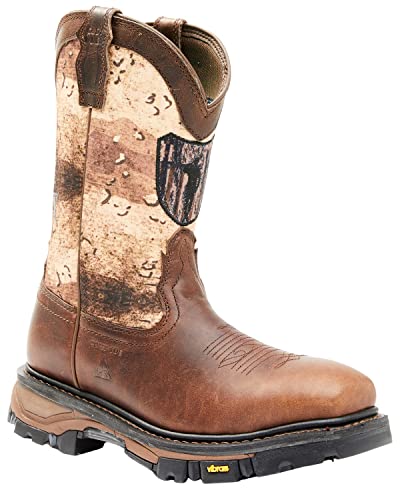
The Camo Flag Decimator is the only option here that combines a composite toe with an explicitly wide size, 8 EE. Its Tyche leather upper, antimicrobial sock and waterproof bootie distinguish its construction, while the 11-inch shaft matches the taller pull-on designs. Cody James says the layered cushioning and TPU support components add rebound, shock attenuation and torsional stability. The size is a limitation: this particular option is listed in size 8 EE, so buyers needing another size should consider a different model rather than assuming the same fit is available.
Bottom line: Choose this if you need the size 8 EE and want a waterproof bootie.
Cody James 10-Inch Disruptor Chill Zone

The Disruptor Chill Zone is the only soft-toe option among these five, which makes it relevant where a safety toe is not required. It has a 10-inch full-grain leather upper, removable comfort insole and single-stitched welt. Cody James says its Ase7 design flexes during movement and reduces shaft tension and ankle pressure. Unlike the Decimator boots and Xero Lite, this model has no safety toe feature in the specifications, so it is not the right choice for a job that requires protective toe footwear. Its pull-on construction also differs from the lace-up option.
Bottom line: Pick this for a soft toe where workplace rules do not require toe protection.
Cody James 6.5-Inch Xero Lite Moc

The Xero Lite is the short-shaft choice, at 6.5 inches, and the only lace-up design in this group. Its composite safety toe and non-marking, slip-resisting rubber outsole distinguish it from the soft-toe Disruptor and tall pull-on Decimators. Cody James says the Xero Gravity Air Control insole provides shock absorption and airflow along with odor, temperature and moisture control. The shorter shaft provides less leg coverage than the 10- and 11-inch boots, so compare coverage needs before choosing it for work around rough materials or equipment.
Bottom line: Choose this if you want a shorter lace-up boot with a composite safety toe.
How to choose Cody James work boots
Choose first by workplace hazard, because toe protection and puncture resistance address different risks. A safety toe protects the toe area from impact or compression; a puncture-resistant insole is a separate underfoot feature and does not replace a safety toe. These five options include composite or Nano composite toes, one soft-toe boot, and two models with puncture-resistant wording. If your employer requires a particular safety certification or rating, verify that requirement before ordering; the features here do not establish a certification. For wet conditions, prioritize a model with a waterproof bootie, but remember that waterproof construction does not make a boot suitable for immersion. Then compare shaft height and closure style against the movement and coverage your job calls for.
Boot shaft height and closure affect fit
Shaft height is measured from the sole area up the boot, and these choices range from 6.5 to 11 inches. A shorter shaft can feel less enclosing around the lower leg, while a taller pull-on boot covers more of it; neither measurement alone determines comfort. Lace-up boots let you adjust tension across the instep, while pull-on boots depend more on the opening and foot shape for a secure fit. Use the size and width printed for the exact model, not another boot in the same brand: this group includes D and EE widths and a specific size 8 EE option. If your toes touch the front when standing or your heel slips substantially while walking, try another size or shape.
Work boot features compared by job need
Different protective features solve different problems, so choose the combination that matches the hazard rather than treating one feature as a substitute for another. A waterproof bootie targets water entry; a puncture-resistant insole targets sharp objects beneath the foot; slip-resisting outsole wording concerns traction. The maker does not give a standardized safety rating, so match any workplace requirement to the exact required marking before purchase. This table separates the main stated distinctions for these models.
| Job need | Feature to prioritize | Model distinction |
|---|---|---|
| Water exposure | Waterproof bootie | Decimator Nano options |
| Sharp hazards underfoot | Puncture-resistant insole or puncture-resisting construction | Decimator Nano options |
| Shorter lace-up style | 6.5-inch shaft and laces | Xero Lite |
| No required safety toe | Soft toe | Disruptor Chill Zone |
How to get a reliable work boot fit
Measure both feet while standing, since foot length and width can differ under body weight. Try boots with the socks you wear on the job and leave room for toes to move without letting the heel lift excessively. Width labels matter: D and EE indicate different width options, but the boot’s toe shape also affects how much room the front feels like it has. A broad square toe is not a substitute for selecting the correct width. For lace-up styles, tighten from the lower eyelets upward to distribute pressure; for pull-ons, make sure the heel holds without pinching the instep. Break in new boots gradually, and stop wearing them if a fit problem creates pain or instability.
Frequently Asked Questions
What is the difference between a composite toe and a Nano composite toe?
Both terms identify nonmetal toe-cap types, but the maker does not define their material composition or performance rating. If a job requires a particular safety standard, verify the marking on the exact boot before relying on either label.
Does a waterproof work boot protect against every wet condition?
No; a waterproof bootie is intended to limit water entry, but it does not make a boot suitable for immersion or guarantee a dry foot in every condition. Water entering over the top can still soak socks and interiors.
How much room should work boots leave at the toes?
Leave enough space for toes to move without touching the front when standing or walking. Try boots late in the day, when feet may be larger, and use your normal work socks.
Can a puncture-resistant insole replace a safety toe?
No; the insole addresses hazards from below the foot, while a safety toe covers the toe area. A workplace requiring both hazards to be addressed may require both features.
When should I replace work boot insoles?
Replace an insole when it is compressed, torn, or no longer sits securely, rather than relying on a fixed mileage interval. Inspect the outsole and upper at the same time for worn tread, separation, or damage that could affect footing.