
Takane Quartz No 0 Jewels: 3 Models Compared

For a Takane quartz clock movement, choose Takane Quartz 7/16-Inch Shaft if your dial is up to 1/4 inch thick and you want to select the hands. Quartz movements use an electronic oscillator and motor rather than a mechanical balance, so jewel count is generally not a useful way to compare them.
Choose a different movement if your clock needs hands longer than 6 inches or a high-torque drive; confirm shaft length and dial thickness before ordering.
We earn a commission if you buy through links on this page. As an Amazon Associate I earn from qualifying purchases. Products are compared on manufacturer specifications, not hands-on testing.
- Best overall: Takane Quartz 7/16-Inch Shaft – Its 7/16-inch threaded shaft fits dials up to 1/4 inch thick, and hands are selectable.
- Best for hands up to 6 inches: Takane Mini Quartz Movement – The maker says the mini movement can run hands up to 6 inches.
- Best for a short-shaft fit: Takane Mini Quartz Short Shaft – It is identified as a short-shaft model for dials up to 1/4 inch thick.
| Product | Best for | Threaded shaft | Hand limit | Case size | Shop |
|---|---|---|---|---|---|
| Takane Quartz 7/16-Inch Shaft | Selectable hands | 7/16 in | — | 2-1/8 × 2-1/8 in | Check Price on Amazon |
| Takane Mini Quartz Movement | Hands to 6 inches | 7/16 in | Up to 6 in | 2-1/8 × 2-1/8 × 5/8 in | Check Price on Amazon |
| Takane Mini Quartz Short Shaft | Thin dials | Short shaft | Up to 6 in | 2-1/8 × 2-1/8 × 5/8 in | Check Price on Amazon |
Takane quartz clock movements
Compare shaft fit, hand capacity, and case dimensions before choosing a movement for a clock repair.
Takane Quartz 7/16-Inch Shaft
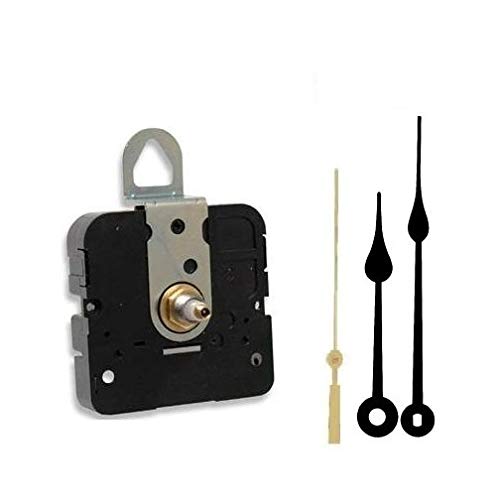
Takane Quartz 7/16-Inch Shaft stands apart with a clearly specified dial fit: its 7/16-inch threaded shaft is intended for dials up to 1/4 inch thick. The kit includes mounting hardware and a wall hanger, and the hand style can be selected. Its case measures 2-1/8 by 2-1/8 inches, so allow room behind the dial as well as at the shaft opening. The maker says it is made in the USA and includes a one-year guarantee.
Bottom line: Pick this when the dial is no more than 1/4 inch thick and hand choice matters.
Takane Mini Quartz Movement

Takane Mini Quartz Movement is the mini option with an explicit hand-capacity figure: the maker says it can run hands up to 6 inches. Its case is 2-1/8 inches wide and high, and 5/8 inch deep; the shaft diameter is 5/16 inch, with a 7/16-inch threaded shaft length in the selected configuration. Mounting hardware is included, and hands are free if requested with the order. This movement suits repairs where hand reach is the deciding factor.
Bottom line: Choose this when you need a mini movement specified for hands up to 6 inches.
Takane Mini Quartz Short Shaft
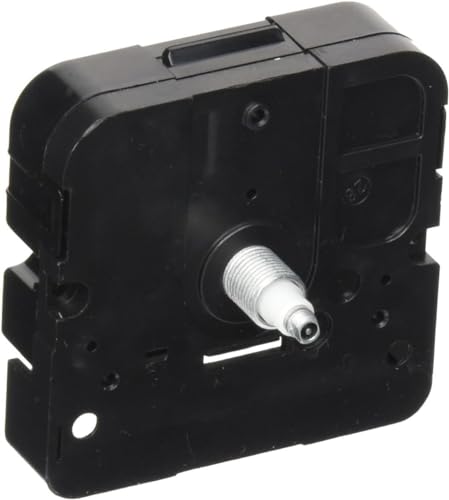
Takane Mini Quartz Short Shaft is the short-shaft mini variant, identified for dials up to 1/4 inch thick. Like the other mini option, the maker says it can run hands up to 6 inches, and the case measures 2-1/8 inches wide and high by 5/8 inch deep. It includes mounting hardware and a metal wall hanger; hands are included if requested. Its black finish distinguishes it from the gold-colored mini option. Choose it for a thin dial when the shaft configuration suits the existing clock.
Bottom line: Pick this for a dial up to 1/4 inch thick when a short-shaft version is needed.
How to choose a quartz clock movement
Start with the dial thickness and the hand length, not a jewel count. Quartz movements keep time with an electronic oscillator and drive the hands with a motor; jewel counts are chiefly a measure used for mechanical watch and clock movements. Measure the dial at the mounting hole, then compare that measurement with the threaded shaft length. The threaded portion must pass through the dial and leave enough room for the washer and retaining nut. Hand length is usually measured from the center hole to the tip, so use that convention when matching a hand limit.
A practical rule is to choose a model explicitly rated for the hand length you need; for hands longer than 6 inches, do not assume a mini movement can drive them. Also measure the space behind the dial so the case will clear the clock body.
Matching shaft length to dial thickness
Match the threaded shaft to the dial thickness before installing a replacement. A shaft that is too short may not leave enough thread for the washer and nut, while excess shaft length can leave the movement loose unless the hardware clamps the dial securely. Dial thickness is only one part of fit: the mounting hole must also accommodate the shaft diameter, and the case must clear the back of the clock.
Use this check before choosing a configuration:
| Dial measurement or need | What to verify | Useful decision |
|---|---|---|
| Up to 1/4 inch thick | Threaded shaft and included hardware reach | Compare the specified shaft configuration |
| Hands up to 6 inches | Movement’s hand-capacity limit | Choose a model rated for that reach |
| Hands longer than 6 inches | Torque and hand clearance | Use a movement explicitly suited to longer hands |
Do not treat total shaft length and threaded shaft length as interchangeable. The mounting hardware needs usable thread, not just a long shaft overall.
Quartz movement versus jewel count
A quartz movement is regulated by an electronic oscillator, so jewel count is not the main selection measure. In mechanical movements, jewels reduce friction at pivot points; quartz designs rely on an electronic timebase and motor instead. For a quartz replacement, compare the shaft, case dimensions, hand capacity, and mounting arrangement first.
Quartz movements commonly use a small battery to power the oscillator and motor, but battery format and operating life depend on the movement. Do not infer either from the word “quartz.” Hand clearance matters too: hands can rub each other or the dial if they bend or are mounted at the wrong height. Keep the hands parallel and check their travel through a full rotation before closing the clock.
Installing replacement clock hands safely
Install hands with the movement supported and the clock disconnected from its battery. Press the hour hand onto its shaft without forcing the movement, then attach the minute hand and secure it using the design’s retaining hardware. The second hand, when used, fits the small center shaft. A hand that is bent or rubbing can stop or disrupt timekeeping even when the movement is correctly sized.
After assembly, rotate the hands through a full 12-hour cycle and check for contact with one another, the dial, and any cover. Keep the mounting nut snug rather than overtightened, which can damage the dial or mounting threads. If the shaft, hand attachment, or dial hole does not match, stop and confirm the required dimensions before applying force.
Frequently Asked Questions
Do quartz clock movements have jewel counts?
Quartz clock movements are generally compared by fit and hand capacity rather than jewel count. Jewels are chiefly used to reduce friction at pivots in mechanical timepieces.
How do I measure clock hand length?
Measure from the center mounting hole to the hand tip, not from end to end. Check the movement’s maximum hand reach against that center-to-tip measurement.
How thick can the dial be for these Takane movements?
Two of the compared configurations are identified for dials up to 1/4 inch thick. Measure the dial at the mounting hole and confirm the threaded shaft leaves room for mounting hardware.
Can a mini quartz movement run hands longer than 6 inches?
The mini models here are specified for hands up to 6 inches. For longer hands, choose a movement explicitly rated for the required reach rather than assuming the mini unit has enough drive.
Why do replacement clock hands rub after installation?
Hands can rub when bent, mounted at the wrong height, or pressed too close together. Check their clearance through a full rotation before closing the clock.