
Best Electronic Mouse Repellent: 3 Plug-In Options

Upgraded Ultrasonic Indoor Repeller, 6-Pack suits most people because its six-device pack uses 10–65 kHz multi-frequency ultrasound for indoor pest deterrence. Choose High Power Garage Rodent Repellent instead if you want a device that also uses flashing light and simulated cat sounds, or Silent Ultrasonic Indoor Repeller, 6-Pack if you want a six-pack marketed as silent.
We earn a commission if you buy through links on this page. As an Amazon Associate I earn from qualifying purchases. Products are compared on manufacturer specifications, not hands-on testing.
- Best overall: Upgraded Ultrasonic Indoor Repeller, 6-Pack – Six devices and 10–65 kHz multi-frequency ultrasound suit coverage across indoor areas.
- Best for added cues: High Power Garage Rodent Repellent – Adds flashing light and simulated cat sounds alongside ultrasonic waves.
- Best for silent operation: Silent Ultrasonic Indoor Repeller, 6-Pack – A six-pack using 10–65 kHz ultrasound is marketed as silent.
| Product | Best for | Pack size | Ultrasonic range | Shop |
|---|---|---|---|---|
| Upgraded Ultrasonic Indoor Repeller, 6-Pack | Multi-room setup | 6 devices | 10–65 kHz | Check Price on Amazon |
| High Power Garage Rodent Repellent | Garage deterrence | 1 device | — | Check Price on Amazon |
| Silent Ultrasonic Indoor Repeller, 6-Pack | Quiet multi-room use | 6 devices | 10–65 kHz | Check Price on Amazon |
Electronic Mouse Repellents Compared
Compare the device count, ultrasonic frequency and extra deterrents before choosing an indoor setup.
Upgraded Ultrasonic Indoor Repeller, 6-Pack
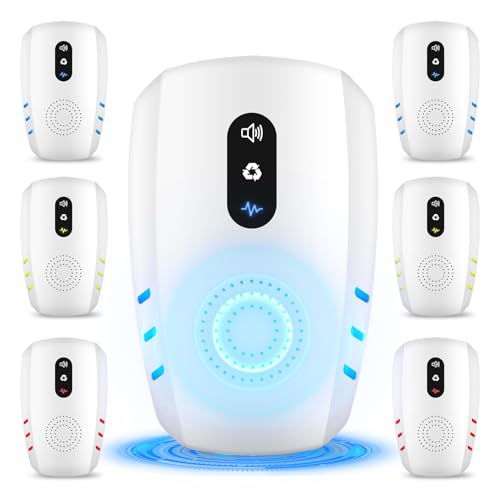
The six-device pack distinguishes this option from the single-packaged alternative and the larger garage-oriented unit. Each plug-in repeller uses multi-frequency ultrasound from 10 to 65 kHz, and the maker says it is intended to help deter mice and several other indoor pests. It suits buyers planning to place units in multiple rooms rather than rely on one outlet location. The product is also framed as a no-mess alternative to traps and sprays, but ultrasound is not a substitute for sealing entry points or removing food and nesting access.
Bottom line: Choose this for a multi-room indoor setup where several outlet locations can be used.
High Power Garage Rodent Repellent

The garage-oriented device adds flashing light and simulated cat sounds to ultrasonic waves, unlike the ultrasound-only options. The maker claims coverage up to 6,000 square feet, though obstacles and room layout can affect how sound reaches enclosed areas. Its guidance recommends combining the device with integrated pest management, including closing entry points and keeping the space clean. This is the clearest match for buyers seeking additional deterrent cues in a garage, workshop or similar indoor space. The large stated coverage figure should not be treated as proof that one unit will reach every divided room.
Bottom line: Pick this if flashing light and simulated cat sounds matter for a garage or workshop.
Silent Ultrasonic Indoor Repeller, 6-Pack

The silent positioning sets this six-pack apart for buyers who prefer an ultrasonic-only device without the flashing-light and sound features of High Power Garage Rodent Repellent. Its multi-frequency system spans 10 to 65 kHz, and the maker says it is designed to encourage mice and other pests to leave treated areas. The plug-in format is intended for indoor use in spaces such as a home, office or garage. A limitation is that the pack’s device-level room coverage is not given, so buyers should not assume that six units guarantee a particular square-foot reach.
Bottom line: Choose this for multiple indoor outlets when a silent-marketed ultrasonic setup is preferred.
How electronic mouse repellents work
Electronic repellents use sound or other cues to make an area less appealing; they do not physically block mice. Ultrasonic sound is above the usual human hearing range of about 20 kHz, though lower frequencies near 10 kHz can be audible to some people. Sound travels line-of-sight more readily than through walls, so separate rooms generally need their own outlet device. Treat electronic deterrents as one part of pest exclusion: seal openings around pipes and foundations, remove food access, and reduce clutter where rodents can nest.
Choosing coverage for rooms and garages
Choose by the layout and outlet locations, not only a square-foot claim. A single open room with an unobstructed outlet can suit one unit, while separate rooms, cabinets and walls interrupt sound and call for placement in each area. High Power Garage Rodent Repellent gives a maker-claimed coverage figure of up to 6,000 square feet, but that claim does not guarantee reach through partitions. A useful decision rule is to place a unit in every enclosed room where activity is suspected rather than expecting one device to cover a whole house. Keep devices where air can circulate around them and avoid blocking the outlet face with furniture or storage.
Ultrasonic versus multi-cue devices
Ultrasonic-only devices keep the setup simple, while a multi-cue unit adds visible or audible stimuli. The comparison below can help match the device style to the space; deterrents work best alongside sanitation and exclusion.
| Device style | Useful when | Trade-off |
|---|---|---|
| Ultrasonic only | You want plug-in sound deterrence in indoor rooms | Walls and furnishings limit sound reach |
| Ultrasound plus light and sound | You want multiple cues in an open garage or work area | Flashing light and simulated sounds may be noticeable |
| Multiple plug-in units | Activity occurs across separate rooms | Requires accessible outlets in each target area |
Using electronic repellents safely
Plug-in repellents are electrical devices, so keep them dry, uncovered and away from sinks, damp floors and flammable materials. Do not use an outlet that is loose, damaged or overloaded with adapters. Ultrasound may be audible to pets such as rodents, rabbits and some dogs, so observe animals and relocate the device if it causes distress. A repellent cannot resolve an active infestation on its own: food should be stored in sealed containers, leaks repaired, and gaps sealed with rodent-resistant materials such as metal mesh combined with sealant.
Frequently Asked Questions
Do ultrasonic mouse repellents work through walls?
Ultrasonic sound is reduced by walls and other solid barriers, so one device should not be expected to cover multiple closed rooms. Put a unit in each separate room with suspected activity and pair it with entry-point sealing.
Can people hear ultrasonic pest repellers?
Most adults hear sounds up to roughly 20 kHz, while the upper limit is often lower with age; a 10–65 kHz device can include frequencies some people may hear. If a high-pitched tone is noticeable, try another outlet location or stop using that unit.
Are electronic mouse repellents safe around pets?
Pet sensitivity varies, and small mammals such as pet mice, rats and rabbits may be especially affected by ultrasonic sound. Keep the device away from their enclosures and discontinue use if an animal shows signs of distress.
What should I do along with an electronic repellent?
Seal gaps around pipes and foundations, store food in closed containers and remove nesting clutter. Mice can enter through openings around 1/4 inch wide, so inspect small cracks as well as larger gaps.
How many plug-in repellents should I use in a house?
Use at least one device in each separate enclosed room where activity occurs, because walls block much of the sound. A six-pack offers several units, but the number needed depends on the house layout and accessible outlets.