
Most Comfortable Dexcom G7 Overpatches Compared

Jinyusega G7 & Stelo Overpatches is the best fit for most people seeking comfortable Dexcom G7 overpatches because its elastic fabric is described as smooth and stable, and its backing is designed for easier removal. Choose another option if you want a clear cover, a 40-count pack or medical-grade adhesive.
Overpatches are adhesive covers placed over a continuous glucose monitor sensor to help hold it in place and protect it during daily activity.
We earn a commission if you buy through links on this page. As an Amazon Associate I earn from qualifying purchases. Products are compared on manufacturer specifications, not hands-on testing.
- Best overall: Jinyusega G7 & Stelo Overpatches – Elastic fabric and an easy-peel backing prioritize a smooth fit and simpler application.
- Best for sensitive skin: Lexcam Clear G7 Overpatches – The clear patch is latex-free and described as hypoallergenic.
- Best for extra coverage: Comfycheer Dexcom G7 Overpatches, 40 Count – Its hole-free design covers the sensor center, and the pack contains 40 patches.
| Product | Best for | Material | Pack size | Design | Shop |
|---|---|---|---|---|---|
| Jinyusega G7 & Stelo Overpatches | Easy application | Nano 360° elastic fabric | 20 patches | Easy-peel backing | Check Price on Amazon |
| Lexcam Clear G7 Overpatches | Sensitive skin | Clear adhesive | 20 patches | Latex-free | Check Price on Amazon |
| Jinyu-Sega Black Sports Patches | Active routines | Nano 360° elastic fabric | 20 patches | 0.02 in thick | Check Price on Amazon |
| Comfycheer Dexcom G7 Overpatches, 40 Count | More patches | Breathable woven fabric | 40 patches | Hole-free center | Check Price on Amazon |
| Skin Grip Tan G7 Overpatches | Medical-grade adhesive | Breathable adhesive | 20 patches | Pre-cut fit | Check Price on Amazon |
Dexcom G7 overpatches for comfort
Compare the material, application features and coverage style to find a comfortable fit for your routine.
Jinyusega G7 & Stelo Overpatches

For a simpler solo application, this set has an easy-peel backing and Nano 360° elastic fabric. It includes 20 patches in five patterns, with a 2.95-inch diameter, and is made for Dexcom G7 and Stelo sensors. The fabric is described as smooth and stable, which may suit people who want a flexible cover rather than a rigid-feeling patch. Its main limitation is the patterned design: shoppers who prefer a clear or single-color cover should consider another style.
Bottom line: Choose this set if easier application and flexible fabric matter most.
Lexcam Clear G7 Overpatches
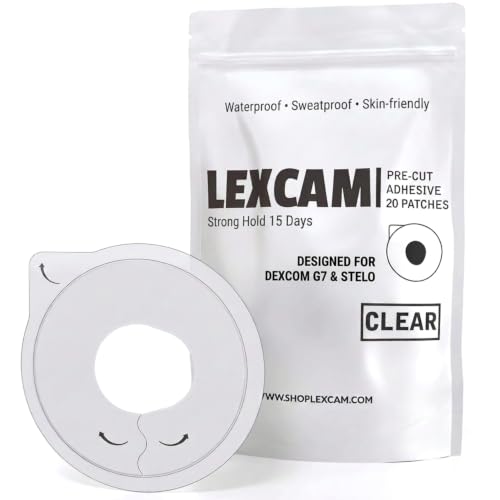
For a transparent cover, this Lexcam option is clear, latex-free and described as hypoallergenic. The pack has 20 patches and is designed for Dexcom G7 and Stelo sensors, making it a fit for people who want the cover to be less visually prominent. The maker describes application and wear as comfortable, but the available material information does not identify a fabric type, unlike elastic or woven options. Adhesive reactions are still possible, so anyone with sensitive skin should test a small piece first.
Bottom line: Pick this if you want a clear, latex-free cover and can patch-test the adhesive.
Jinyu-Sega Black Sports Patches

For sports and movement, this black Jinyu-Sega patch uses Nano 360° elastic fabric and is 0.02 inch thick. The maker says it is designed for activities including gym workouts, yoga, cycling and swimming, and that it can remain secure through a sensor’s 14-day lifespan. The 20-count pack suits buyers who want a single-color option geared toward active use. Its black color is less discreet than a transparent cover, so it may not suit people prioritizing an unobtrusive look.
Bottom line: Choose it for active use if a black, elastic-fabric cover fits your preference.
Comfycheer Dexcom G7 Overpatches, 40 Count

For buyers who want more covers in one pack, Comfycheer includes 40 patches and uses breathable woven fabric. Its hole-free center is intended to cover the sensor and help shield it from everyday bumps and scratches; the maker also describes the adhesive as suitable for showers, workouts and swimming. That full-center coverage differs from designs that leave a hole around the sensor.
Bottom line: Pick this if a hole-free center and a 40-count pack are priorities.
Skin Grip Tan G7 Overpatches

Skin Grip distinguishes itself with a pre-cut fit and breathable adhesive described as 100% medical-grade. The tan 20-pack is designed for Dexcom G7 and Stelo sensors, and the maker says the cover can provide 15 or more days of grip and withstand water and sweat. The tan color offers an alternative to clear or black patches.
Bottom line: Choose this for a pre-cut tan cover with breathable medical-grade adhesive.
How to choose comfortable Dexcom G7 overpatches
Comfort starts with the material and the way the adhesive meets your skin. Elastic fabric can move with the body, while woven fabric is another breathable option; clear adhesive patches favor a low-visibility look. A pre-cut cover can simplify placement, and peel tabs or easy-peel backing can make application and removal less fiddly. If you are sensitive to adhesives, choose a product that explicitly identifies a relevant property, such as latex-free, and test a small patch area first. Stop using an overpatch if you develop persistent irritation, and ask a clinician about recurring skin reactions. For swimming or sweaty activity, favor an option whose maker specifically describes water or sweat resistance.
Dexcom G7 overpatch fit and coverage
Fit matters because an overpatch should secure the sensor without obstructing the sensor opening or interfering with its placement. A 2.95-inch diameter provides a concrete reference for one design, but body shape, placement and the sensor’s surrounding adhesive area affect how much skin the cover spans. Choose a hole-free center only when the product is designed to cover the sensor face; do not cut or layer material over sensor openings unless the device maker permits it. Smooth skin, fully dried after washing, helps adhesive contact. Avoid lotion or oil at the application site, which can weaken adhesion.
Overpatch materials and comfort features compared
Material and application features point to different comfort priorities. Use this guide to match the construction to your preference rather than treating one material as universally more comfortable.
| Need | Feature to look for | Comfort consideration |
|---|---|---|
| Flexibility during movement | Elastic fabric | Moves with the skin |
| Breathable cover | Woven fabric | Allows airflow through fabric |
| Low-visibility appearance | Clear cover | Less visually prominent |
| Simpler placement or removal | Pre-cut fit or peel backing | Can reduce handling steps |
Adhesive strength and skin tolerance are separate concerns: a firm hold does not guarantee that an adhesive will suit every person. Replace a cover if edges lift enough to catch on clothing, and avoid pulling it off quickly because that can irritate skin.
Applying and removing an overpatch safely
Apply an overpatch to clean, dry skin and press it down gently, especially around the edges. Skin oils, lotion and moisture can compromise adhesion, so allow the site to dry completely after cleaning and avoid applying immediately after a shower. Leave the sensor’s opening and any device-specific clearance unobstructed unless the overpatch is made for full coverage. To reduce skin stress during removal, loosen the adhesive gradually rather than yanking; adhesive remover may help, but check that it is suitable for your skin and device. Do not use an overpatch to hide a sensor that is already loose or damaged; follow the sensor maker’s guidance for replacing or troubleshooting it.
Frequently Asked Questions
How often should I replace a Dexcom G7 overpatch?
Replace an overpatch when its edges lift, it becomes soiled or it no longer holds securely. A sensor’s wear period and an overpatch’s wear period are not necessarily the same, so do not assume a cover lasts as long as the sensor.
Can I swim while wearing a Dexcom G7 overpatch?
Some covers are described by their makers as waterproof or suitable for swimming, but that does not make every overpatch appropriate for water. Dry the cover after swimming and replace it if the edges lift or water compromises its hold.
How can I remove an overpatch without irritating skin?
Peel slowly and keep the skin supported rather than pulling the patch straight up quickly. A skin-safe adhesive remover can help release stubborn edges; avoid solvents not intended for skin.
Should a Dexcom G7 overpatch have a hole in the center?
Choose a hole or hole-free design according to the cover’s intended fit and the sensor maker’s placement guidance. Never cover a sensor opening with a patch that is not designed for full-center coverage.
What should I do if an overpatch causes a rash?
Remove the patch if you develop persistent redness, itching or discomfort, and let the skin recover before applying another adhesive. Test a small area before trying a different adhesive, and seek medical advice for severe or recurring reactions.