
Socks to Wear With Water Shoes: 3 Fits Compared

ULTRACEN Women’s Ultra-Thin No-Show Socks suits most people wearing water shoes because its ultra-thin no-show design adds little bulk. Choose Janedream Water Sports Dive Socks for water-sports foot coverage or Niorasen Men’s Waterproof Crew Socks when crew-height waterproofing below the cuff matters more than a low-profile fit.
We earn a commission if you buy through links on this page. As an Amazon Associate I earn from qualifying purchases. Products are compared on manufacturer specifications, not hands-on testing.
- Best overall: ULTRACEN Women’s Ultra-Thin No-Show Socks – Its ultra-thin no-show fit is designed to add no extra thickness in shoes.
- Best for water sports: Janedream Water Sports Dive Socks – Its water-sports design emphasizes foot coverage and protection from scratches and pricks.
- Best for wet-weather hikes: Niorasen Men’s Waterproof Crew Socks – Its waterproof barrier is intended to block rain and shallow splashes below the crew cuff.
| Product | Best for | Fit | Material | Water coverage | Shop |
|---|---|---|---|---|---|
| ULTRACEN Women’s Ultra-Thin No-Show Socks | Low-bulk shoe fit | No-show; size 8–11 | Quick-dry fabric upper; cotton sole | Quick-drying upper | Check Price on Amazon |
| Janedream Water Sports Dive Socks | Water-sports coverage | Sizes 26–44; adjustable | Nylon | Water-sports use | Check Price on Amazon |
| Niorasen Men’s Waterproof Crew Socks | Wet-weather hiking | Crew; men’s Large | Three-layer construction; cotton-blend lining | Waterproof below cuff | Check Price on Amazon |
Socks to Wear With Water Shoes
Choose by how much sock bulk, coverage and water exposure you expect while wearing your shoes.
ULTRACEN Women’s Ultra-Thin No-Show Socks

For a low-profile fit, these women’s no-show socks are the thinnest option here and are described as suitable for water shoes. The upper uses quick-drying, breathable fabric, while the sole is cotton; the heel strap is designed to help the sock stay in place. They suit warm-weather wear when you want a liner without extra thickness. The cotton sole is the tradeoff for frequent wet use, since it may not dry as quickly as the upper, so choose another option if the whole sock needs to dry quickly.
Bottom line: Pick these when a thin, low-cut liner matters more than fast drying across the entire sock.
Janedream Water Sports Dive Socks
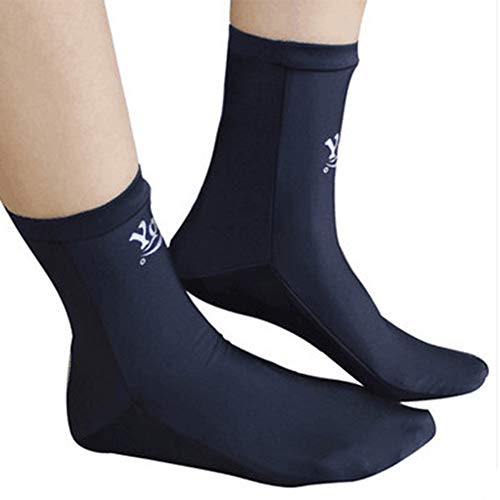
For water-sports coverage, these socks are presented for divers, body surfers and fishing, rather than as a discreet no-show liner. Their nylon material is described as warm, elastic and comfortable, with adjustable or buckle closure and protection from scratches and pricks. That makes them a better match when more foot coverage is useful around water. The sizing spans 26–44, so check that range against your foot size before ordering; buyers wanting an ultra-thin, nearly invisible sock may prefer a no-show style.
Bottom line: Choose these for water-sports use when adjustable coverage is more important than a minimal liner.
Niorasen Men’s Waterproof Crew Socks

Unlike the other options, these men’s crew socks are built around a waterproof barrier below the cuff, not a low-profile fit for water shoes. The maker says the breathable membrane helps block rain, wet grass, mud and shallow splashes, while a cotton-blend inner layer sits against the skin. They suit hiking or walking in wet weather when your shoe has room for crew-height socks. They are not intended for deep or prolonged submersion, and water can enter over the cuff; choose a different sock for swimming or immersion.
Bottom line: Pick these for wet-weather walks when crew coverage and a below-cuff barrier are the priority.
How to Choose Socks for Water Shoes
Choose the sock by fit first: a thin liner is the better match when a close-fitting water shoe has little spare room. A thicker or taller sock can change the shoe’s fit, and extra fabric can bunch at the heel or toes. For warm weather and short outings, a quick-drying upper is useful; for cooler water, added coverage can be more comfortable, but it does not make a sock suitable for deep immersion. Match the sock’s intended use to your activity: water-sports socks for water-focused wear, or waterproof hiking socks for rain and shallow splashes below the cuff. If a shoe already feels snug barefoot, choose a thin no-show style rather than sizing up a sock and hoping the shoe remains secure.
Water-Sports Socks Versus Waterproof Hiking Socks
Water-sports socks and waterproof hiking socks solve different problems: one emphasizes foot coverage around water, while the other is designed to block wet-weather exposure below a cuff. A waterproof membrane does not make a crew sock a swimming sock; water can enter at the top, and prolonged submersion is outside its use. A low-cut liner adds less coverage but is easier to pair with close-fitting shoes. Use this distinction to narrow the style before considering fabric or color.
This quick guide matches the sock style to the exposure you expect.
| Use | Style to consider | Key fit check |
|---|---|---|
| Snug water shoes | Thin no-show liner | Heel stays in place |
| Water-sports foot coverage | Water-sports sock | Size range fits your foot |
| Rain or shallow splashes | Waterproof crew sock | Water stays below cuff |
Fit and Drying in Water Shoes
A sock should fit smoothly without folding at the heel, toes or arch; folds create friction inside a shoe. With less than about a finger-width of spare room at the toe, choose a thin liner rather than a thicker sock. Cotton can retain moisture, while synthetic quick-drying fabrics are generally more suitable when frequent drying matters; in a mixed-material sock, the slowest-drying section can affect the whole pair. Let socks dry fully between wears, and rinse away sand or grit after beach use because particles can rub between the foot and shoe. Water shoes can also hold water, so remove and dry both the shoe and sock after wet use.
When Waterproof Socks Are Not Enough
Waterproof socks are for keeping wet-weather water out below their cuff, not for making feet watertight during swimming. Even a waterproof barrier can be bypassed when water runs over the top, and wet fabric can remain against the skin. For shallow splashes, check that the cuff sits above the expected waterline; for immersion or repeated water entry, choose gear designed for that activity instead. Rinse sand and debris from socks promptly, and stop wearing a pair if seams, fabric or elastic are damaged, since fit and coverage can change. A snug shoe-and-sock combination should still let toes move freely rather than compressing the foot.
Frequently Asked Questions
Can you wear socks with water shoes?
Yes, socks can reduce direct rubbing, but they also take up room inside a close-fitting shoe. Choose a thin liner if the shoe has little spare space, and make sure your toes can still move freely.
Can waterproof hiking socks be submerged?
No, waterproof hiking socks designed to protect below the cuff can let water enter over the top. Avoid deep or prolonged submersion and use gear intended for swimming or immersion.
How tight should water shoe socks fit?
Water shoe socks should lie flat without bunching, while leaving room for toes to move. If the shoe has less than about a finger-width of toe space, choose a thinner sock.
How do you keep sand from rubbing inside water shoes?
Rinse sand from socks and shoes after beach use, since grit trapped against the foot can rub during walking. Let both dry fully before the next wear.