
Amy Howard One-Step Paint: Colors Compared for Furniture

For a larger furniture project, Amy Howard One-Step Paint, Black, 32 oz is the Amy Howard One-Step Paint choice, with a 32-ounce container; Amy Howard One-Step Paint, French Blue, 16 oz offers the same chalk-based paint in French Blue at 16 ounces. Choose Amy Howard One Hour Miracle Paint, Barnboard, 32 oz instead if you want a water-based enamel with an eggshell finish rather than chalk-based paint.
One-step paint is intended to reduce preparation steps, but surface condition still matters: test adhesion in a hidden spot, especially on slick laminate or metal.
We earn a commission if you buy through links on this page. As an Amazon Associate I earn from qualifying purchases. Products are compared on manufacturer specifications, not hands-on testing.
- Best overall: Amy Howard One-Step Paint, Black, 32 oz – The 32-ounce black chalk-based paint provides more paint than the 16-ounce color option.
- Best for French Blue: Amy Howard One-Step Paint, French Blue, 16 oz – Its 16-ounce container is the French Blue option.
- Best for an eggshell finish: Amy Howard One Hour Miracle Paint, Barnboard, 32 oz – This water-based enamel has a scrubbable eggshell finish.
| Product | Best for | Color | Container size | Paint type | Shop |
|---|---|---|---|---|---|
| Amy Howard One-Step Paint, Black, 32 oz | Larger black projects | Black | 32 fl oz | Chalk-based | Check Price on Amazon |
| Amy Howard One-Step Paint, French Blue, 16 oz | French Blue accents | French Blue | 16 fl oz | Chalk-based | Check Price on Amazon |
| Amy Howard One Hour Miracle Paint, Barnboard, 32 oz | Scrubbable eggshell finish | Barnboard | 32 oz | Water-based enamel | Check Price on Amazon |
Amy Howard One-Step Paint Compared
Compare the chalk-based colors with a related enamel option by finish, color, and container size.
Amy Howard One-Step Paint, Black, 32 oz

The 32-ounce black container is the largest option here for a single color. Amy Howard says this chalk-based paint can be applied to furniture and cabinetry without stripping, sanding, or priming, and names wood, laminate, and metal among its possible surfaces. That makes it a fit for a larger piece or several coordinated projects when black suits the room. Its limitation is color and finish: it is black chalk-based paint, not the French Blue shade or the eggshell enamel option. Test a small, inconspicuous area first if the surface is slick or coated.
Bottom line: Choose it for a larger project that calls for black chalk-based paint.
Amy Howard One-Step Paint, French Blue, 16 oz
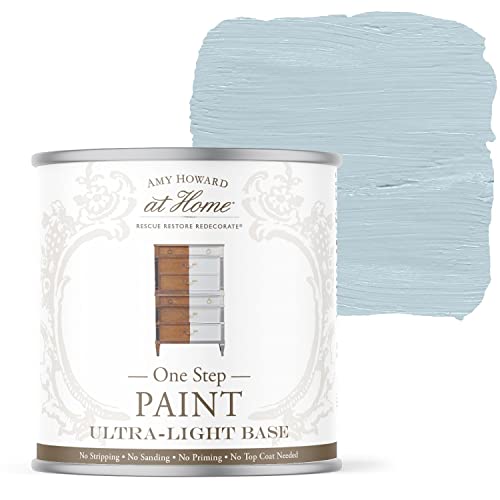
French Blue distinguishes this 16-ounce option from the larger black container. Amy Howard says the chalk-based formula is intended for furniture and cabinetry and can be used on wood, laminate, and metal without stripping, sanding, or priming. Its smaller container is a practical match for a single accent piece or a limited color application, while a project requiring more coverage may call for a larger quantity. This is not the water-based enamel choice: select it when the chalk-based finish and blue color are the priorities, and check adhesion on a hidden area before coating the whole piece.
Bottom line: Pick it for a small furniture project where French Blue is the desired color.
Amy Howard One Hour Miracle Paint, Barnboard, 32 oz

The Barnboard One Hour Miracle Paint is the finish alternative here: it is a water-based enamel with a scrubbable eggshell finish, rather than a chalk-based One-Step Paint. Amy Howard says the formula dries in one hour and is intended to work without stripping, sanding, or priming. The 32-ounce container makes it relevant for furniture or cabinetry projects where that enamel finish is a better fit. Its limitation is the finish type and color; it does not match a request specifically for black or French Blue chalk-based paint. Keep the room ventilated during application and drying.
Bottom line: Choose it when you prefer a scrubbable eggshell enamel to chalk-based paint.
How to choose furniture paint by finish
Choose by the finish you want, not just by the phrase “one-step.” Chalk-based paint and water-based enamel are different paint types: the two One-Step options here are chalk-based, while One Hour Miracle Paint is an enamel with an eggshell finish. EggshelI is a low-sheen finish, while gloss reflects more light; sheen affects how visible surface texture can be. For furniture that will be handled often, consider how easily the finish can be cleaned and what maintenance the paint maker recommends. Match the color to the room and the container size to the project, then test the paint on an inconspicuous patch. A small test is especially useful on laminate, metal, or a previously coated surface.
Surface prep for one-step furniture paint
“No sanding” does not mean a dirty or loose surface is ready to paint. Remove dust, wax, grease, and furniture polish first; residue can interfere with adhesion even when a paint is designed to skip stripping and priming. For smooth laminate or metal, brush a small test patch and let it dry before judging the bond. If the patch beads, peels, or scrapes away easily, stop and use a surface preparation method compatible with the substrate and paint. Do not dry-sand old coatings that may contain lead; homes built before 1978 can have lead-based paint, and renovation work may require lead-safe practices. Keep paint away from children and ventilate the work area.
Choosing between chalk-based paint and enamel
Chalk-based paint suits a project where its matte, chalky appearance is wanted; enamel is a different coating type and can offer a smoother, more washable surface depending on its formula. The options here make that distinction concrete: two colors are chalk-based, while Barnboard is a water-based enamel with an eggshell finish. “Scrubbable” is a maker claim, not a reason to scrub fresh paint; coatings need time to dry and harden. Use this guide to match project needs to finish type.
| Project need | Type to consider | What to confirm |
|---|---|---|
| Chalk-based look | Chalk-based furniture paint | Color and surface adhesion |
| Eggshell enamel finish | Water-based enamel | Drying and cure directions |
How much furniture paint to plan for
Container size is not the same as coverage: the area a can covers changes with surface texture, porosity, application method, and number of coats. These choices range from 16 to 32 ounces, but the specifications do not give a coverage figure, so estimate the furniture’s paintable area and use the maker’s coverage guidance before deciding how much to buy. A carved or highly textured piece has more surface area than its simple outside dimensions suggest. For a matching finish across several pieces, plan the color and quantity together rather than assuming one container will cover every project. Follow the container’s drying and recoat timing; dry-to-touch does not necessarily mean fully hardened.
Frequently Asked Questions
Can chalk-based paint go on laminate furniture?
Amy Howard says its chalk-based One-Step Paint can be used on laminate, but laminate surfaces vary in slickness and condition. Test an inconspicuous patch and check that it adheres after drying before painting the full piece.
How long should furniture paint dry before another coat?
Use the specific paint’s recoat directions because drying time varies by formula, coat thickness, temperature, and humidity. One Hour Miracle Paint is described by Amy Howard as drying in one hour, but that claim should not be applied to the chalk-based One-Step Paint.
Does furniture paint need sealing after application?
Some chalk-painted furniture projects use wax or another protective topcoat, but the right finish depends on the paint and intended wear. Check the paint maker’s directions before adding a topcoat, since an incompatible coating can alter color or adhesion.
How can I paint furniture without brush marks?
Use a suitable brush or a small foam roller and apply thin, even coats rather than trying to cover in one heavy pass. Brush marks are more likely on rough surfaces or when paint starts to dry before it is leveled.
Is sanding old painted furniture safe?
Old coatings can contain lead, particularly in homes built before 1978, so avoid dry sanding paint of unknown age. Use lead-safe renovation practices and applicable local requirements before disturbing an older coating.