
Best Liquid Seam Sealer for Vinyl Floors Compared

Mannington Low Gloss Seam Sealer Kit suits most buyers seeking liquid seam sealer for vinyl floors because its two-part formula is designed for low-gloss urethane-based wear layers and covers about 70 linear feet of seams per kit. Choose another product when the floor is Congoleum PVC sheet, or when you need a general floor coating rather than a seam treatment.
We earn a commission if you buy through links on this page. As an Amazon Associate I earn from qualifying purchases. Products are compared on manufacturer specifications, not hands-on testing.
- Best overall: Mannington Low Gloss Seam Sealer Kit – Designed for low-gloss urethane wear layers and covers about 70 linear feet of seams per kit.
- Best for Congoleum PVC: Congoleum SU80 Seam Sealer – Flexible water-based acrylic seals seams in Congoleum PVC sheet flooring, with about 50 linear feet of coverage.
| Product | Best for | Seam coverage | Formula | Pack size | Shop |
|---|---|---|---|---|---|
| Mannington Low Gloss Seam Sealer Kit | Low-gloss urethane | About 70 linear ft | Two-part | Kit | Check Price on Amazon |
| Tarkett Low Gloss Seam Sealer | Tarkett low-gloss | — | Two-part | Small kit | Check Price on Amazon |
| Congoleum SU80 Seam Sealer | Congoleum PVC | 50 linear ft | Water-based acrylic | 2 fl oz | Check Price on Amazon |
Liquid Seam Sealers for Vinyl Floors
Match the sealer to the flooring construction and seam job before choosing by coverage or package size.
Mannington Low Gloss Seam Sealer Kit
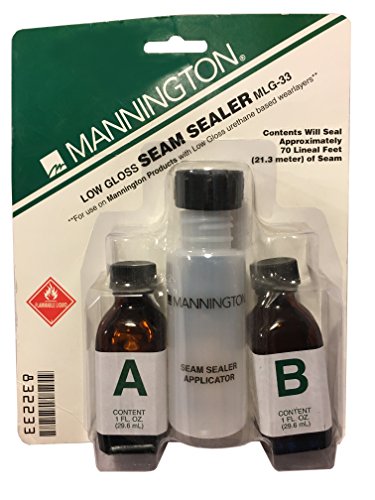
For low-gloss urethane-based wear layers, this kit is the most directly targeted choice among these seam sealers. The two-part system is intended to chemically weld and seal vinyl flooring seams, and the kit includes the components for that job. The maker says one kit seals approximately 70 linear feet. This fit matters most when the floor has the specified low-gloss wear layer; the product is not described for every vinyl construction, so identify the floor surface before selecting it.
Bottom line: Choose this when the floor has a low-gloss urethane-based wear layer and the project needs up to about 70 linear feet of seam coverage.
Tarkett Low Gloss Seam Sealer

Tarkett’s low-gloss seam sealer is distinguished by a kit sized for two uses, with each use calling for ½ ounce of Part A and Part B. That split portioning can suit a small repair or two separate seam jobs where a full kit’s approximate coverage is unnecessary. The product is named for low-gloss flooring, making it a more focused choice than a coating intended for broad floor protection.
Bottom line: Pick this for a small low-gloss seam job when two measured applications are sufficient.
Congoleum SU80 Seam Sealer
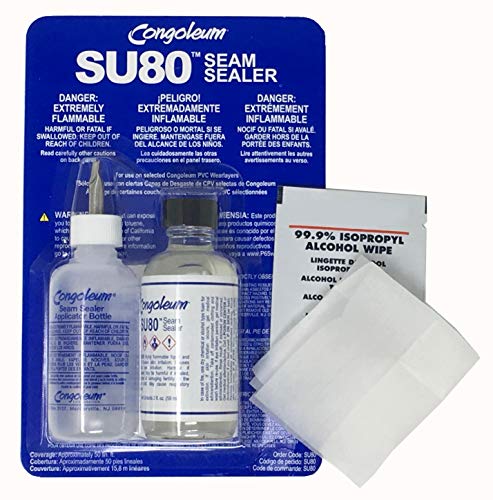
Congoleum SU80 is made specifically for seams in Congoleum PVC sheet flooring, including Forever Plus, Pacesetter, Prelude, and Forecast lines. Its flexible, water-based acrylic formula is intended to keep surface water and dirt from entering seams; the included applicator bottle dispenses the sealer, and wet excess can be wiped with a damp, clean cloth. Coverage is 50 linear feet. That named-product fit is its main boundary: buyers working on a different flooring construction should not treat the product as a universal vinyl sealer.
Bottom line: Choose this for a seam on one of the named Congoleum PVC sheet product lines.
How to choose liquid seam sealer for vinyl floors
Start with the floor’s construction, because seam sealers are not interchangeable across every vinyl surface. Low-gloss urethane wear layers point toward a product designed for that finish, while Congoleum PVC sheet seams call for the formulation specified for those lines. A general floor coating serves a different purpose and does not bond a seam. Next, estimate the seam length: about 70 linear feet and 50 linear feet are stated coverage figures for two options here, while other packages use a portion count or no length figure. Measure the seam in feet before buying; if you need more than a coverage figure, plan for another quantity rather than assuming extra yield.
Liquid seam sealer types and what they do
Seam sealers can chemically weld, bond, or flexibly cover the joint, while floor finish coatings protect the surface rather than closing the seam. A two-part kit combines Part A and Part B, so the mixing and application process differs from a squeeze-bottle acrylic. Water-based acrylic is described for flexible Congoleum PVC sheet seams, while solvent-free formulations may be intended for several sheet constructions. Use the table to separate a joint treatment from a surface coating and to match the construction before considering package convenience.
| Product type | Intended job | Fit cue |
|---|---|---|
| Two-part seam sealer | Seal or chemically weld a seam | Confirm the floor’s wear layer or manufacturer line |
| Water-based acrylic seam sealer | Seal a flexible sheet-floor seam | Match the named PVC product family |
| Floor sealer coating | Protect floor surface | Not a seam-bonding product |
Measure seam coverage before starting
Measure each joint along its length and add the totals to estimate the quantity needed. Coverage expressed in linear feet refers to seam length, not floor area: a room with 70 square feet of flooring could have far less or more than 70 feet of joints depending on sheet layout. Allow for the full seam run and avoid estimating only the visible damaged section when the seam treatment must continue along the joint. Package instructions determine how the materials are applied; in particular, two-part formulas require both components, while a squeeze applicator meters material directly at the seam. Keep excess wet sealer off the finish unless its cleanup method is confirmed.
Prepare vinyl seams and avoid common mistakes
Clean, dry, aligned seam edges are a better starting point than a joint containing dirt or moisture, which can interfere with a continuous seal. Do not substitute a surface finish for seam sealer: coatings intended to improve stain resistance or gloss protect the floor face rather than join sheet edges. Check the floor type and sealer compatibility before opening the package, especially when the floor has a specialized wear layer or belongs to a named product line. For a water-based acrylic product that allows damp-cloth cleanup, remove excess while it is still wet; once material cures, cleanup may be harder. Keep the work area ventilated and prevent foot traffic until the specific product’s cure guidance allows it.
Frequently Asked Questions
How do I measure a vinyl floor seam?
Measure the joint from end to end in feet and add each seam length for the total. Linear-foot coverage describes seam length, not room area.
Can floor sealer repair a vinyl seam?
No; a floor coating is meant to protect the surface, not bond sheet edges. Use a seam sealer matched to the floor construction for a joint that needs sealing.
Does liquid seam sealer work on every vinyl floor?
No; some formulas target low-gloss urethane wear layers, while others are specified for particular PVC sheet lines or wider sheet-goods categories. Confirm the floor construction before application.
How much seam sealer does a small repair need?
A small repair may use a fraction of a kit; one two-use product calls for ½ ounce each of Part A and Part B per use. Estimate the seam length first and use the package’s application directions.
When should wet seam sealer be cleaned up?
Clean wet excess promptly when the product’s method allows it; the Congoleum acrylic sealer permits wiping with a damp, clean cloth. Avoid letting excess spread onto the floor face.