
7-Watt LED Bulbs: Compare Brightness, Fit and Base

For a standard E26 lamp needing broad room light, FLSNT A19 7W Filament is the best fit here, with 800 lumens from a 7-watt A19 bulb. Choose LUXRITE A15 7W instead for an A15 shape or 3000K light; the C7 options are only 0.6 watts and suit decorative sockets, not ordinary 7-watt bulb replacements.
A 7-watt LED uses 7 watts of power; a C7 labeled “equivalent to 7W” uses 0.6 watts and is a much dimmer decorative bulb.
We earn a commission if you buy through links on this page. As an Amazon Associate I earn from qualifying purchases. Products are compared on manufacturer specifications, not hands-on testing.
- Best overall: FLSNT A19 7W Filament – A standard E26 A19 format delivers 800 lumens at 7 watts.
- Best for ceiling fans: LUXRITE A15 7W – The A15 shape is intended for ceiling fans and enclosed fixtures, with 600 lumens.
- Best for decorative strings: C7 E12 0.6W, 25-Pack – A 25-count pack of 0.6-watt C7 bulbs has an E12 base for decorative lighting.
| Product | Best for | Power | Light output | Base | Shop |
|---|---|---|---|---|---|
| FLSNT A19 7W Filament | General room lighting | 7 W | 800 lumens | E26 | Check Price on Amazon |
| LUXRITE A15 7W | Fan fixtures | 7 W | 600 lumens | E26 | Check Price on Amazon |
| Meconard C7 0.6W, 6-Pack | C7 string lights | 0.6 W | — | E12 | Check Price on Amazon |
| C7 E12 0.6W, 25-Pack | Bulk C7 lighting | 0.6 W | 50 lumens | E12 | Check Price on Amazon |
| NETEHA C7 0.6W, 6-Pack | Outdoor C7 strings | 0.6 W | 55 lumens | E12 | Check Price on Amazon |
7 watt LED bulbs compared
Start with actual wattage, then match bulb shape, brightness, color and base to the fixture.
FLSNT A19 7W Filament
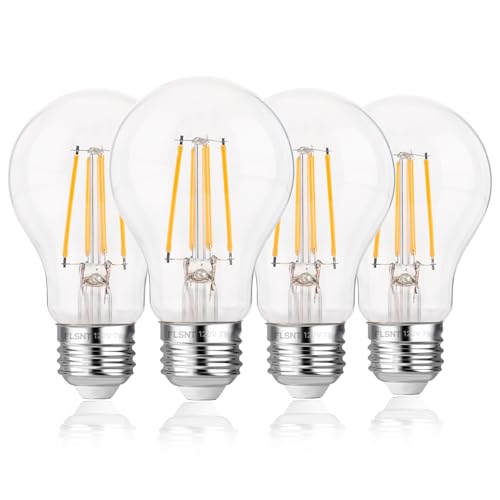
For the most light among the true 7-watt bulbs here, this A19 produces 800 lumens and uses an E26 base. Its clear glass, visible filament, 2700K soft-white color and CRI 82+ suit a warm-looking lamp or room fixture. The maker says it is dimmable and rated for up to 15,000 hours. The A19 shape is a familiar general-purpose bulb, but its size and dimmer compatibility still need to suit the particular fixture; choose another option if you need an A15 form or a specifically enclosed-fixture-rated bulb.
Bottom line: Choose this for a standard E26 socket when 800 lumens and warm 2700K light are priorities.
LUXRITE A15 7W
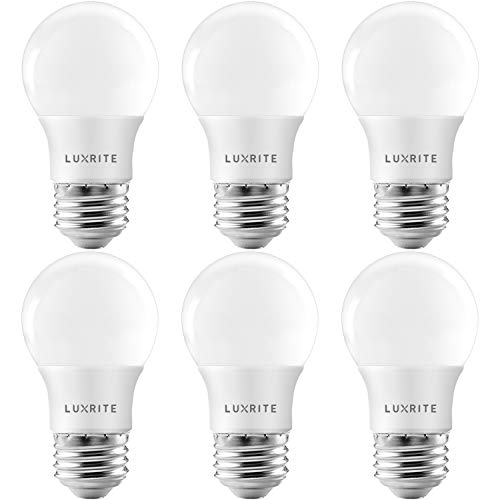
The A15 shape sets this 7-watt bulb apart from the A19 option, making it the one to consider for ceiling fans and smaller compatible fixtures. It produces 600 lumens in 3000K soft white and has an E26 medium base. The maker says it is dimmable from 10% to 100%, rated for enclosed fixtures, and suitable for indoor and outdoor use. Its 600-lumen output is lower than the 800-lumen A19, so it is a weaker choice when maximum brightness is the deciding factor. Confirm the fixture accepts an A15 bulb.
Bottom line: Pick this for a compatible fan or enclosed fixture where a smaller A15 profile matters.
Meconard C7 0.6W, 6-Pack

This is a decorative C7 bulb, not a 7-watt LED: its actual draw is 0.6 watts, despite being described as equivalent to a 7-watt incandescent. The six-pack uses an E12 candelabra base and clear plastic construction, with warm-white light. The maker says the bulbs are shatterproof and cool to the touch, and identifies indoor and outdoor string-light use. Its low power and C7 format suit accent lighting, but it cannot substitute for a standard-brightness E26 room bulb. Check that the socket is E12 and accepts C7 bulbs.
Bottom line: Choose this for E12 C7 string lights when decorative glow matters more than room brightness.
C7 E12 0.6W, 25-Pack

The 25-bulb pack is the high-count choice for decorative C7 sockets, but each bulb draws 0.6 watts rather than 7 watts. It has an E12 base, warm 2200K color and 50-lumen output, so it is intended for accents such as holiday strings and nightlights rather than lighting a room. The maker says the plastic bulbs are waterproof and gives a 25,000-hour average lifespan. That dim output is the key limitation for anyone searching for a regular 7-watt LED replacement; use it only where a C7 E12 bulb fits.
Bottom line: Choose this for many C7 E12 decorative sockets and a warm, low-output accent.
NETEHA C7 0.6W, 6-Pack

For outdoor decorative strings, this C7 bulb has the clearest weather-use specification among the C7 choices: the maker says its plastic construction is waterproof to IP65. Each bulb uses 0.6 watts, produces 55 lumens at 2700K, and has an E12 base. That makes it a low-output decorative replacement described as equivalent to a 7-watt incandescent, not a true 7-watt LED. The six-pack is useful only if the string or fixture accepts E12 C7 bulbs; choose an A19 or A15 instead for standard room lighting.
Bottom line: Pick this for an E12 C7 outdoor string where the maker’s IP65 claim fits your use.
How to choose a 7 watt LED bulb
Choose by lumens and base first: watts measure electricity use, while lumens indicate light output. A typical 7-watt LED falls around 500 to 800 lumens, depending on its design; the true 7-watt bulbs here span 600 to 800 lumens. For a reading or work area, favor the brighter end if the fixture and shade allow it. Color temperature is measured in kelvins: roughly 2700K is warm, and 3000K is still warm but a little less amber. Compare a bulb’s actual wattage, not an incandescent-equivalence phrase: a 0.6-watt C7 marked equivalent to 7W does not provide the output of a standard 7-watt LED.
Match bulb shape and base to the fixture
Match the bulb’s base and physical envelope to the socket before choosing color or brightness. E26 is the common medium screw base used in many household lamps, while E12 is a smaller candelabra base used in decorative fixtures and strings. A19 is a common general-purpose bulb shape; A15 is smaller and often used in ceiling fans or compact fixtures. C7 bulbs are small decorative bulbs, not standard A-shape replacements. Check the fixture label for maximum wattage and permitted bulb type, and confirm the bulb clears any shade or cover. With an enclosed fixture, use a bulb specifically rated for enclosed use; a dimmer also needs to be compatible with LED bulbs.
7-watt bulbs versus 7-watt-equivalent C7 bulbs
A true 7-watt LED draws 7 watts; a C7 “equivalent to 7W” bulb may draw a fraction of that and is intended for decorative illumination. The difference matters because wattage equivalence refers to an incandescent comparison, not the electrical draw or brightness of a 7-watt LED. Use the following quick distinction when a product label includes both values.
| Label / format | Actual draw | Typical use |
|---|---|---|
| 7W A19 or A15 LED | 7 watts | Room or fixture lighting |
| C7 “equivalent to 7W” | Often under 1 watt | Decorative strings and accents |
Do not compare bulbs by the equivalence phrase alone. For C7 replacements, check the socket type and string’s electrical rating; for a room lamp, look for actual lumens and a compatible standard base.
Frequently Asked Questions
How bright is a 7 watt LED bulb?
A 7-watt LED commonly produces about 500 to 800 lumens, though output varies by bulb design. The true 7-watt options here provide 600 or 800 lumens.
Is a 7 watt LED the same as a 7 watt equivalent bulb?
No: 7 watts is the LED’s actual power draw, while “7W equivalent” compares a lower-power bulb with an incandescent. For example, a 0.6-watt C7 equivalent is a decorative low-output bulb, not a standard 7-watt LED.
What base does a standard household bulb use?
Many household lamps use an E26 medium screw base, while decorative candelabra fixtures often use E12. Check the socket marking or the old bulb’s base before replacing it.
Can I use an LED bulb in an enclosed fixture?
Use an LED specifically rated for enclosed fixtures when the fixture is enclosed, since trapped heat can affect bulb life. Also stay within the fixture’s maximum wattage and verify the bulb physically fits.
What color temperature should I choose for a warm room?
A 2700K bulb gives a warm, amber-white appearance, while 3000K is also warm but somewhat less amber. Choose by the room’s desired atmosphere and keep color temperatures consistent in the same area.