
Ceiling Paint Roller No Drip Kits Compared by Reach

Ceiling Roller Kit, 10-Inch suits most buyers who want a shielded roller with a 96-inch pole for reaching ceilings and high walls. Choose another kit if roller width or a rotating head better matches your painting needs; a splash shield can reduce splatter, but it does not make paintwork mess-proof.
We earn a commission if you buy through links on this page. As an Amazon Associate I earn from qualifying purchases. Products are compared on manufacturer specifications, not hands-on testing.
- Best overall: Ceiling Roller Kit, 10-Inch – Pairs a 10-inch roller and protective cover with a detachable 96-inch stainless steel pole.
- Best for a 9-inch roller: Ceiling Roller Kit, 9-Inch Adjustable – Combines a 9-inch roller cover, splash shield and adjustable 96-inch pole.
- Best for extra reach: Ceiling Roller Kit, 98.6-Inch Pole – Its 98.6-inch extendable pole is the longest among these kits.
| Product | Best for | Roller width | Pole length | Head adjustment | Shop |
|---|---|---|---|---|---|
| Ceiling Roller Kit, 10-Inch | Wider roller coverage | 10 in | 96 in | Adjustable | Check Price on Amazon |
| Ceiling Roller Kit, 9-Inch Adjustable | Adjustable roller angle | 9 in | 96 in | Rotating | Check Price on Amazon |
| 8-Foot Foam Ceiling Roller Kit | Foam roller cover | 9 in | 96 in | Adjustable angle | Check Price on Amazon |
| Ceiling Roller Kit, 98.6-Inch Pole | Longest pole reach | — | 98.6 in | Rotating | Check Price on Amazon |
Ceiling Paint Roller No Drip Kits
Compare roller width, reach and head features to find a kit suited to your ceiling and painting setup.
Ceiling Roller Kit, 10-Inch
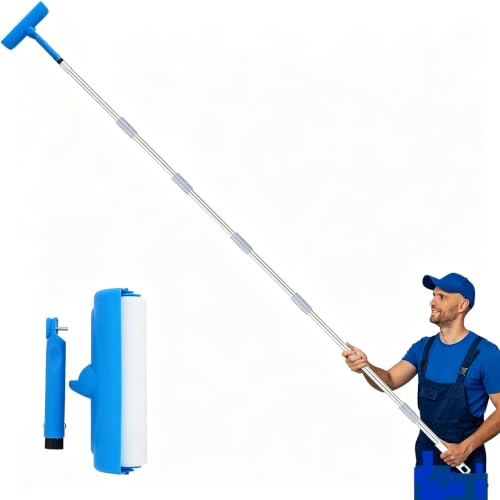
Ceiling Roller Kit, 10-Inch stands out with a 10-inch roller and a 96-inch stainless steel extension pole. Its protective cover is intended to catch splashes during overhead painting, while the detachable handle and pole make storage easier. The brush head stays fixed during use, so this kit is better for painters who want a straightforward roller angle rather than frequent head repositioning. The maker says the pole helps reach high ceilings and walls without a ladder; the actual reach depends on the painter’s height and room layout.
Bottom line: Pick this kit if a 10-inch roller and detachable stainless steel pole fit your storage and reach needs.
Ceiling Roller Kit, 9-Inch Adjustable

Ceiling Roller Kit, 9-Inch Adjustable combines a 9-inch roller cover with a 96-inch adjustable extension pole and rotating roller head. The reusable plastic shield is designed to reduce drips and splatters during ceiling work, and the head can help when changing from ceiling passes to wall edges. It suits buyers who value angle adjustment more than a wider roller. A shield cannot catch every drop, so cover floors and furniture and avoid loading the roller so heavily that paint runs off the cover.
Bottom line: Choose this kit when a rotating head and 9-inch roller are the useful fit.
8-Foot Foam Ceiling Roller Kit

8-Foot Foam Ceiling Roller Kit is the foam-roller option, with a 9-inch roller, 8-foot pole and splash guard. Its angle adjustment locks in place, which can help keep the roller aligned while working overhead. The maker says the guard reduces splatter and the pole lets users reach high walls and ceilings without a ladder. Foam is a different cover material from the fiber cover in Ceiling Roller Kit, 10-Inch, so choose based on the finish and paint compatibility you need; confirm the cover is appropriate for your paint before starting.
Bottom line: Pick this kit if you specifically want a foam cover and an angle-locking head.
Ceiling Roller Kit, 98.6-Inch Pole

Ceiling Roller Kit, 98.6-Inch Pole has the longest pole in this group at 98.6 inches, along with a reusable plastic splash guard and adjustable rotating head. The extra pole length may help when a 96-inch option leaves too little reach, though your height and ceiling geometry still determine whether you can work comfortably from the floor. The maker says the shield intercepts drips and directs excess paint back toward the roller. Roller width is not clear from the specifications, so compare that requirement before choosing this kit.
Bottom line: Choose this kit if the extra pole length matters more than knowing the roller width in advance.
How to Choose a Ceiling Paint Roller
Choose a ceiling roller by matching cover width, pole reach and roller nap to the surface. A 9-inch roller is a common standard size, while a 10-inch cover can cover more width per pass but may be harder to control when loaded with paint. Nap is the raised fiber depth: 3/8-inch nap is commonly used on smooth or lightly textured surfaces, while rougher texture generally needs a deeper nap to reach into recesses. Check that the cover fits the roller frame and is compatible with the paint. For overhead work, start with a lightly loaded roller and add paint in controlled passes; overloading increases drips even when a shield is fitted.
| Need | What to compare |
|---|---|
| Fewer passes | Wider roller cover |
| Changing ceiling and wall angles | Rotating or adjustable head |
| Working from the floor | Pole reach and room clearance |
How Much Pole Reach Do You Need
Measure from your standing position to the ceiling rather than relying on pole length alone. An 8-foot pole is 96 inches, but the roller head, grip position and your height affect total reach; a 98.6-inch pole adds only 2.6 inches over a 96-inch pole. A telescoping pole also needs room to extend and lock, so check for light fixtures, fans and narrow corners before selecting it. If you cannot keep both feet planted and guide the roller without stretching, use a stable platform or a shorter pole instead of leaning sideways. Extension poles reduce the need to reposition a ladder, but they do not remove fall risks from other work at height.
What a No-Drip Shield Can and Cannot Do
A roller shield catches some paint thrown or falling from the cover, but it cannot guarantee a drip-free ceiling job. Paint consistency, how much paint is loaded and roller speed all affect splatter; a heavily saturated roller can still drip around or beyond the guard. Cover floors and furniture with drop cloths, and use painter’s tape where trim meets the ceiling. Load the roller evenly in a tray and roll off excess before lifting it overhead. Work in manageable sections and keep the guard oriented between the roller and the protected area. For a ceiling with textured bumps, make controlled passes rather than pressing hard, which can force paint out of the cover.
Match Roller Cover to Ceiling Texture
Roller nap should suit the surface texture: 3/8 inch is a common choice for smooth or lightly textured walls and ceilings, while more pronounced texture often calls for a thicker nap. A 9-inch cover is a widely used size, but the frame and cover must match; do not assume every shield accepts every roller width. Foam covers differ from fiber covers and are not interchangeable for every paint or surface. Read the paint can for application guidance and confirm the cover material works with that paint. Before coating the full ceiling, make a small test patch and check coverage and texture pickup after it dries.
Frequently Asked Questions
Can a ceiling roller shield stop every paint drip?
No, a shield can reduce splatter but cannot guarantee that no paint will escape. Load the cover evenly, roll off excess in the tray and protect floors and furniture with drop cloths.
Is an 8-foot pole long enough for a ceiling?
An 8-foot pole measures 96 inches, but total reach also depends on your height and the roller head. If you must stretch or lean to reach, use a stable platform or a longer pole that you can control safely.
What roller nap works on a lightly textured ceiling?
A 3/8-inch nap is commonly used on smooth and lightly textured surfaces. Deeper texture may need a thicker nap to reach into recesses, so check the paint maker’s application guidance and test a small area.
How do I reduce splatter while rolling a ceiling?
Use a lightly and evenly loaded roller and roll off excess paint before lifting it overhead. Keep the shield between the roller and protected surfaces, and cover nearby floors and furniture because guards do not catch every drop.
Can I use a ceiling roller on walls too?
Yes, these kits are described for wall as well as ceiling painting, and an adjustable or rotating head can help change the working angle. Protect trim and floors, and check that the roller cover suits the wall texture and paint.