
Keter Plastic Sheds: 3 Models Compared by Size

Keter Manor 4 x 6 Shed suits most people who need a Keter plastic shed because its 131.8-cubic-foot capacity provides the most room among these resin models. Choose Keter Store-It-Out Prime instead for a compact horizontal unit intended for trash cans and smaller outdoor gear, or Keter Premier Tall Shed when vertical storage matters more than floor space.
We earn a commission if you buy through links on this page. As an Amazon Associate I earn from qualifying purchases. Products are compared on manufacturer specifications, not hands-on testing.
- Best overall: Keter Manor 4 x 6 Shed – Its 131.8-cubic-foot capacity is the largest of these resin sheds.
- Best for trash cans: Keter Store-It-Out Prime – It holds up to two 32-gallon cans and has a lift-up lid.
- Best for tight spaces: Keter Premier Tall Shed – Its tall 29-inch-wide footprint uses vertical space.
| Product | Best for | Exterior dimensions | Capacity | Shop |
|---|---|---|---|---|
| Keter Manor 4 x 6 Shed | Larger storage needs | 51.2 × 75.6 × 78 in. | 131.8 cu. ft. | Check Price on Amazon |
| Keter Store-It-Out Prime | Trash can storage | 52 × 28 × 45 in. | 31 cu. ft. | Check Price on Amazon |
| Keter Premier Tall Shed | Narrow storage spaces | 55.1 × 29 × 67.1 in. | 62.05 cu. ft. | Check Price on Amazon |
Keter Plastic Sheds Compared
Compare footprint, storage capacity and construction to find the shed that fits your yard and gear.
Keter Manor 4 x 6 Shed
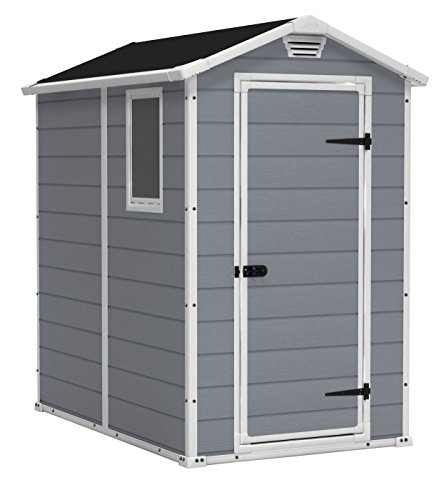
The Manor provides the most capacity here, with 131.8 cubic feet for larger items such as patio furniture, a push mower or bikes. Its exterior measures 51.2 inches wide by 75.6 inches deep by 78 inches high, while the interior measures 43.7 by 69.7 by 74.8 inches. Polypropylene resin and steel reinforcement form the structure; the maker says its weather-resistant, waterproof, UV-protected construction will not peel, rot or rust. A skylight, window and ventilation add light and airflow. Its larger footprint needs more clear, level ground than the compact options.
Bottom line: Pick this model when you need the most storage volume and have room for its footprint.
Keter Store-It-Out Prime
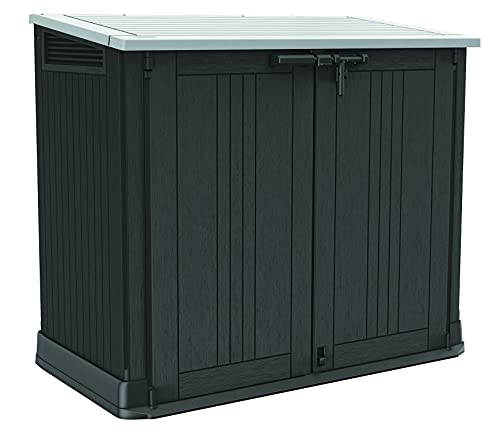
The Store-It-Out Prime is a horizontal storage unit rather than a walk-in shed, making its 52-by-28-inch footprint useful where a tall structure will not fit. It holds up to two 32-gallon trash cans, and its hydraulic lid pistons are designed to ease opening. The polypropylene resin is steel reinforced; the maker says it resists rust, peeling, fading and denting. Ventilation panels encourage airflow, and flexible locking options can help secure contents. Its 31-cubic-foot capacity is much less than the larger sheds, so it suits bins and smaller gear better than bulky lawn equipment.
Bottom line: Choose it for trash cans and smaller gear when a low horizontal format suits the space.
Keter Premier Tall Shed

The Premier Tall trades floor width for height: its 29-inch width and 67.1-inch height create a vertical storage option for patios or narrow areas. The 55.1-inch length and 62.05-cubic-foot capacity make it roomier than the horizontal unit, though smaller in capacity than the Manor. It uses heavy-duty polypropylene resin reinforced with steel, and the maker says the weather-resistant, UV-protected material will not peel, rot or rust. Shelving brackets support customizable interior storage. Its tall, narrow layout is not the best match for wide furniture or other items that need a broad opening.
Bottom line: Pick this model when a narrow footprint and vertical organization matter more than maximum capacity.
How to Choose a Keter Plastic Shed
Start with the largest item you need to store, then compare its dimensions with the shed’s interior, not just its exterior footprint. The Manor has 43.7 inches of interior width and 74.8 inches of interior height; those measurements determine whether bulky gear can pass through and fit inside. Capacity helps compare overall volume, but it does not show whether a long handle, wide bike or mower will fit through the opening. Measure the access route too, including gates and tight corners. Leave room for doors or lids to open fully, and keep the base level so the structure sits evenly. For regular access to several bulky items, favor a walk-in layout; for bins and smaller gear, a horizontal unit can be more practical.
Resin Shed Footprints and Capacity
Match the shed’s outside dimensions to the space available, then reserve room around the structure for opening doors, assembly and maintenance. A compact footprint is not the same as a small interior: the Premier Tall uses a 29-inch width and 67.1-inch height to prioritize vertical storage. The Manor’s interior dimensions are smaller than its exterior measurements, so use the interior figures when checking equipment fit. Capacity in cubic feet is useful for comparing volume, but long or wide objects can still be blocked by a narrow opening. Measure the object’s longest and widest points and compare them with the usable interior and access opening before choosing.
| Storage need | Layout to consider | Why |
|---|---|---|
| Two trash cans | Horizontal unit | Low lift-up access suits bin storage |
| Tall tools in a narrow area | Vertical shed | Uses height while limiting width |
| Bulky yard or patio gear | Larger walk-in shed | More capacity and interior room |
Preparing a Level Base and Secure Placement
A resin shed needs a firm, flat base so its panels and doors align; uneven support can make assembly and opening difficult. Clear vegetation and debris first, then check the base in both directions with a level before placing the floor. Keep the footprint out of low spots where rainwater collects, and avoid placing it where roof runoff drains directly against the walls. Wind can move an unanchored lightweight structure, so use the manufacturer’s anchoring method and suitable anchors for the base material. Leave working room around the shed during assembly and access space for ventilation. Confirm the site’s usable dimensions before ordering, including door swing or lid clearance.
Ventilation, Weather and Shed Care
Ventilation matters when storing damp garden tools or pool gear because trapped moisture can linger even in weather-resistant structures. These models include ventilation features, but airflow does not remove water already on wet equipment; dry items before putting them away and avoid blocking vents. Polypropylene resin does not need painting, and it does not rot or rust like untreated wood or metal, but dirt and organic debris still collect on exterior surfaces. Rinse off loose dirt and use a mild cleaner for routine cleaning rather than abrasive tools that can scratch plastic. Keep the base clear of leaves and check that doors, lids and vents remain unobstructed.
Frequently Asked Questions
How much space should I leave around a plastic shed?
Leave enough clearance for doors or lids to open fully and for assembly access; there is no single clearance that fits every yard layout. Measure the door swing and the route for moving stored items, and add working room around the footprint.
Does a resin shed need a concrete foundation?
A concrete foundation is not the only possible base, but the surface must be firm, flat and level. A compacted, stable base can work when it supports the full floor without settling; follow the shed maker’s base and anchoring requirements.
Can a plastic shed store a lawn mower?
A mower fits only if its height, width and length are smaller than the usable interior and opening. Measure the mower including handles, then allow room to maneuver it past the doorway and any stored items.
How do I reduce moisture inside a resin shed?
Dry wet tools and gear before storage, keep built-in vents clear, and avoid placing the shed where water pools. Ventilation promotes airflow, but it cannot dry items that go inside soaked.
Should an outdoor resin shed be anchored?
Yes, secure an outdoor shed using the maker’s anchoring method and anchors suited to the base. Wind exposure and the base material affect the anchor choice, so set the shed on a level surface before fastening it.