
Best Cord for Bracelet Making: 5 Types Compared

Paxcoo 0.8 mm Elastic String suits most bracelet makers because its 0.8 mm elastic cord combines a useful bead-compatible size with a 120 m roll. Choose LUSTEMBER 0.8 mm Nylon String instead when you want nonstretch nylon, or Paxcoo Flat Elastic Cord, 1 mm when you prefer flat 1 mm elastic cord.
Bracelet cord is the thread or string that holds beads together; the right choice depends on bead-hole clearance and whether the finished bracelet should stretch.
We earn a commission if you buy through links on this page. As an Amazon Associate I earn from qualifying purchases. Products are compared on manufacturer specifications, not hands-on testing.
- Best overall: Paxcoo 0.8 mm Elastic String – Its 0.8 mm elastic cord comes in a 120 m roll for stretch-bead projects.
- Best for nonstretch designs: LUSTEMBER 0.8 mm Nylon String – Its 0.8 mm nylon string has no elasticity.
- Best for flat elastic: Paxcoo Flat Elastic Cord, 1 mm – Its flat elastic measures about 1 mm wide and 0.7 mm thick.
| Product | Best for | Cord type | Size | Roll length | Shop |
|---|---|---|---|---|---|
| Paxcoo 0.8 mm Elastic String | Stretch bead bracelets | Elastic | 0.8 mm diameter | 120 m | Check Price on Amazon |
| Paxcoo Flat Elastic Cord, 1 mm | Flat elastic cord | Elastic, flat | 1 mm wide; 0.7 mm thick | 100 m | Check Price on Amazon |
| JULIMAIDONG 0.8 mm Elastic Cord | Clear stretch cord | Elastic, round | 0.8 mm diameter | 60 m | Check Price on Amazon |
| LUSTEMBER 0.8 mm Nylon String | Nonstretch bracelets | Nylon, nonstretch | 0.8 mm | — | Check Price on Amazon |
| LUSTEMBER Elastic String, 1 mm, Two Rolls | Two-color projects | Elastic | 1 mm | — | Check Price on Amazon |
Best cord for bracelet making
Compare stretch, cord size, and roll length against your beads and intended bracelet style.
Paxcoo 0.8 mm Elastic String
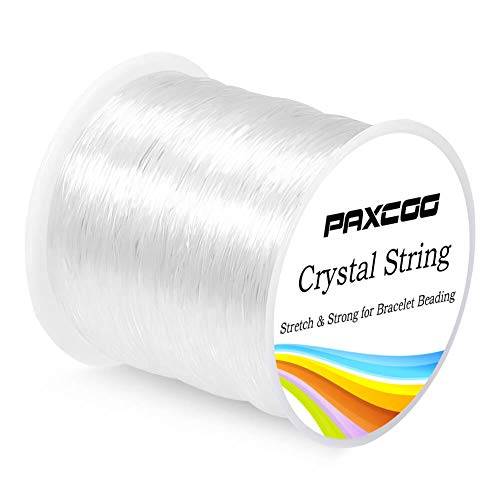
Paxcoo 0.8 mm Elastic String stands out for its 120 m roll of 0.8 mm elastic cord, making it a practical pick for repeated stretch-bracelet projects. The maker says the crystal-clear cord is made from elastic plastic rubber and is suitable for seed, gemstone, and glass beads. Its 0.8 mm diameter can fit more bead holes than thicker cord, but the hole still needs enough clearance for the strand and any doubled section at the knot. The tradeoff is that this is stretchy cord, so it is not the choice for a rigid, nonstretch bracelet.
Bottom line: Pick this for a long supply of fine elastic cord for stretch-bead designs.
Paxcoo Flat Elastic Cord, 1 mm
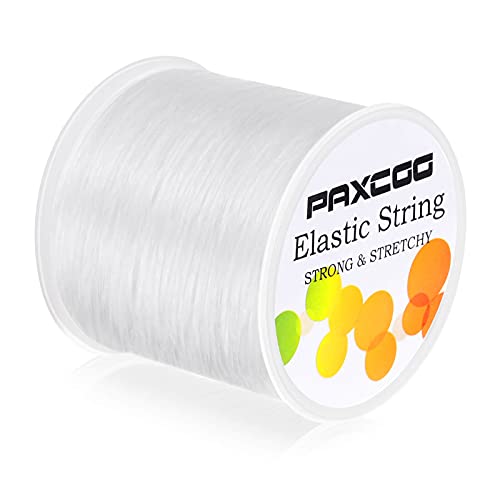
Paxcoo Flat Elastic Cord, 1 mm is the flat-cord option: it measures about 1 mm wide and 0.7 mm thick, unlike round elastic strands. The maker says the polyester-spandex cord is flexible, works with small and large beads, and can be knotted with a small knot that may be tucked among beads. Its 100 m roll gives substantial length for projects. Flat cord can be harder to thread through a very small or irregular bead hole than a thinner round strand, so measure the narrowest hole before choosing it.
Bottom line: Choose this if you want flat elastic and your bead holes accommodate its width.
JULIMAIDONG 0.8 mm Elastic Cord

JULIMAIDONG 0.8 mm Elastic Cord combines a clear, round 0.8 mm elastic strand with a 60 m roll, a smaller quantity than the 120 m option. The maker says the polyester-spandex cord is lightweight, easy to tie, and suited to bracelets, necklaces, and beading. Its transparent appearance can blend with clear or light-colored beads, while the fine diameter helps with bead holes that cannot take thicker cord. The limitation is the shorter roll length, which matters if you are making many bracelets or longer beaded pieces.
Bottom line: Pick this for clear 0.8 mm stretch cord when a 60 m roll is enough.
LUSTEMBER 0.8 mm Nylon String

LUSTEMBER 0.8 mm Nylon String is the nonstretch choice among these cords: it is 0.8 mm nylon string, and the maker explicitly says it has no elasticity. Nylon is suited to designs where beads should stay on a firm strand rather than expand over the hand; the maker also claims abrasion resistance and colorfastness. This product is offered for uses beyond bracelets, including braiding and necklaces. It will not provide the easy over-the-hand fit of elastic, so plan a clasp or another opening method for a bracelet that must be removed.
Bottom line: Choose this for a firm, nonstretch bracelet that uses a clasp or tie closure.
LUSTEMBER Elastic String, 1 mm, Two Rolls

LUSTEMBER Elastic String, 1 mm, Two Rolls differs by pairing two 1 mm elastic cords, one black and one white, rather than a single clear strand. The maker says the cord uses nylon-polyester fabric and braided rubber, stretches and returns to length within its elastic range, and is easy to cut and tie. The two colors can coordinate with darker or lighter bead palettes, or support separate projects. The roll length is not part of the available product facts, so anyone planning a large run should confirm the amount before ordering.
Bottom line: Pick this when black and white elastic are useful for your bead colors or projects.
How to choose bracelet cord by stretch and bead fit
Choose the cord by matching its stretch to the bracelet closure and its thickness to the bead holes. Elastic cord can slip over the hand without a clasp; nonstretch nylon needs a clasp or adjustable tie if the bracelet must come off. Measure the smallest bead-hole opening, not just the largest bead, and leave enough clearance to thread without forcing or fraying the cord. For a simple single strand, cord diameter should be comfortably smaller than the hole; if a knot or doubled pass must go through the bead, test that thickness too. The products here include round 0.8 mm elastic, flat elastic about 1 mm wide, and 0.8 mm nonstretch nylon, so they suit different construction needs.
Elastic and nonstretch bracelet cord compared
Elastic cord favors an easy slip-on bracelet, while nonstretch string favors a stable strand with a separate closure. Stretch cord must recover after being pulled over the hand; nonstretch cord does not expand to fit and should be sized or closed accordingly. Cord shape also matters: flat cord has a different profile from round cord, even when its width sounds similar to a round strand’s diameter. Use this comparison to narrow the construction style before considering color or roll quantity.
| Need | Suitable cord type | Tradeoff |
|---|---|---|
| Slip-on bracelet | Elastic cord | Depends on elastic recovery and secure knotting |
| Fixed fit with clasp | Nonstretch nylon | Requires a closure or tie |
| Very small bead holes | Thinner cord that clears the hole | Test any doubled section at the knot |
Match the cord to how the bracelet opens before selecting a color or quantity.
How thick should bracelet-making cord be
Start with bead-hole clearance: the cord must pass through the smallest hole without scraping or binding. A 0.8 mm cord is thinner than a 1 mm cord and may fit holes that reject the thicker strand, but bead-hole sizes vary even within one bead assortment. Flat cord needs special attention because its width and thickness are separate measurements; its broad side may not pass through a narrow opening. If the finished knot must be hidden inside a bead, check whether the cord’s doubled section and knot can fit through the hole before stringing the whole bracelet. Do not force a cord through a bead, since abrasion can weaken it.
How to tie and finish elastic bead bracelets
Finish elastic bracelets with a secure knot and avoid relying on a single loose overhand knot. A square knot or surgeon’s knot is commonly used for elastic jewelry; pull each side snugly, then test the knot gently before trimming the tails. If the knot must disappear, choose a bead with an opening large enough to accept it rather than forcing it inside. Leave a small tail while checking the closure, because trimming too close before the knot is secure can cause it to slip. Stretch cord should not be yanked sharply during wear or stringing; controlled tension and smooth bead holes help limit abrasion and premature breakage.
Frequently Asked Questions
Should bracelet cord be smaller than the bead holes?
Yes, the cord should pass through the smallest bead hole without binding. Leave additional clearance if the cord must pass through twice or if you plan to tuck a knot into a bead.
Can nylon string make a stretchy bracelet?
No, nonstretch nylon does not expand over the hand. Use it for a bracelet with a clasp, adjustable tie, or another planned opening.
How much cord should I cut for a bracelet?
A typical adult bracelet is about 7 to 8 inches around, but bead size and wrist fit change the finished length. Cut extra cord for knotting or attaching a clasp, then trim after the closure is secure.
How do I keep an elastic bracelet knot from slipping?
Use a snug square or surgeon’s knot and test it gently before trimming the tails. A bead hole can hide the knot only if the knot fits without forcing it.
Does flat cord fit the same beads as round cord?
Not necessarily, because flat cord has both width and thickness while round cord has a diameter. Check the narrowest bead opening against the cord’s full profile before starting.