
Bobber Stops for Fishing: 5 Options by Line Fit

For most anglers choosing bobber stops for fishing, Thill Premium Bobber Stops, 40 Pack is a straightforward pick: it comes with 40 fluorescent-yellow stops made for slip floats. Anglers who need a line-diameter range or a larger kit should compare the rubber assortments instead.
A bobber stop is an adjustable line marker that sets a slip float’s fishing depth; its size and threading style need to suit the line and rod setup.
We earn a commission if you buy through links on this page. As an Amazon Associate I earn from qualifying purchases. Products are compared on manufacturer specifications, not hands-on testing.
- Best overall: Thill Premium Bobber Stops, 40 Pack – The 40-pack uses fluorescent-yellow, fine-diameter stops made for slip floats.
- Best for size choices: Lavie&Camus 720-Piece Stop Kit – The kit includes S, M and L sizes, with a diameter range for S.
- Best for medium line: Hufopik Medium Rubber Stopper Kit – The M-size stoppers are specified for line 0.2–0.28 mm in diameter.
| Product | Best for | Pack count | Line fit | Style | Shop |
|---|---|---|---|---|---|
| Thill Premium Bobber Stops, 40 Pack | Slip-float fishing | 40 | — | Fine-diameter stops | Check Price on Amazon |
| Lavie&Camus 720-Piece Stop Kit | Multiple line sizes | 720 | S: 0.15–0.24 mm | Oval rubber rings | Check Price on Amazon |
| Hufopik Medium Rubber Stopper Kit | Medium line fit | 240 | 0.2–0.28 mm | Rubber, wire and plastic | Check Price on Amazon |
| JSHANMEI 50-Piece String Stops | String-knot setup | 50 | — | Cotton knots with beads | Check Price on Amazon |
| Black Rubber Bobber Stops | Basic rubber stops | — | — | Rubber | Check Price on Amazon |
Bobber Stops for Fishing
Match stop style and line fit to your slip-float setup before choosing a pack.
Thill Premium Bobber Stops, 40 Pack
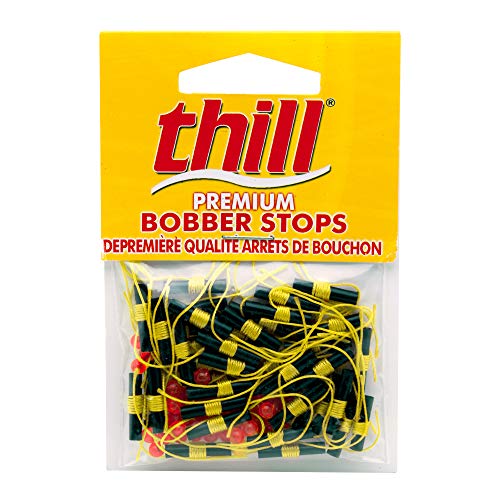
Thill stands out with fluorescent-yellow, fine-diameter stops in a 40-piece pack. The maker says the stops grip line dependably and use thin knots and beads intended for slip floats. That format suits anglers who want a visible stop and a compact pack rather than a bulk assortment of rubber rings. The use is slip floats, so anglers looking for a multi-size rubber kit should compare another option. Stop position determines the float’s depth, so set it to the target before fishing and check that the knot can pass through the rod guides.
Bottom line: Pick this when visibility and a slip-float knot style matter more than a multi-size rubber assortment.
Lavie&Camus 720-Piece Stop Kit

Lavie&Camus stands out for its 720 oval rubber stoppers arranged in S, M and L sizes, rather than one specified size. The maker says the soft rubber is intended to hold without damaging line; the S-size fit is 0.15–0.24 mm. The large assortment suits anglers who want options for different line diameters, but the fit range only identifies size S. Confirm the fit for your line before choosing M or L, and avoid forcing an oversized stopper onto thin line.
Bottom line: Choose this if you want a large rubber assortment and your line matches a confirmed size.
Hufopik Medium Rubber Stopper Kit

Hufopik is the medium-size option with a specific line range: 0.2–0.28 mm, and 240 stoppers total. Each of the 40 rings carries six stoppers; the product’s materials include steel wire, plastic and soft rubber. That defined fit makes the kit useful when the line diameter falls within the interval. The limitation is that only M size is included, so anglers using thinner or thicker line should select a different size rather than assume these stoppers will fit.
Bottom line: Pick this when your measured line diameter is between 0.2 and 0.28 mm.
JSHANMEI 50-Piece String Stops

JSHANMEI uses green cotton string knots with beads, unlike the rubber rings in the other kits, and includes 50 pieces. The maker says the stops are designed for quick installation and adjustment and to grip monofilament line. This style suits anglers who prefer a tied-on marker for a slip bobber and want to adjust depth without choosing among rubber stopper sizes. The product does not give a line-diameter range, so anglers with a specialized line or setup should confirm compatibility before relying on the stop.
Bottom line: Choose this for a cotton knot-and-bead stop instead of a rubber ring.
Black Rubber Bobber Stops

These black rubber stops are the simplest rubber option here: the maker says they can serve as bobber, sinker and line stops, including in ice-fishing setups. The maker also says they slide onto line and grip to hold a float or sinker position. That broad intended use suits anglers who want a basic rubber stopper without a specified kit count or size assortment.
Bottom line: Pick these for a basic black rubber stop when you can confirm the fit for your line.
How to choose bobber stops for fishing
Choose a stop by line fit and how it attaches, not by pack count alone. Slip-bobber stops set the maximum depth by stopping the float from sliding farther up the line; a bead between stop and float helps keep the float from passing over the knot or stop. String-knot styles and rubber rings install differently, so match the style to your rigging preference. Measure line diameter when a product gives a range: for example, a stop specified for 0.2–0.28 mm fits only when your line falls within that interval. Stops that are too loose can shift, while an overly tight stop can be difficult to move or may stress the line.
Setting slip-bobber depth and checking rod guides
Set the stop at the distance from hook to stop that matches the depth you want to fish; moving the stop changes that depth. On a slip-bobber rig, the stop and bead travel through the rod guides during casting, so a bulky knot or oversized bead can catch at the guides or reel. A practical check is to reel the stop onto the spool and pull line through each guide before casting; if it snags, use a slimmer stop-and-bead arrangement. Keep the stop snug enough to hold position but avoid pulling line sharply against a knot. Recheck the marker after casts or adjustments because a shifted stop changes the float depth.
Rubber rings and string-knot stops compared
Rubber-ring stops are individual oval or cylindrical pieces that slide onto line, while string-knot stops use a tied thread marker and often include a bead. The choice affects installation and fit: ring kits may specify line diameter and size, while a knot style can be adjusted along the line. This table summarizes the practical distinction.
| Style | Useful when | Fit check |
|---|---|---|
| Rubber ring | You want a stopper selected by line diameter | Match the size range to measured line |
| String knot with bead | You prefer a tied marker for a slip float | Check that the knot passes through rod guides |
Neither style replaces a properly tied terminal rig: the stop sets depth, while the hook and weight determine bait presentation. Avoid assuming that every stop works equally well on every line diameter.
Common bobber-stop fit mistakes
The most common mistake is choosing by color or pack quantity without matching the stop to line diameter. A loose stop can creep during casting, and an oversized knot or bead can hang up at rod guides; check both position and passage before fishing. Another mistake is treating the stop as a fixed depth marker: changing its position changes how far the bait can descend beneath the float. A simple rule is to choose a product with a line range when your line measures within a narrow diameter band, such as 0.2–0.28 mm. For uncalibrated fits, test the stop on spare line first and ensure it moves deliberately without sliding freely.
Frequently Asked Questions
What does a bobber stop do on fishing line?
A bobber stop limits how far a slip float can slide along the line and therefore sets the maximum fishing depth. Moving the stop closer to or farther from the hook changes that depth.
How do I choose the right bobber stop size?
Measure the line diameter and compare it with the stop’s range; one medium kit here specifies 0.2–0.28 mm. A stop that is too loose may shift, while an overly tight one may be hard to adjust.
Why is there a bead with a slip bobber stop?
A bead sits between the stop and float so the float does not pass over the stop. Keep the bead small enough to travel through the rod guides without catching during a cast.
Can bobber stops pass through rod guides?
They can, but a bulky stop knot or bead may snag on guides or the reel. Reel the stop onto the spool and pull line through the guides before fishing to check for catching.
How often should I check a bobber stop?
Check the stop after casts or any depth adjustment because movement changes the fishing depth. Before casting, confirm that the stop is still at the intended position and can travel through the guides.