
Wood Floor Gap Filler: 3 Colors Compared by Fit

For an oak-toned floor touch-up across hardwood, laminate, vinyl or LVP, Wood Floor Gap Filler, Oak is the closest match because it is designed for those surfaces and narrow gaps. Choose Gap Filler, Walnut, 310 ml or Gap Filler, Oak, 310 ml instead when you want a flexible filler for several hard-floor coverings and a walnut or oak color.
Floor gaps that widen and close with seasonal movement need a flexible product; a filler intended for stable seams may crack as the wood moves.
We earn a commission if you buy through links on this page. As an Amazon Associate I earn from qualifying purchases. Products are compared on manufacturer specifications, not hands-on testing.
- Best overall: Wood Floor Gap Filler, Oak – Its uses include hardwood, laminate, vinyl and LVP, with narrow gaps and seams among the target repairs.
- Best for walnut floors: Gap Filler, Walnut, 310 ml – The flexible floor filler comes in walnut and is made for wood, cork, tile and other hard-surface coverings.
- Best for oak floors: Gap Filler, Oak, 310 ml – The same flexible floor-filler formula is available in oak for wood, cork, tile and other hard-surface coverings.
| Product | Best for | Color | Container | Compatible surfaces | Shop |
|---|---|---|---|---|---|
| Wood Floor Gap Filler, Oak | Oak floor seams | Oak | — | Hardwood, laminate, vinyl, LVP | Check Price on Amazon |
| Gap Filler, Walnut, 310 ml | Walnut floor seams | Walnut | 310 ml (10.5 fl oz) | Wood, cork, tile, resilient floors | Check Price on Amazon |
| Gap Filler, Oak, 310 ml | Oak floor seams | Oak | 310 ml (10.5 fl oz) | Wood, cork, tile, resilient floors | Check Price on Amazon |
Wood Floor Gap Filler Options
Compare the color, container size and intended floor surfaces before choosing a filler.
Wood Floor Gap Filler, Oak

For an oak-colored repair across several floor types, this filler is marketed for hardwood, laminate, vinyl and LVP, including narrow gaps, dark seams, exposed edges, transitions and pipe cuts. The manufacturer says its shrink- and sink-resistant formula dries flatter and can be painted or recoated after drying. That makes it a match for neat surface touch-ups where the gap is narrow and relatively stable.
The color is oak, so it may not blend with floors that have a different tone or grain. Check the seam width and color match on a discreet area before filling a visible run.
Bottom line: Choose this for oak-toned, narrow floor seams across the hard-floor types.
Gap Filler, Walnut, 310 ml
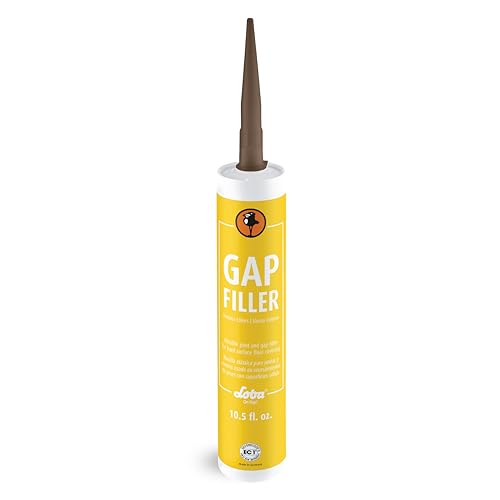
For a walnut-toned seam, this flexible floor filler is specified for wood, cork, tile, resilient flooring and other hard-surface coverings. The manufacturer says it is sandable, can be recoated with finish, oil and care products, and can be mixed with other colors for a custom match. Its flexible formula is the distinguishing feature when a floor joint needs more give than a rigid wood repair putty.
The 310 ml tube is walnut, so a substantially lighter or redder floor may need a mixed color or a different shade. Test any color blend on scrap material before applying it to a visible seam.
Bottom line: Choose this when walnut color and a flexible formula suit the floor joint.
Gap Filler, Oak, 310 ml

For oak-toned joints on mixed hard flooring, this 310 ml flexible filler is intended for wood, cork, tile, resilient surfaces and other hard floor coverings. It is sandable and recoatable with finish, oil and care products. Like the walnut version, its color can be mixed with other colors to make a custom match, which is useful when a single oak shade does not closely match the floor.
The manufacturer identifies the color simply as oak, so it may not match every oak stain or plank. Use a small sample to judge the cured color before filling a long or prominent seam.
Bottom line: Choose this for oak-colored joints when you want a flexible, mixable floor filler.
How to Choose Wood Floor Gap Filler
Choose a flexible floor filler for joints that may move, and reserve a firm wood putty for stable defects such as small holes or gouges. Wood changes dimension as indoor humidity changes; a rigid repair across a moving board joint can crack or pull loose. For a flooring seam, match the product’s intended use to the floor material and the color to the finished surface. A useful decision rule is to use a floor-specific flexible formula for a seam between boards, but use an all-purpose wood filler only for a stationary repair that does not need to flex. Sandable or recoatable formulas can help refine a repair, but confirm finish compatibility on a hidden spot first.
Match Filler to Gap Size and Movement
Narrow, stable seams are the best candidates for surface gap filler; wide openings or gaps that visibly change through the seasons call for a different repair approach. A common mistake is filling an expansion gap at the perimeter, where flooring needs room to move. Keep required expansion space clear beneath trim, and do not bridge a moving floor joint with a rigid patch. If a gap is wider than a narrow seam or keeps reopening, identify whether the cause is seasonal movement, a loose board or an installation problem before filling it. Wood Floor Gap Filler, Oak is described for narrow gaps, while the flexible options are intended for hard-floor coverings; neither description establishes a maximum gap width.
Compare Flexible and General-Purpose Fillers
Flexible floor fillers and general-purpose wood fillers serve different jobs: the former are formulated for floor-covering joints, while the latter are commonly used to repair stationary cracks, holes and gouges. A floor product may be sandable or compatible with later finish, while an all-purpose filler can offer paintability or screw anchoring instead. Use this distinction to match the repair rather than treating every filler as interchangeable. The products here are floor-specific and oak or walnut colored, so they are more directly suited to flooring seams than a general-purpose wood repair putty.
| Repair condition | Filler type to consider | Reason |
|---|---|---|
| Narrow, stable floor seam | Floor-specific gap filler | Made for hard-floor joints |
| Joint with seasonal movement | Flexible floor filler | Accommodates some movement |
| Small stationary hole or gouge | All-purpose wood filler | Designed for wood repairs |
| Perimeter expansion space | No filler | Floor needs room to move |
Prepare and Finish a Floor Seam
A clean, dry seam gives filler a better surface to bond to; remove dust and loose debris without wetting an unfinished wood floor. Apply a small amount, smooth it into the joint, and remove excess from the floor face before it sets. Sand only if the product and floor finish allow it, since aggressive sanding can scratch adjacent boards or cut through a surface coating. Recoating compatibility is not universal: test the intended finish, oil or care product on a sample or concealed area. Work in a ventilated space and keep people and pets off the repair until the material has cured according to its package directions.
Frequently Asked Questions
Can wood floor gap filler go between moving boards?
A flexible floor filler is the better match for a joint with some movement, but a gap that opens and closes substantially can still damage the repair. Keep perimeter expansion gaps clear rather than filling them.
How wide a floor gap can filler cover?
Use gap filler for narrow seams, and do not assume a filler can bridge a wide opening because no universal maximum applies to every formula. If the joint is wider than a narrow seam or repeatedly reopens, address the movement or installation issue first.
Should I fill gaps around the room edge?
No, flooring generally needs an expansion space at the perimeter so boards can respond to humidity changes. Trim usually conceals that space; filling it can restrict movement and contribute to buckling.
Can I stain wood floor gap filler?
Some general-purpose wood fillers are stainable, but the floor gap fillers here are described as sandable or recoatable rather than stainable. Test the exact filler and finish combination on a hidden area before treating a visible seam.
When should I apply floor finish over gap filler?
Wait until the filler has dried or cured as its package directs, then test the finish on a concealed spot. Recoat only if the formula is compatible with that finish; drying time varies by product, gap depth and room conditions.