
Dinner Plates With Lipped Edge: 5 Sets Compared

For most households, Gnlnkn 10.5-Inch Blue Stoneware Plates is a practical choice because its 10.5-inch plates have a 1-inch raised rim for containing sauce. Choose Pokini 10-Inch Reactive Glaze Plates instead if you prefer a 10-inch plate with a deeper 1.18-inch lip; check that diameter against your cupboard and dishwasher space.
We earn a commission if you buy through links on this page. As an Amazon Associate I earn from qualifying purchases. Products are compared on manufacturer specifications, not hands-on testing.
- Best overall: Gnlnkn 10.5-Inch Blue Stoneware Plates – Its 10.5-inch diameter and 1-inch rim balance dinner capacity with a defined edge.
- Best for a deeper lip: Pokini 10-Inch Reactive Glaze Plates – Its 1.18-inch depth is the tallest rim in this group.
- Best for warm neutrals: 10.5-Inch Ivory Plates With Brown Rim – Its ivory body and brown rim give the set a contrasting neutral look.
| Product | Best for | Diameter | Rim height | Set count | Shop |
|---|---|---|---|---|---|
| Gnlnkn 10.5-Inch Blue Stoneware Plates | Saucy main dishes | 10.5 in | 1 in | 4 plates | Check Price on Amazon |
| E-far 10.5-Inch Speckled White Plates | Scratch resistance | 10.5 in | 0.8 in | 6 plates | Check Price on Amazon |
| DOWAN 10.5-Inch Alabaster Plates | Everyday meals | 10.5 in | 1 in | 6 plates | Check Price on Amazon |
| Pokini 10-Inch Reactive Glaze Plates | Deeper plate rim | 10 in | 1.18 in | 6 plates | Check Price on Amazon |
| 10.5-Inch Ivory Plates With Brown Rim | Neutral table settings | 10.5 in | 1.1 in | 4 plates | Check Price on Amazon |
Dinner Plates With Lipped Edge Compared
Compare each set’s diameter, raised edge and count to match plates to your meals and storage space.
Gnlnkn 10.5-Inch Blue Stoneware Plates

Gnlnkn 10.5-Inch Blue Stoneware Plates pairs a 10.5-inch eating surface with a 1-inch raised edge, making the rim more defined than the 0.8-inch edge on E-far 10.5-Inch Speckled White Plates. The set contains four plates in a blue mottled glaze, and the maker says they are microwave-, oven-, dishwasher- and freezer-safe. Stoneware suits everyday meals, while the lip can help contain gravy or pasta sauce as you carry a plate. The four-piece count may be limiting for larger households or anyone setting a table for more than four.
Bottom line: Choose it for a defined 1-inch rim and a blue finish in a four-plate set.
E-far 10.5-Inch Speckled White Plates

E-far 10.5-Inch Speckled White Plates is the six-plate option with a 0.8-inch raised edge, lower than the 1-inch rims on Gnlnkn 10.5-Inch Blue Stoneware Plates and DOWAN 10.5-Inch Alabaster Plates. Its warm speckled-white stoneware is described as chip- and scratch-resistant, and the maker says it is microwave- and dishwasher-safe. That combination may suit a household that wants more matching plates and an understated glaze. The shallower rim is a limitation for meals with generous sauce; a plate with a taller edge is a better fit when spill containment matters most.
Bottom line: Pick it for six plates and the maker-described scratch- and chip-resistant surface.
DOWAN 10.5-Inch Alabaster Plates

DOWAN 10.5-Inch Alabaster Plates combines a 10.5-inch diameter and 1-inch rim with a six-plate count, unlike the four-plate set from Gnlnkn 10.5-Inch Blue Stoneware Plates. Its speckled alabaster-white glaze and terra-cotta-colored underside bring a natural two-tone look. The maker says the plates are microwave-, oven- and dishwasher-safe, and describes them as lightweight. This is a useful fit for serving pasta, steak or other meals where a rim can help contain juices. The 1-inch edge is not as deep as the 1.18-inch lip on Pokini 10-Inch Reactive Glaze Plates for especially saucy servings.
Bottom line: Choose it for six 10.5-inch plates with a 1-inch rim and speckled finish.
Pokini 10-Inch Reactive Glaze Plates
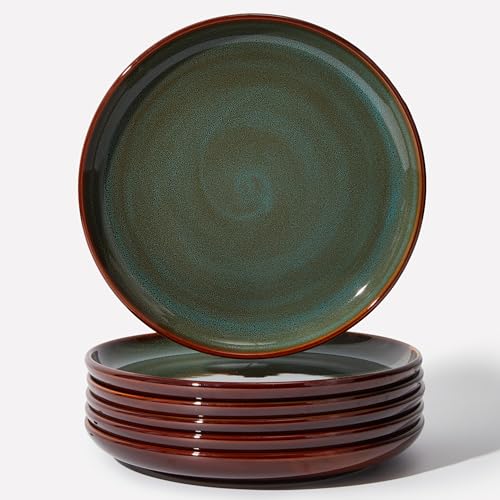
Pokini 10-Inch Reactive Glaze Plates has the deepest lip here at 1.18 inches, paired with a 10-inch diameter. Its six plates have a brown-green reactive glaze, and the maker says the stoneware is microwave- and dishwasher-safe, lead-free and cadmium-free. The smaller diameter than the 10.5-inch sets may suit tables or storage where a little less width is useful, while the taller edge favors containing sauce. The tradeoff is less plate diameter for foods that need a broad serving area.
Bottom line: Choose it when a taller lip matters more than a 10.5-inch plate diameter.
10.5-Inch Ivory Plates With Brown Rim
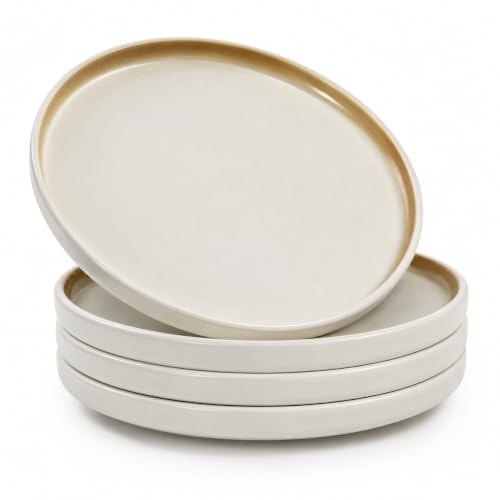
10.5-Inch Ivory Plates With Brown Rim stands out with an ivory body, warm brown rim and a 1.1-inch raised edge, taller than the 1-inch edges on Gnlnkn 10.5-Inch Blue Stoneware Plates and DOWAN 10.5-Inch Alabaster Plates. Its four 10.5-inch plates offer a generous diameter for dinner portions, and the raised edge is intended to help contain juices and dressings. The neutral contrast can coordinate with simple or rustic table settings. A four-piece set is the main constraint for larger gatherings, and the product facts do not establish appliance compatibility, so verify that before relying on microwave or oven use.
Bottom line: Pick it for a warm neutral appearance and a 1.1-inch raised rim.
How to Choose Dinner Plates With a Lipped Edge
Choose a plate by diameter first, then decide how tall a rim you need for the food you serve. Dinner plates commonly measure about 10 to 11 inches across; 10.5 inches is a useful everyday size, while 10 inches leaves slightly more clearance in a crowded dishwasher. A rim around 0.8 inch is a modest barrier, and a rim above 1 inch gives more containment for sauce or juices. Rim height does not turn a plate into a bowl, so avoid filling it with thin soup. If your storage slot or dishwasher has less than 11 inches of usable width, measure the plate’s outer diameter before buying.
What a Raised Plate Rim Can Contain
A raised rim helps keep dressing, gravy and meat juices from running straight off a flat plate, but it cannot prevent spills when a plate is tilted. A wider, flatter center provides more room for foods such as steak or pizza; a deeper center-and-rim profile better suits pasta with sauce. Ceramic plates are rigid and heavier than many plastic alternatives, so hold a loaded plate with two hands when carrying it. For a serving with more liquid than a rim can hold, use a bowl instead. This is especially important around children or hot dishes: a raised edge is not a secure barrier against a hot spill.
Stoneware and Ceramic Plate Care
Stoneware is fired clay with a dense body, while ceramic is a broad category that includes stoneware and porcelain. Care varies by glaze and maker, so confirm microwave, oven and dishwasher compatibility for the specific set rather than assuming all ceramic plates can go from one appliance to another. Thermal shock—moving a cold plate directly into a hot oven or placing a hot plate on a cold, wet surface—can crack ceramic. Let hot dishes cool on a dry trivet, and avoid abrupt temperature changes. Glazes can also develop utensil marks with repeated use; use nonabrasive cleaners and check for chips before serving food on damaged plates.
Plate Size and Rim Height at a Glance
Use diameter for serving space and rim height for containment; the following guide is a practical rule of thumb, not a formal plate standard.
| Plate profile | Useful for | Tradeoff |
|---|---|---|
| About 10 inches across | Smaller tables and storage spaces | Less room for large portions |
| About 10.5 inches across | Everyday dinner portions | Needs more cupboard and dishwasher width |
| Rim under 1 inch | Light sauces and dressings | Less containment for juices |
| Rim over 1 inch | Saucy meals and gravy | Does not make the plate spillproof |
Frequently Asked Questions
Are dinner plates with raised edges good for pasta?
Yes, a raised edge can help contain pasta sauce while serving, especially when the rim is around 1 inch or taller. Use a bowl for especially liquid-heavy pasta dishes.
What dinner plate diameter fits everyday meals?
A 10- to 11-inch diameter is a common dinner-plate range, with 10.5 inches offering a broad everyday serving area. Measure cupboard slots and dishwasher clearance if space is tight.
Can ceramic plates go straight from freezer to oven?
Avoid moving a frozen ceramic plate directly into a hot oven because sudden temperature change can cause thermal shock and cracking. Use only gradual temperature changes and confirm the maker permits oven use.
How do I prevent ceramic plates from chipping?
Keep plates from knocking against hard sink edges or other dishes, since impacts can chip ceramic rims. Inspect for chips and stop using a damaged plate for food service.
Does a higher rim stop a plate from spilling?
No; a raised rim helps contain sauce on a level plate but cannot prevent spills when the plate is tilted or carried abruptly. For liquids, use a bowl with deeper sides.