
Lego Tables for Adults: 5 Options Compared by Fit

For most adult builders, WOOD CITY Rotating Building Platform is the strongest fit because its 41-by-21.6-inch platform has a rotating surface and 11 sorting trays. Choose Tri-Fold Wooden Building Tray instead if folding storage and portability matter more; the other options are child-oriented tables or a smaller lap desk.
A building table or tray gives bricks a contained work surface, but a low platform is not the same as a full-height desk. If you want seated, upright building, check the table height and chair fit before ordering.
We earn a commission if you buy through links on this page. As an Amazon Associate I earn from qualifying purchases. Products are compared on manufacturer specifications, not hands-on testing.
- Best overall: WOOD CITY Rotating Building Platform – Its 41-by-21.6-inch platform rotates and includes 11 sorting trays.
- Best for compact storage: Tri-Fold Wooden Building Tray – The 41-by-21.6-inch tray folds to 20.47 inches and has four removable sorting trays.
- Best for lap building: Wooden Building Lap Desk – The 19.9-by-12.28-inch wooden workstation is designed for lap or tabletop use.
| Product | Best for | Workspace dimensions | Storage | Portability | Shop |
|---|---|---|---|---|---|
| WOOD CITY Rotating Building Platform | Shared building | 41.3 × 21.6 in | 11 trays | Rotating platform | Check Price on Amazon |
| Tri-Fold Wooden Building Tray | Compact storage | 41 × 21.6 in | 16 sorting zones | Folds to 20.47 in | Check Price on Amazon |
| UTEX Large Construction Play Table | Child-height setup | 32.2 × 22.2 in | Built-in storage and 2 bins | Fixed table | Check Price on Amazon |
| Wooden Building Lap Desk | Lap building | 19.9 × 12.28 in | 2 removable side bins | Portable lap desk | Check Price on Amazon |
| UTEX 2-in-1 Construction Play Table | Child-height setup | 25.6 × 25.6 in | Pull-out fabric drawer | Fixed table | Check Price on Amazon |
Lego Tables for Adults Compared
Compare the work surface and setup first: these options range from large sorting platforms to child-sized furniture.
WOOD CITY Rotating Building Platform
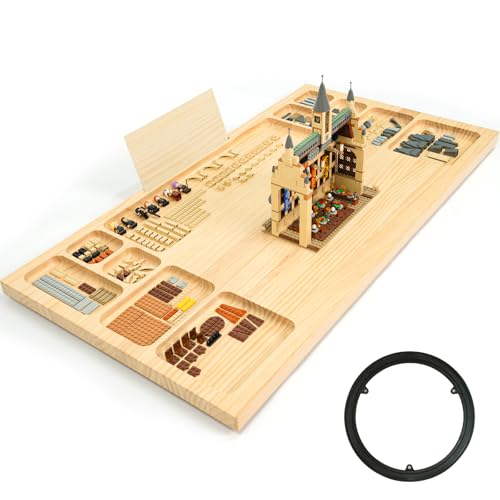
For a broad, shared building area, this 41.3-by-21.6-inch pine platform offers more length than a lap desk and turns on an integrated Lazy Susan. Its 11 trays keep pieces sorted, while a shelf holds a manual, phone, or tablet. At 12.1 pounds, it is a tabletop platform rather than a full-height desk, so builders need a separate table or other support surface. Choose it when several people may gather around a build or you want sorting space alongside the work area; skip it if you need legs or a self-contained standing-height workstation.
Bottom line: Pick this when rotating access and built-in sorting matter more than having table legs.
Tri-Fold Wooden Building Tray

For builders who need to put a large work area away between sessions, this wooden tray opens to 41 by 21.6 inches and folds down to 20.47 inches. Four removable sorting trays join 12 built-in compartments, and the instruction slot stays usable when folded. The maker also describes it as a lap desk, but its 1-inch height makes it a low platform, not a replacement for a conventional desk. Select it for portable, contained builds and organized parts; builders who need a taller surface or a rotating platform should consider another style.
Bottom line: Choose this if fold-away storage and multiple sorting zones are the priority.
UTEX Large Construction Play Table
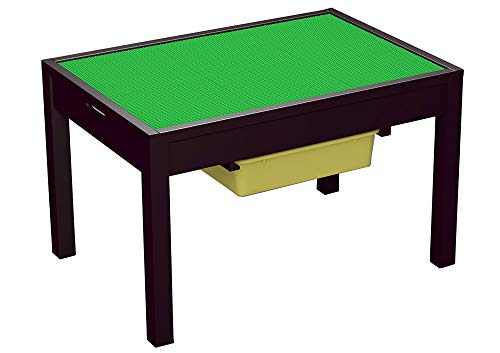
Unlike the adult-oriented trays, this UTEX is a freestanding play table sized for children, with a 20-inch height and a 32.2-by-22.2-inch top. One side of its reversible top is block-compatible; the other is smooth for puzzles or other activities. A built-in compartment and two removable bins provide storage. Its size can suit an adult who specifically wants a low, child-height build station, but the height is likely unsuitable for ordinary chair-and-desk posture. Choose it for a shared family play space, not as a full-height adult workstation.
Bottom line: Pick this for a low play table shared with younger builders.
Wooden Building Lap Desk

For building on a couch or floor rather than furnishing a room, this wooden lap desk is the most portable format in the group. Its 19.9-by-12.28-inch surface includes two removable side bins and an instruction-book holder, and it can also sit on a tabletop. The compact footprint limits how much of a large build can remain spread out, so it suits smaller projects or builders comfortable moving pieces aside as they work. It is described as compatible with a 25-by-25 baseplate; confirm that baseplate fit before ordering if that exact setup matters.
Bottom line: Choose this for small builds that need to move between lap and tabletop.
UTEX 2-in-1 Construction Play Table
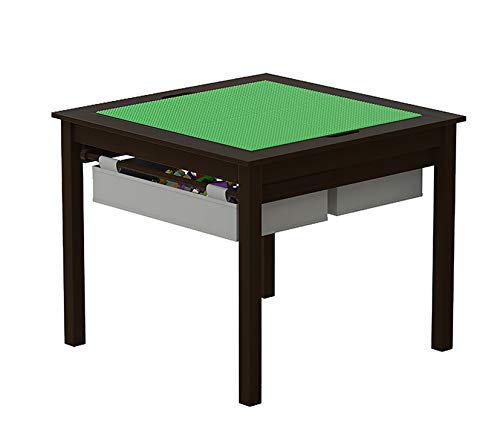
With a 25.6-inch-square top and 21-inch height, this UTEX is a child-sized freestanding table rather than a full-height adult desk. Its reversible top switches between a construction panel and a smooth play surface, while a pull-out fabric drawer stores pieces. That gives it a different setup from the adult-oriented trays, which are designed to sit on another surface or work on a lap. It may suit adults who deliberately want a low station for floor building, but not those seeking standard chair-height ergonomics. Check the actual chair and reach fit for the intended room.
Bottom line: Pick this only if a low, reversible play table fits your setup.
How to choose a Lego table for adults
Start with your posture and available surface: a low tray works on a table or lap, while a freestanding play table sets its own height. Conventional desks are commonly around 28 to 30 inches high, so the 20- to 21-inch children’s tables sit substantially lower and pair poorly with a typical desk chair. For seated desk building, favor a surface near your chair’s working height; for floor or couch building, a lap tray may fit better. Then compare usable workspace: a 41-inch platform can keep a larger project spread out, while a 19.9-inch lap desk favors portability. Count sorting compartments only if they match your habits; bins help separate pieces but do not enlarge the build area.
Workspace size and table height
Measure the build footprint and the space around it before choosing a platform. A 41-by-21.6-inch surface offers more length than a 25.6-inch square top, but neither measurement indicates how much room a particular model needs around its edges for sorting or manuals. For a comfortable seated setup, measure from the floor to your elbow while seated and compare that with the working surface; a mismatch can make prolonged building awkward. Lap desks avoid fixed-height furniture but can shift with posture. The products here span low trays and child-sized tables, not conventional adult-height desks, so the word “table” alone does not establish ergonomic fit. A practical rule: if you need a chair-height station, rule out surfaces around 20 to 21 inches high.
Building trays versus freestanding play tables
Choose a tray when you already have a suitable tabletop, couch, or lap position; choose a freestanding table when children’s play furniture is the intended setup. These formats solve different problems, so surface area alone is not a fair comparison. A rotating platform makes shared reach easier, while a folding tray saves storage depth and integrated bins keep pieces corralled. Freestanding children’s tables add legs and a reversible play surface, but their low height can be inconvenient for adults sitting in a standard chair. Use this guide to match the format to the setup.
| Need | Useful format | Trade-off |
|---|---|---|
| Shared reach | Rotating platform | Needs a separate support surface |
| Put away between builds | Folding tray | Still a low platform |
| Build on a couch or lap | Lap desk | Smaller working area |
| Children’s playroom station | Freestanding play table | Child-height posture |
Storage and portability trade-offs
Count both compartments and the space needed to store the organizer itself. A tray with built-in zones can keep small pieces visible during a build, while removable bins are easier to lift away or carry separately. A folding design reduces its long dimension but remains a broad object when open; measure the intended shelf, sofa gap, or closet opening rather than assuming a folded tray will fit. A freestanding table takes more room than a flat platform and is less convenient to move between rooms. If the project is in progress, also consider whether the surface can be moved without disturbing the build; none of these product specifications provides a load limit or a method for securing unfinished creations.
Frequently Asked Questions
What height should an adult Lego table be?
A conventional desk is commonly about 28 to 30 inches high, while child-sized play tables can be around 20 to 21 inches. Compare the work surface with your seated elbow height and chair before choosing a fixed table.
How much surface area do adult builds need?
There is no single required footprint; larger multi-part builds benefit from room to keep sections and instructions spread out. A 41-inch-long platform accommodates more layout space than a roughly 20-inch lap desk, but measure the actual project and available furniture.
Are building trays comfortable to use on a couch?
Lap trays can work on a couch when their footprint fits across your lap and the posture feels stable. A 19.9-by-12.28-inch desk is more compact than a 41-inch platform, so it is better suited to smaller builds.
Can a rotating building platform replace a desk?
A rotating platform needs a separate support surface and does not provide desk legs or a conventional working height. Use it on a suitable tabletop, and compare that table height with your chair before a long building session.
How should I choose between a folding tray and storage bins?
Choose a folding tray when reducing stored length matters, and bins when you want pieces removable from the work area. Measure the folded object against the intended storage gap and check whether the open footprint fits your building surface.