
140 cc Dirt Bike: Compare Engines, Gears and Fit

For a 140 cc dirt bike with a five-speed manual transmission, FX140 140cc 5-Speed is the closest match; its 140 cc engine and gear count are the deciding facts. Choose X-Pro DB X1 140cc if you want another 140 cc option with a four-speed manual instead, or consider the 125 cc alternatives if their transmission or wheel setup better suits the rider.
We earn a commission if you buy through links on this page. As an Amazon Associate I earn from qualifying purchases. Products are compared on manufacturer specifications, not hands-on testing.
- Best overall: FX140 140cc 5-Speed – Its 140 cc four-stroke engine and five-speed manual transmission match the requested engine size and offer the most gears here.
- Best for four-speed preference: X-Pro DB X1 140cc – It pairs a 140 cc four-stroke engine with a manual four-speed transmission.
- Best for clutch-free shifting: X-PRO X19 125cc – Its 125 cc engine is paired with a four-speed semi-automatic transmission.
| Product | Best for | Engine | Transmission | Brakes | Shop |
|---|---|---|---|---|---|
| FX140 140cc 5-Speed | Five-speed manual | 140 cc, 4-stroke | 5-speed manual | Hydraulic disc, dual-piston front | Check Price on Amazon |
| X-Pro DB X1 140cc | Four-speed manual | 140 cc, 4-stroke | 4-speed manual | Hydraulic disc, front and rear | Check Price on Amazon |
| X-PRO X19 125cc | Clutch-free shifting | 125 cc, 4-stroke | 4-speed semi-automatic | Hydraulic disc, front and rear | Check Price on Amazon |
| FRP FX125-14 125cc | Lower seat height | 125 cc, 4-stroke | 4-up manual clutch | Hydraulic disc, front and rear | Check Price on Amazon |
140 cc Dirt Bikes Compared
Compare engine size, shifting style and brake setup, then prioritize rider fit and intended terrain.
FX140 140cc 5-Speed

FX140 140cc 5-Speed stands apart with a five-speed manual transmission and a 140 cc oil-cooled four-stroke engine. The maker gives its engine output as 11 hp and describe a 210 mm front disc with a dual-piston caliper and a 200 mm rear hydraulic disc. Its adjustable clutch and brake levers may help riders dial in lever reach. This setup suits someone specifically seeking a full manual 140 cc bike with more gear steps than the four-speed alternative. A manual clutch requires coordinated shifting, so it is a less natural fit for a rider who wants to avoid clutch operation.
Bottom line: Choose this if a five-speed manual is your priority.
X-Pro DB X1 140cc
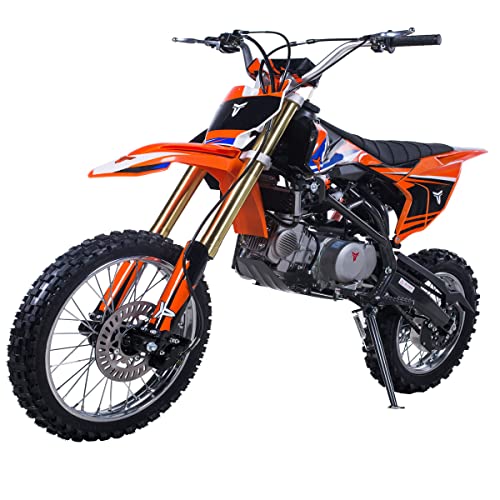
X-Pro DB X1 140cc is another 140 cc four-stroke option, but it uses a four-speed manual transmission rather than the five-speed setup on FX140 140cc 5-Speed. Its maker gives a 35-inch seat height and hydraulic disc brakes at both ends. Those figures make seat-height checks especially important: a tall seat can make stops and slow turns more demanding for a shorter rider. Choose this model when the 140 cc engine and four-speed manual match your needs and the seat height works for the rider.
Bottom line: Choose this if the 35-inch seat and four-speed manual suit the rider.
X-PRO X19 125cc

X-PRO X19 125cc is a 125 cc alternative, not a 140 cc bike, and its semi-automatic transmission is the key difference: riders shift gears without operating a clutch lever. The four-speed gearbox offers more involvement than a fully automatic setup while avoiding clutch coordination. Its 17-inch front and 14-inch rear wheels give it a different wheel combination from the 14/12 setup on FRP FX125-14 125cc. This option may suit someone who wants a gas-powered bike with gear changes but no manual clutch. The smaller engine means it does not meet a strict 140 cc requirement.
Bottom line: Choose this if clutch-free gear changes matter more than 140 cc displacement.
FRP FX125-14 125cc

FRP FX125-14 125cc is a 125 cc alternative with a 28-inch seat height, which is lower than the 35-inch figure given for X-Pro DB X1 140cc. Its 14-inch front and 12-inch rear wheels distinguish it from the larger wheel pair on X-PRO X19 125cc. The maker describes a four-up manual clutch and gives an 8.8 hp engine output; it also has both kick and electric starting. Those differences can make it worth considering when seat reach or starting options are priorities. It is still a 125 cc bike, so it is not a match for a buyer who requires 140 cc displacement.
Bottom line: Choose this if its lower seat height and starting options fit your priorities.
How to Choose a 140 cc Dirt Bike
Start with rider fit and transmission, not displacement alone: a 140 cc engine does not guarantee a particular seat height, weight or power delivery. In this group, 140 cc options have four- or five-speed manual gearboxes, while the 125 cc X19 uses a semi-automatic gearbox. Manual bikes require clutch coordination when shifting; semi-automatic bikes let the rider change gears without a clutch lever. Compare the seat-height figures when available against the rider’s inseam while wearing riding boots. A practical fit rule is to favor a bike the rider can steady confidently at a stop rather than choosing by engine size alone. Intended trail difficulty and the rider’s control experience also matter.
Seat Height and Rider Fit
Seat height is a useful first filter, but it is not the whole fit: suspension sag, seat width, boots and riding posture all affect how far a rider can reach. Here, the 28-inch seat on the FX125-14 and 35-inch seat on the DB X1 are seven inches apart, so riders should not assume these bikes feel similarly sized. Before buying, compare the seat height with the rider’s inseam and check that the rider can mount, balance and stop under control. A taller bike can be harder to manage at low speed even when the engine size seems appropriate. Wheel diameter also affects overall stance, but wheel size alone cannot establish a safe fit.
Manual and Semi-Automatic Dirt Bike Transmissions
A manual dirt bike uses a clutch lever to disconnect engine power during gear changes; a semi-automatic gearbox shifts without a hand-operated clutch. For a newer rider still learning coordination, avoiding the clutch can simplify one task, but it does not remove the need to manage speed, braking and balance. The X19’s four-speed semi-automatic is therefore a different riding setup, not just a smaller-engine version of the manuals. A four-speed manual may suit someone who prefers fewer gear positions, while the five-speed FX140 offers one additional ratio. No gear count by itself proves which bike is easier or better for a particular trail.
Protective Gear and Dirt Bike Safety
Wear a properly fitted motorcycle helmet that meets the U.S. Department of Transportation’s FMVSS 218 standard; a helmet should sit level, feel snug and stay secure when its strap is fastened. Dirt-bike riding also calls for eye protection, gloves, over-the-ankle boots and protective clothing because falls and flying debris are foreseeable off-road hazards. Hydraulic disc brakes do not replace safe stopping distance: loose dirt and downhill grades can lengthen stops, so riders should practice braking at low speed on a clear, controlled area. Keep beginners on terrain suited to their control skills, and inspect the bike’s brakes, tires and controls before each ride. Never ride on public roads unless the bike and rider meet applicable road-use requirements.
Frequently Asked Questions
Does a 140 cc dirt bike suit a beginner?
A 140 cc bike may be manageable for some beginners, but engine size alone cannot establish suitability. Consider rider experience, seat height, throttle control and whether the rider can stop and balance the bike confidently.
How tall should a dirt bike seat be for me?
Compare seat height with the rider’s inseam while wearing riding boots, then assess balance at a stop. A 28-inch and a 35-inch seat differ substantially, and seat width and suspension sag can change effective reach.
What is the difference between manual and semi-automatic dirt bikes?
A manual bike uses a clutch lever during gear changes, while a semi-automatic lets the rider shift without a hand-operated clutch. Semi-automatic shifting removes one coordination task but still requires the rider to control gears, speed and braking.
What helmet standard should a dirt bike helmet meet?
For U.S. street motorcycle use, choose a helmet meeting DOT FMVSS 218 and ensure it fits snugly with the chin strap secured. Off-road riders also need eye protection because dust and debris can reach the face.
How often should I check dirt bike brakes and tires?
Inspect brakes and tires before each ride, looking for damage, loose parts and reduced braking response. Check tire pressure against the bike manufacturer’s recommended cold pressure, since the appropriate setting depends on the specific bike and terrain.