
Shoes for Bow Legs: 4 Corrective Inserts Compared

For shoes for bow legs, Wonderwin Silicone Heel Wedges, Large is the closest match because its three-layer silicone heel wedges can be used individually or together. These are shoe inserts rather than shoes; choose a different option if you need full-length footwear or a size matched to a specific shoe.
Heel wedges change the angle under the heel, so fit and comfort matter more than claims of correction. Bow-leg alignment concerns should be discussed with a clinician before relying on inserts.
We earn a commission if you buy through links on this page. As an Amazon Associate I earn from qualifying purchases. Products are compared on manufacturer specifications, not hands-on testing.
- Best overall: Wonderwin Silicone Heel Wedges, Large – Three silicone layers can be used individually, allowing the wedge configuration to be adjusted.
- Best for multiple pairs: Urwalk Adjustable Heel Wedges, Large – The product name specifies three pairs, while its three layers allow combinations.
- Best for anti-slip design: Svowin Anti-Slip Heel Wedges, Small – The first layer uses silica gel honeycomb construction.
| Product | Best for | Layers | Size | Dimensions | Shop |
|---|---|---|---|---|---|
| Wonderwin Silicone Heel Wedges, Large | Layered silicone | 3 layers | Large | 3 × 3.5 in; 0.5 in high | Check Price on Amazon |
| Urwalk Adjustable Heel Wedges, Large | Three-pair supply | 3 layers | Large | 3.5 × 2.5 in; 0.2 in high | Check Price on Amazon |
| Svowin Anti-Slip Heel Wedges, Small | Honeycomb top layer | 3 layers | Small | 3.6 × 2 in; 0.45 in high | Check Price on Amazon |
| Supination O/X Leg Insoles, Size 41/42 | Supination support | — | 41/42 | — | Check Price on Amazon |
Shoes for Bow Legs: Corrective Heel Wedges
These products are heel-wedge shoe inserts, not complete shoes, and their design and sizing differ.
Wonderwin Silicone Heel Wedges, Large
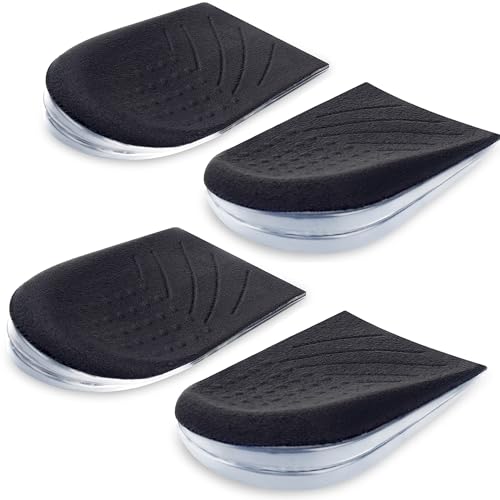
Wonderwin Silicone Heel Wedges, Large stands out for its silicone construction and three layers, which can be used individually. The large black wedges measure 3 inches long by 3.5 inches wide and are 0.5 inch high. The maker says the wedges are designed for alignment-related concerns, including bow legs, and describes an ergonomic heel shape. This is a heel insert, not a full-length insole or a shoe. Its large size and adhesive attachment may not suit buyers who need a removable insert or have limited room in their footwear; check the shoe’s heel area for fit.
Bottom line: Choose this if you want a layered silicone heel wedge and your shoes have room for its large footprint.
Urwalk Adjustable Heel Wedges, Large

Urwalk Adjustable Heel Wedges, Large is distinguished by the three pairs specified in its name, rather than the two pairs named for Wonderwin Silicone Heel Wedges, Large. Its three layers can be used separately or combined to change the tilt, and the large black wedges measure 3.5 by 2.5 inches with a height of 0.2 inch. The maker identifies bow legs among the intended alignment concerns. Unlike a full insole, this wedge supports the heel area only; buyers seeking cushioning across the whole foot should consider that difference. Confirm the dimensions fit inside the intended shoes.
Bottom line: Choose this if having three pairs and adjustable heel layers fits your needs.
Svowin Anti-Slip Heel Wedges, Small

Svowin Anti-Slip Heel Wedges, Small differs through its anti-slip silica gel honeycomb first layer. This adjustable three-layer heel wedge measures 3.6 inches long by 2 inches wide and 0.45 inch high; its size label combines women’s 4–7.5 and men’s 6–7. The maker describes it for alignment issues including bow legs and says the layers can guide foot positioning. The narrow size range makes it a less suitable pick for buyers outside the label’s shoe-size range. As with other heel wedges, it does not replace a complete shoe or provide full-length support.
Bottom line: Choose this if the size range matches and you want a honeycomb anti-slip layer.
Supination O/X Leg Insoles, Size 41/42

Supination O/X Leg Insoles, Size 41/42 is the only product here described as an insole rather than a layered heel wedge, and it is labeled for supination in size 41/42. Its sloped design is described as lower on the inside and thicker on the outside, a different orientation from a generic heel wedge; the maker also names bow legs among its intended uses. The fields do not provide dimensions or a layer count, so buyers who need to compare footprint or height should verify those before choosing. This option suits shoppers looking for a supination-oriented insole, not an adjustable set of separate heel layers.
Bottom line: Choose this if a supination-oriented insole in size 41/42 is the intended fit.
How to choose shoes for bow legs
Choose by insert type, size and the shoe space available, not by a promise to change leg shape. A heel wedge acts under the heel, while a full-length insole contacts more of the foot; these are not interchangeable. A useful first check is whether the shoe has enough depth and width to accommodate an added layer without crowding the toes or lifting the heel out of its counter. Start with the lowest configuration that fits comfortably rather than stacking more material immediately. Bow legs can have different causes and severity, and an insert cannot establish a diagnosis. If pain, instability or a new change in walking is present, ask a clinician whether a heel wedge is appropriate before using one.
Heel wedge sizing and shoe fit
Heel wedges in this comparison range from 2 to 3.5 inches wide and from 0.2 to 0.5 inch high where measurements are supplied. These are meaningful differences: a wider wedge can be harder to fit in a narrow shoe, while additional height can alter how the shoe holds the heel. Use the shoe’s interior heel area as the fit limit, and avoid forcing an insert that wrinkles, shifts or crowds the foot. For a fit decision, if the wedge is wider than the available heel platform, choose a smaller-footprint option rather than trimming or folding it. Shoe-size labels are not directly comparable across brands, so match the specific sizing description and confirm fit in the intended footwear.
Heel wedges versus full insoles
Heel wedges concentrate support under the heel; full insoles extend farther toward the toes and can change contact across more of the foot. A sloped wedge also has an orientation: medial and lateral designs raise different sides, so do not assume that turning one around is interchangeable. The products here include adjustable layered wedges and one supination-oriented insole, but the fields do not establish a common clinical prescription. Use this quick distinction when deciding which type to investigate:
| Need | Type to consider |
|---|---|
| Heel-area angle adjustment | Layered heel wedge |
| Support extending along the foot | Full insole |
| Foot alignment direction is uncertain | Clinical assessment first |
Orientation matters because a wedge that raises the wrong side may not match the intended correction. If a clinician has prescribed a specific direction or side, follow that guidance rather than selecting by a broad label alone.
Safe use and common mistakes
Increase insole height gradually and stop if the insert causes new pain, numbness, skin irritation or instability. A heel wedge changes the foot’s position inside the shoe, so a configuration that feels secure standing still can still slip during walking if the shoe’s heel counter is shallow. Keep the insert flat and centered; a folded or shifted wedge creates uneven contact. Silicone and adhesive-backed products can also behave differently across shoe linings, so inspect placement before each use. Do not treat an insert’s intended-use wording as proof that it corrects bow legs or relieves a medical condition. Persistent knee or foot symptoms, a child’s changing leg alignment, or a sudden gait change merit professional evaluation.
Frequently Asked Questions
Can shoe inserts correct bow legs permanently?
A heel wedge changes foot position inside a shoe; these specifications do not establish that it permanently changes leg alignment. Bow-leg alignment has multiple possible causes, so persistent concerns should be assessed by a clinician.
How do I tell medial from lateral heel wedges?
Medial and lateral describe which side of the heel is raised, not simply left versus right. Confirm the intended orientation for each foot, since reversing the slope changes which side is elevated.
Will heel wedges fit inside every shoe?
No; heel space and counter depth differ among shoes, and the compared wedges measure 2 to 3.5 inches wide where dimensions are supplied. If a wedge crowds the foot or lifts the heel insecurely, choose a smaller footprint or different shoe.
Should I wear layered wedges all day immediately?
Begin with the least layered configuration that fits securely, then assess comfort during short periods before longer wear. Stop using the wedge if it brings new pain, numbness, skin irritation or instability.
Are these inserts suitable for children with bow legs?
Because leg alignment changes during growth, consult a pediatric clinician before adding corrective wedges to a child’s shoes.