
Best Portable Toilet for Boat: 3 Marine-Ready Picks

The SEAFLO SFPT-20-02 is the best portable toilet for most boats here because its 5.28-gallon waste tank holds twice as much as the compact model while staying self-contained. Choose the shorter SEAFLO SFPT-10-01 instead if storage height is tight; a bag-style camping toilet suits buyers who do not need a flush-water tank.
We earn a commission if you buy through links on this page. As an Amazon Associate I earn from qualifying purchases. Products are compared on manufacturer specifications, not hands-on testing.
- Best overall: SEAFLO SFPT-20-02 5.3-Gallon – Its 5.28-gallon waste tank reduces emptying frequency compared with the smaller flush toilet.
- Best for low storage: SEAFLO SFPT-10-01 2.6-Gallon – Its 11.9-inch height is shorter than the other tanked models.
- Best for an elongated seat: Kohree 5.8-Gallon Elongated – A 13-inch elongated bowl seat gives more seat length than the typical 9.8 inches cited by the maker.
| Product | Best for | Waste capacity | Fresh-water capacity | Height | Shop |
|---|---|---|---|---|---|
| SEAFLO SFPT-20-02 5.3-Gallon | Longer boat trips | 5.28 gal | 3.43 gal | 15.5 in | Check Price on Amazon |
| SEAFLO SFPT-10-01 2.6-Gallon | Low storage spaces | 2.64 gal | 3.43 gal | 11.9 in | Check Price on Amazon |
| Kohree 5.8-Gallon Elongated | Elongated seat comfort | 5.8 gal | 3.2 gal | 17 in | Check Price on Amazon |
Portable Toilets for Boats
Compare tank capacity, height and toilet style against your available onboard space and trip length.
SEAFLO SFPT-20-02 5.3-Gallon
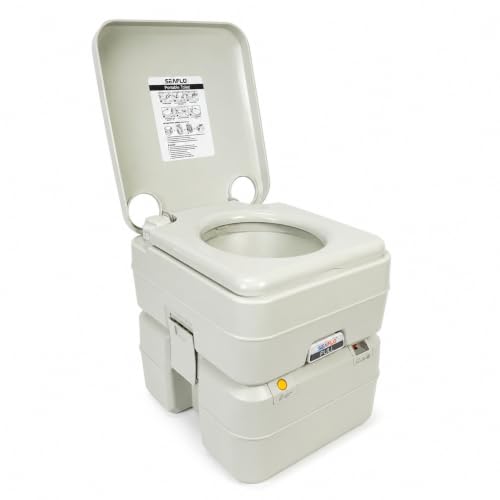
The SEAFLO SFPT-20-02 pairs the largest flush-toilet waste tank in this group with a 3.43-gallon fresh-water tank. Its manual flush and double-layer sealing are suited to a boat without external water or power, and its 15.5-inch height is lower than the Kohree model. SEAFLO says the dual-tank setup reduces frequent emptying and refilling; actual intervals depend on how many people use it and how often. The tradeoff is its taller profile than the compact SEAFLO, so measure the intended storage space before choosing.
Bottom line: Pick this if fewer waste-tank emptyings matter more than the shortest storage height.
SEAFLO SFPT-10-01 2.6-Gallon
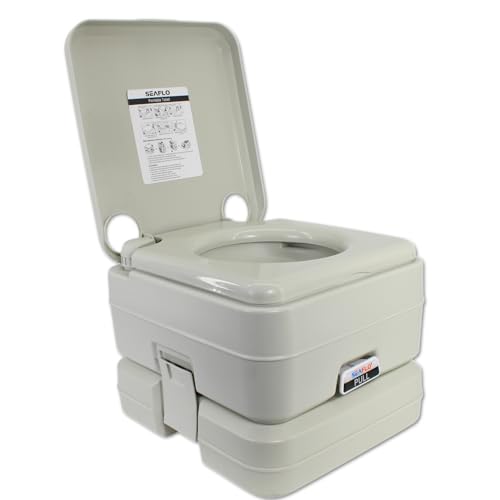
The SEAFLO SFPT-10-01 is the shortest self-contained flush toilet here at 11.9 inches high, making it the strongest fit when a boat locker or berth has limited vertical clearance. It uses manual operation, a 3.43-gallon fresh-water tank and a 2.64-gallon waste tank; SEAFLO says the design needs no external water or power. Its smaller waste tank means more frequent emptying than the 5.28-gallon SEAFLO, particularly on a multi-person trip. The maker gives it a four-year warranty, but the compact height comes at the cost of waste capacity.
Bottom line: Choose this when height is the binding constraint and a smaller waste tank works for your trip.
Kohree 5.8-Gallon Elongated

The Kohree 5.8-gallon model has the largest waste capacity in this comparison and a 13-inch elongated bowl seat, its key distinction from the shorter SEAFLO units. It also has a 3.2-gallon fresh-water tank and a diagonal design intended to save space relative to standard portable toilets. The 17-inch overall height is the tallest among these flush models, so check available headroom before selecting it for a compact boat. Kohree says the tank supports up to 110–120 flushes; actual flush count will vary with use.
Bottom line: Pick this if you want the larger waste tank and elongated seat, and have room for its height.
How to choose a boat portable toilet
For longer trips or multiple users, favor a larger waste tank; for a tight locker, favor a shorter overall height. These four choices range from 2.64 to 5.8 gallons of waste capacity, while their tanked models carry 3.2 to 3.43 gallons of flush water. Capacity does not translate to a fixed number of days because use frequency and crew size change the emptying interval. A practical rule is to measure the storage opening and available height first: if clearance is under 12 inches, only the 11.9-inch SEAFLO is close to fitting, and the opening itself still needs enough width and access for removal. For a weekend with several users, select the largest waste tank that fits the space.
| Need | Choice cue |
|---|---|
| Low storage height | 11.9-inch compact flush model |
| More waste capacity | 5.28- or 5.8-gallon tank |
| No flush-water tank | Bag-style toilet |
Flush toilets and bag toilets for boats
Flush cassette toilets keep fresh water and waste in separate onboard tanks, while bag toilets collect waste in a removable liner. A manual flush does not require external water or electrical power on the SEAFLO models, which can simplify use away from dock hookups. Tanked units still need a plan for carrying and emptying the waste tank; check marina rules before discharge because local and vessel-specific restrictions can apply. Bag systems avoid a flush-water tank, but require secure storage of used bags until lawful disposal. Do not treat odor-control claims as a substitute for keeping seals, caps and waste containers closed during handling.
Measure boat space before choosing a toilet
Measure height, width, depth and the route through hatches or cabin doors before selecting a portable toilet. The tanked models measure approximately 14 to 16.5 inches wide and 14.5 to 16.5 inches long, while the bag-style unit is 12.4 inches wide and 15.2 inches long. The highest tanked option reaches 17 inches, so it may not clear a low berth or locker even when its footprint fits. Allow enough working room to unlatch and remove a waste tank or bag; a toilet that fits only when closed may be awkward to service aboard. Keep portable toilets secured so movement on the water cannot tip them or open a tank latch.
Waste handling and onboard safety
Empty and handle marine toilet waste only at an appropriate shore-side facility or other location permitted for that waste; never assume open-water discharge is allowed. Keep the toilet upright and secured underway, and carry used waste containers with their closures firmly shut to limit spills. For a tanked model, separate fresh-water handling from waste-tank handling and clean hands after emptying. For a bag toilet, use the liner and gel as directed by its maker, then seal and dispose of bags according to local rules. A storage compartment should be ventilated and accessible enough to remove the unit without spilling contents.
Frequently Asked Questions
How often should a portable boat toilet be emptied?
Emptying frequency depends on tank size, crew count and use, not a fixed number of days. A 5.28-gallon tank holds twice the waste volume of a 2.64-gallon tank, so it generally allows more use before emptying under the same conditions.
Can a manual portable toilet work without shore power?
The SEAFLO manual models are described as self-contained and requiring no external water or power. Their fresh-water tanks hold 3.43 gallons, which must be refilled as needed.
How much room does a portable toilet need on a boat?
Allow more room than the toilet’s footprint alone: measure the height and the hatch or doorway route needed to remove it. The tanked options range from 11.9 to 17 inches high and 13.9 to 16.5 inches wide.
Can boat toilet waste be emptied overboard?
Do not assume overboard discharge is permitted; marine sanitation rules depend on location and vessel setup. Use an authorized shore-side disposal point unless you have confirmed a lawful alternative for your circumstances.
What is the difference between a cassette toilet and a bag toilet?
A cassette-style portable toilet separates fresh water from waste in onboard tanks, while a bag toilet collects waste in a liner. The bag set here includes 15 bags and 10 portions of urine gel, while the tanked models require carrying and emptying a waste tank.