
Epson XP-15000 DTF Conversion Kits Compared by Setup

For an Epson XP-15000 DTF conversion, the five-tank CISS kit with a manifold, white-ink stirrer, timer, and adjustable power adapter suits most buyers who need a complete ink-supply setup. Choose a manifold-and-damper kit instead if you already have external ink tanks; confirm your printer is chipless and one of the compatible models before ordering.
We earn a commission if you buy through links on this page. As an Amazon Associate I earn from qualifying purchases. Products are compared on manufacturer specifications, not hands-on testing.
- Best overall: XP-15000 CISS Kit with Manifold and Stirrer – Combines a manifold and six dampers with five 250 mL tanks, white-ink stirring, and an adjustable power adapter.
- Best for existing tanks: XP-15000 Manifold and Damper Kit – Includes a printhead adapter and six dampers for a chipless XP-15000, XP-15010, or XP-15080.
- Best for cartridge-based setups: XP-15000 CISS Kit with Stirrer and Dampers – Includes five 250 mL tanks, a white-ink stirrer, six cartridges, and six dampers.
| Product | Best for | Tank capacity | Included components | Ink tube size | Shop |
|---|---|---|---|---|---|
| XP-15000 CISS Kit with Manifold and Stirrer | Complete ink supply | 250 mL each, 5 tanks | Manifold, stirrer, timer, power adapter | 4 × 3 mm | Check Price on Amazon |
| XP-15000 Manifold and Damper Kit | Existing tank systems | — | Printhead adapter, 6 dampers | 4 × 3 mm | Check Price on Amazon |
| XP-15000 CISS Kit with Stirrer and Dampers | Cartridge-inclusive setup | 250 mL each, 5 tanks | Stirrer, 6 cartridges, 6 dampers, air filters | — | Check Price on Amazon |
| XP-15000 CISS with White-Ink Stirrer | Timer-controlled stirring | 250 mL each, 5 tanks | Stirrer, timer, 5 air filters, iron frame | 3 × 4 mm | Check Price on Amazon |
Epson XP-15000 DTF conversion kits
Compare the included ink-supply parts and check chipless compatibility before choosing a kit.
XP-15000 CISS Kit with Manifold and Stirrer
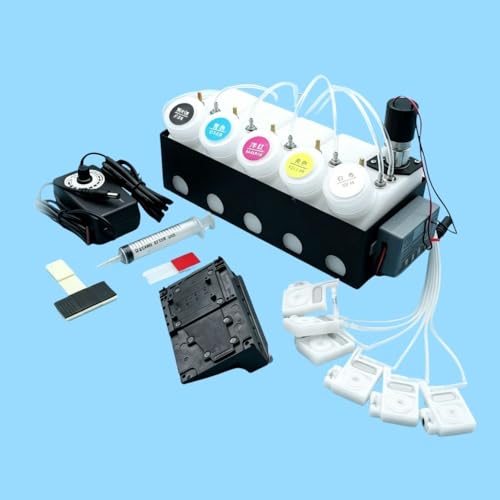
Among these kits, this option combines the external ink supply with a manifold, white-ink stirrer, timer, and adjustable power adapter. It includes five 250 mL tanks for CMYK and white-ink, six dampers, air filters, and an iron frame. The tube dimensions convert from 0.16 × 0.12 inches to 4 × 3 mm, and the adapter is compatible with 110–220 V. It suits someone assembling the ink-delivery system and printhead connection together. The tradeoff is that installation still requires a compatible XP-15000-series printer and chipless operation; verify those before starting a conversion.
Bottom line: Pick this if you need the tanks and printhead connection in one kit.
XP-15000 Manifold and Damper Kit

Unlike the CISS options, this kit supplies the printhead connection rather than a set of external tanks. It contains one printhead adapter and six dampers designed for 0.16 × 0.12-inch ink tubing, equivalent to 4 × 3 mm, and it is specified for the XP-15000, XP-15010, and XP-15080. The maker says the dampers are designed for smooth ink flow in DTF use. This is the most direct fit for a buyer who already has a compatible ink supply and needs the manifold-and-damper parts. Its limitation is explicit: the printer must be chipless, and the kit is not for other models.
Bottom line: Choose this when you already have tanks and need the adapter and dampers.
XP-15000 CISS Kit with Stirrer and Dampers

This CISS kit stands apart by including six ink cartridges along with the external tanks, white-ink stirrer, and six dampers. Its five tanks hold 250 mL each for CMYK and white-ink; the package also includes air filters, an iron frame, and a voltage-adjustable adapter compatible with 110–220 V. It is identified as a chipless system and is intended for XP-15000, XP-15010, and XP-15080 DTF modifications. It can suit buyers who want cartridges included with the supply components. The specifications do not establish the tube size, so confirm tube compatibility if your setup depends on a specific diameter.
Bottom line: Pick this if including cartridges with the CISS components matters.
XP-15000 CISS with White-Ink Stirrer

This CISS system highlights adjustable white-ink stirring and timer control, while the other options emphasize the manifold or included cartridges. It has five 250 mL tanks for CMYK and white-ink, 3 × 4 mm tubing, five installed air filters, and an iron frame. The white tank has two outlets; the four CMYK tanks have one each. The maker says the stirrer speed can be changed with the power-voltage switch and that the timer can control its running and stopping. This option suits a buyer prioritizing scheduled stirring, but its package should be checked against any need for separate cartridges or dampers.
Bottom line: Choose this for timer-controlled white-ink stirring and 3 × 4 mm tubing.
How to choose an XP-15000 DTF conversion kit
Choose by the parts you still need: a manifold-and-damper kit connects an existing supply, while a CISS kit adds external tanks. A DTF setup uses CMYK color inks plus white-ink; the white layer is important because transfer film is not a white substrate. Match the printer model and chipless requirement before committing, since the adapter kit specifically requires chipless operation. For a more complete setup, check whether the package includes tanks, dampers, filters, a stirrer, and power supply rather than assuming every CISS package has the same contents.
Tank capacity is not the same as usable ink volume: leave headspace and avoid filling a tank to its rim. White pigment can settle while idle, so a stirrer is useful, but follow the maker’s setup procedure and keep the white tank agitated as required. Do not assume a CISS conversion is reversible without consequences for the printer’s normal cartridge setup.
Check model, tubing, and chipless fit
Confirm the exact printer family before assembly: the kits here name Epson XP-15000, XP-15010, and XP-15080, but compatibility is not universal across Epson photo printers. Tubing dimensions matter because a poor match can leak or restrict ink delivery; convert units consistently, since 4 × 3 mm is approximately 0.16 × 0.12 inches. The manifold-and-damper kit calls for a chipless printer, and the CISS options are described as chipless systems, so verify the printer’s firmware or chip arrangement rather than assuming a standard cartridge configuration will work.
Plan the tank position so the ink supply is stable and the lines do not kink or pull on the carriage. Keep tanks level with the printer unless the kit’s setup instructions specify otherwise; a height difference can affect ink pressure. Before loading ink, check connector fit and route tubes away from moving parts.
What the DTF conversion parts do
A CISS feeds ink from external reservoirs through tubes and dampers toward the printhead; a manifold adapts that path to the printer’s head connection. Dampers buffer ink flow and help reduce pressure fluctuations, while air filters let tank air exchange without leaving open ports. These parts must remain sealed and correctly seated because air leaks can interrupt ink delivery.
White-ink needs more attention than CMYK because its pigment can settle during idle periods. A stirrer circulates the white reservoir, while timer controls can schedule stirring intervals on compatible systems. Stirring does not replace circulation through the printer’s ink path or routine nozzle checks. Start with the printer manufacturer’s normal nozzle-check pattern and stop if missing lines persist; running repeated cleaning cycles consumes ink and may fill the maintenance area faster.
Install and maintain a converted DTF ink system
Install with the printer powered down and protect the work surface from ink, which can stain clothing and nearby materials. Keep tubes clear of the carriage path, secure the tanks against tipping, and confirm every fitting is snug before priming. Electrical adapters and stirrers should stay dry; do not handle powered components with wet hands. Use inks intended for the conversion and avoid mixing unknown formulations in the same tank.
Check the system before each print session for bubbles, kinks, loose fittings, and settled white-ink. A nozzle check is a practical first diagnostic: a missing color can point to an air or flow issue, while a consistent pattern suggests the head is firing. If a printer will sit unused, follow the ink-system maker’s maintenance procedure rather than letting pigment settle for an extended period.
Frequently Asked Questions
Does an XP-15000 DTF conversion kit work with every Epson printer?
No; the kits here specify XP-15000, XP-15010, and XP-15080 compatibility. Confirm the exact model and chipless requirement, especially for the manifold-and-damper kit.
Why does a DTF system use white-ink?
White-ink provides an opaque base layer when a transfer is placed on darker material. DTF systems commonly combine CMYK with white, and white pigment can settle when the tank sits unused.
What size tubing fits the XP-15000 manifold kit?
The manifold-and-damper kit specifies 0.16 × 0.12-inch tubing, equivalent to 4 × 3 mm. Compare the tubing’s inside and outside dimensions with the kit connection before installation.
How often should white DTF ink be stirred?
There is no single interval established for these kits; one option includes timer control for setting stir and stop times. White pigment can settle during idle periods, so use the stirring instructions and check for settling before printing.
Can I use a DTF conversion kit with regular Epson cartridges?
The manifold-and-damper kit is specified for chipless printers, and one CISS option is explicitly described as chipless. Check how your printer handles cartridge chips before beginning, since a conventional cartridge setup may not meet that requirement.