
Best Automotive Upholstery Sewing Machines Compared

For most automotive upholstery work, VEVOR Industrial Lockstitch 550W is the best fit because it is an industrial lockstitch machine rated for sewing up to 10 layers of denim. Choose a home machine only for occasional lighter repairs; thick vinyl, foam-backed fabric, and multiple layers can exceed a portable machine’s capabilities.
We earn a commission if you buy through links on this page. As an Amazon Associate I earn from qualifying purchases. Products are compared on manufacturer specifications, not hands-on testing.
- Best overall: VEVOR Industrial Lockstitch 550W – Industrial lockstitch design, servo motor, and stated capacity of up to 10 denim layers.
- Best for mixed home projects: SINGER Heavy Duty 4552 – Offers 32 built-in stitches and a metal frame in a compact machine.
- Best for occasional mending: Brother XM2701 Portable – Portable 12.6-pound machine with a free arm for cuffs and similar small pieces.
| Product | Best for | Machine type | Stitch speed | Weight | Shop |
|---|---|---|---|---|---|
| VEVOR Industrial Lockstitch 550W | Thick upholstery seams | Industrial lockstitch | Up to 5,000 stitches/min | 134.48 lb | Check Price on Amazon |
| SINGER Heavy Duty 4552 | Varied home sewing | Home heavy-duty machine | — | 17.2 lb | Check Price on Amazon |
| Brother XM2701 Portable | Small repair projects | Portable home machine | — | 12.6 lb | Check Price on Amazon |
| VASPOW Corded 12V Sewing Machine | Portable denim mending | Portable home machine | 450 stitches/min | 9 lb | Check Price on Amazon |
Automotive Upholstery Sewing Machines
Compare the machines by construction and stated capacity before choosing one for automotive materials.
VEVOR Industrial Lockstitch 550W
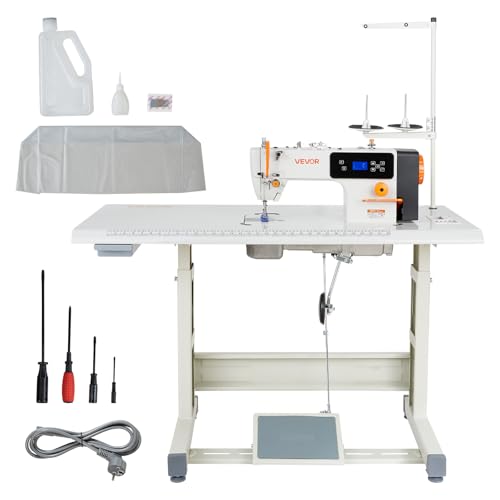
VEVOR Industrial Lockstitch 550W is the only industrial lockstitch machine in this group, making it the strongest match for sustained upholstery sewing. Its servo motor reaches 5,000 stitches per minute, and the maker says it sews up to 10 layers of denim. An LCD control panel adjusts speed and needle position; a knee lifter gives 0.5 inches of lift. It suits a dedicated workbench and substantial layered projects. At 134.48 pounds, it is a poor choice if you need a portable machine or have limited space.
Bottom line: Choose it for a fixed workspace and thick, layered seams.
SINGER Heavy Duty 4552

SINGER Heavy Duty 4552 brings more stitch options than the industrial lockstitch, with 32 built-in stitches and 110 stitch applications for utility, stretch, and decorative work. The maker describes its DC motor as providing added piercing power for thick, layered, lightweight, and stretch fabrics, and the metal interior frame adds stability. This combination suits upholstery projects mixed with general home sewing. It is not an industrial machine, and the features give no layer capacity or speed figure, so buyers planning repeated heavy upholstery seams should favor an industrial setup.
Bottom line: Pick it when upholstery is one of several home sewing uses.
Brother XM2701 Portable

Brother XM2701 Portable is a lightweight portable machine with a free arm, which makes sewing around cuffs, sleeves, and similar narrow pieces easier than on a full-size work setup. It has 27 built-in stitches, an automatic needle threader, and a drop-in top bobbin. Those features suit occasional repairs and lighter automotive trim tasks more than bulky seat construction. At 12.6 pounds, it is easy to move, but the features do not give a thick-material capacity; avoid assuming it can feed multiple heavy upholstery layers reliably.
Bottom line: Choose it for portable mending and lighter trim work.
VASPOW Corded 12V Sewing Machine

VASPOW Corded 12V Sewing Machine is the lightest machine here, weighing 9 pounds, and its corded 12V motor runs at 450 stitches per minute. The maker says it sews through 3–4 layers of 12-ounce denim, a useful boundary for smaller mending jobs rather than heavy seat construction. Its free arm and metal chassis support tabletop repair work. Choose it for portability and modest denim projects; the layer capacity is much lower than the industrial machine’s, so it is not suited to repeated thick upholstery seams.
Bottom line: Pick it for small, portable denim repairs.
How to choose an automotive upholstery sewing machine
Choose by the thickest seam you expect to sew, not by the stitch-count headline. Industrial lockstitch machines are designed for straight seams and sustained work; home machines trade that capacity for portability and additional decorative stitches. For frequent seat, panel, or binding work, favor an industrial machine with a servo motor and adjustable speed. If the project is occasional trim repair in light material, a compact machine may be easier to store. Test the full seam stack—including fabric, backing, and any folded edges—before committing to a long seam; a machine’s denim-layer figure does not guarantee identical performance on vinyl or foam-backed material.
Automotive upholstery material and needle fit
Upholstery seams commonly combine multiple layers, so match needle and thread to the fabric and total stack rather than using a general-purpose setup by default. A larger upholstery needle can help pierce dense material, while an overly large needle can leave visible holes in thin vinyl. Automotive vinyl is not identical to denim: coatings, backing, and friction affect feeding and stitch formation. Use a scrap stack that matches the project, and check the machine’s manual for compatible needle system and sizes. Keep hands clear of the needle path, lower the presser foot before sewing, and stop if thick layers no longer feed evenly.
Industrial and portable machines compared
Industrial machines suit regular thick-seam work, while portable machines fit lighter repairs and small work areas. A servo motor with speed control can help a learner start seams slowly; maximum speed is not a requirement for clean upholstery. A typical automotive seat seam can involve several layers at edges and folds, so leave room to support the material and avoid pulling it through by hand. Use this guide to narrow the machine type to the work pattern.
| Need | Machine type | Reason |
|---|---|---|
| Repeated thick seams | Industrial lockstitch | Work-focused construction and speed control |
| Mixed household projects | Heavy-duty home machine | More stitch options and compact footprint |
| Small repairs or limited storage | Portable home machine | Lower weight and easier movement |
Common upholstery sewing mistakes
The most common mistake is choosing a machine based on an advertised fabric-layer count without accounting for seam bulk. Folded hems, piping, and backing can make a short seam far thicker than a flat test swatch. Sew a matching scrap stack first and reduce speed through bulky transitions. Do not force fabric under the presser foot or pull from behind, since that can bend a needle and distort stitches. Keep the work surface clear and support large panels so their weight does not drag at the needle. For seats or other vehicle components near airbags, wiring, or safety restraints, avoid altering those systems unless the repair procedure specifically allows it.
Frequently Asked Questions
Can a home sewing machine sew automotive upholstery?
Some home machines can handle occasional light trim repairs, but thick seam stacks can exceed their feeding and piercing ability. Test the full layered scrap first; repeated heavy seat seams are better matched to an industrial machine.
What does a lockstitch machine do?
A lockstitch machine interlocks upper and lower threads within the fabric to form a straight seam. It is a common choice for upholstery seams, and a walking-foot model can help feed bulky layers evenly.
How many layers of upholstery can a machine sew?
There is no universal layer count because material thickness, backing, folds, and needle setup change the seam bulk. Use a scrap stack of the same materials and test the thickest seam before sewing a finished panel.
Should I use a walking foot for car upholstery?
A walking foot is useful when multiple layers tend to shift because it helps feed the top layer with the lower layers. If sewing slippery vinyl or foam-backed fabric, test the feed on scraps and use clips rather than pins that can leave holes.
Can I sew vinyl with a regular sewing needle?
A standard needle may struggle with thick vinyl or leave a poor stitch line; needle size and point should suit the material and thread. Test an appropriate upholstery needle on scraps, since vinyl can show punctures that cannot be removed.