
Sun Dolphin Boss 10 SS Kayak Covers Compared

The Boss 10 SS itself isn’t among these options; for outdoor storage, choose a cover made for the kayak, with sealed seams if rain protection is your priority. The kayak cover with Oxford fabric, a waterproof coating and adjustable bungee cords is the strongest match on those features.
Choose a different option if you need a cover for a longer kayak: one cover is sized for 11.7- to 13.1-foot boats, so verify its fit against your hull before ordering.
We earn a commission if you buy through links on this page. As an Amazon Associate I earn from qualifying purchases. Products are compared on manufacturer specifications, not hands-on testing.
- Best overall: Oxford Boss 10 SS Cover with Bungee Cords – Oxford fabric, a waterproof coating, sealed seams and adjustable bungee cords are specified.
- Best for breathable fabric: KFVGHXFG 210D Boss 10 SS Cover – Its 210D Oxford fabric is described as breathable for outdoor storage.
| Product | Best for | Material | Closure or coverage | Shop |
|---|---|---|---|---|
| Oxford Boss 10 SS Cover with Bungee Cords | Rain protection | Oxford fabric | Elastic hem, bungee cords | Check Price on Amazon |
| Oxford Boss 10 SS Cover with Straps | Storage or transport | Oxford fabric | Adjustable straps | Check Price on Amazon |
| KFVGHXFG 210D Boss 10 SS Cover | Breathable fabric | 210D Oxford | Adjustable straps | Check Price on Amazon |
Sun Dolphin Boss 10 SS kayak covers
Compare the fit, fabric and securing features before choosing a cover for storage.
Oxford Boss 10 SS Cover with Bungee Cords

This cover distinguishes itself with a waterproof coating and sealed seams, alongside an elastic hem and adjustable bungee cords. The maker says it blocks rain, splashes and moisture, and describes it as full coverage for outdoor storage. That combination suits owners who want to secure a cover in a backyard, at a dock or on a beach. The model fit is the Boss 10 SS for 2017–2026. Its size is given only as “normal,” so confirm the cover’s actual dimensions if your kayak has accessories or an unusual profile that could affect fit.
Bottom line: Choose this if sealed seams and adjustable securing cords are your priorities.
Oxford Boss 10 SS Cover with Straps
This option stands out by explicitly mentioning roof-rack transport as well as backyard storage, and it includes adjustable straps. Its features also describe Oxford fabric with a waterproof coating and sealed seams. The maker says the cover shields against rain, wind, dust and other outdoor debris. The fit is the Boss 10 SS for 2017–2026, with a “normal” size designation. Because a storage cover can flap or catch wind when a vehicle is moving, confirm that the cover is suitable for transport and secure it as directed before taking a kayak on the road.
Bottom line: Pick this if adjustable straps and a transport use match your plans.
KFVGHXFG 210D Boss 10 SS Cover
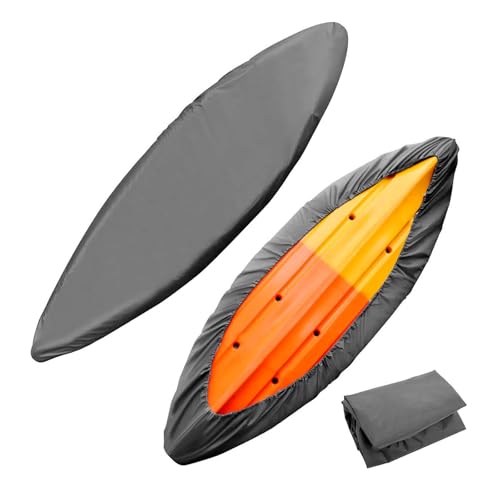
This cover is the only option here that specifically calls its fabric breathable: it uses 210D Oxford material and adjustable straps. The maker says it helps protect against sun exposure, rain, dust and dirt during outdoor storage, and describes the fabric as resistant to light wear and splashes. That makes it a fit for owners who want a cover for regular storage and value airflow as a feature. Its size is labeled “normal” rather than given as a length range, so check compatibility if your kayak carries add-ons that change its outside dimensions.
Bottom line: Choose this if breathable 210D Oxford fabric is the deciding feature.
How to choose a Boss 10 SS cover
Start with the kayak’s actual overall length and the cover’s fit, then compare closure and fabric. A 10-foot kayak cover should be selected by the hull’s measured length and shape, not by assuming every cover labeled for the model has identical dimensions. Length alone may not settle fit when a kayak has protruding fittings or accessories.
For outdoor storage, look for the specific weather features you need: a waterproof coating and sealed seams are different claims from splash resistance or breathable construction. A hem, straps or cords can help hold a cover in place, but no closure makes a loose-fitting cover secure. If the kayak will be exposed to wind, select a cover that can be tightened around it and remove or resecure it if it begins to flap.
How kayak cover sizing works
Measure the kayak from its farthest bow point to its farthest stern point, including fixed fittings that must remain covered. Compare that measurement with the cover’s usable length; a nominal model match does not guarantee room for accessories or a particular hull profile. This matters especially when a cover gives a broad range rather than dimensions for a single boat.
A cover advertised for 11.7 to 13.1 feet is aimed at longer kayaks than a 10-foot class boat. If your kayak is under 11.7 feet, don’t assume extra fabric will improve protection: excess material can bunch or catch wind. Verify the intended hull size before ordering, and allow room only when the manufacturer’s fit guidance supports it.
Storage covers versus transport covers
Most kayak covers in this comparison are described for outdoor storage; one also mentions roof-rack transport. That difference matters because road speed can make loose fabric flap, pull at straps or catch the wind. Treat a cover as storage-only unless its maker specifically identifies it for transport, and secure it using the intended attachment points.
For storage, keep the kayak stable and avoid trapping pooled water under the fabric. A breathable cover may help air move through, while sealed seams and a waterproof coating are aimed at reducing water entry; these features are not interchangeable. Inspect the fit after wind or rain, especially if the cover shifts or the kayak is stored near falling leaves or debris.
Common kayak cover mistakes
The most common sizing mistake is choosing by the kayak’s model name without checking length and outside shape. A longer cover can bunch, while a tight cover may not reach around a wider hull or accessories. Measure the kayak before selecting a size, and verify any cover whose range begins above the kayak’s measured length.
Another mistake is treating “water resistant,” “waterproof” and “breathable” as equivalent. Those terms describe different fabric or construction properties, and a cover’s features should match the storage conditions. Avoid leaving a loose cover flapping in strong wind, and do not assume a storage cover is safe for highway transport. Recheck straps and cords periodically for looseness or wear.
Frequently Asked Questions
How do I measure a kayak for a cover?
Measure from the farthest point at the bow to the farthest point at the stern, including fixed fittings that need coverage. Compare that overall length with the cover’s size range and account for the hull’s width and shape.
Can I leave a kayak cover on in the rain?
A cover with a waterproof coating and sealed seams is intended to limit water entry, while breathable fabric addresses airflow rather than waterproofing. Secure the cover so rainwater does not pool on top.
Can I transport a kayak with its storage cover on?
Only use a cover for road transport if its maker specifically identifies it for that purpose. At road speed, loose fabric can flap or catch wind, so secure it correctly and stop if it shifts.
How should a kayak cover fit in windy weather?
The cover should fit close enough to limit loose, flapping fabric and should be held by its intended straps, cords or hem. Recheck it after wind; remove or secure it again if it shifts.
Does a breathable kayak cover keep rain out?
Breathability and water resistance are separate properties. A breathable fabric may allow airflow, while a waterproof coating and sealed seams are the features aimed at reducing rain entry.