
USB Red-Blue Bicycle Tail Lights Compared by Modes

YUERWOVER Red + Blue 2-Pack is the closest match for a USB red-and-blue bicycle tail light because it comes as a two-pack and offers five modes. Choose another option if you need a different mode count or a specified attachment style.
A bicycle tail light is a rear-facing lamp intended to make a rider easier to notice; red is the conventional rear signal color, while blue can be confused with other road signals in some places.
We earn a commission if you buy through links on this page. As an Amazon Associate I earn from qualifying purchases. Products are compared on manufacturer specifications, not hands-on testing.
- Best overall: YUERWOVER Red + Blue 2-Pack – The two-pack combines five modes with a 500 mAh battery and a claimed 2–6 hours of use.
- Best for flexible mounting: Red-Blue Dual-Color Silicone-Strap Light – The maker describes a silicone-strap that can attach to a bike, helmet, or backpack.
- Best for more modes: ROCKBROS 7-Mode Red-Blue-Green Light – Seven modes give more selectable patterns than the other exact matches.
| Product | Best for | Colors | Modes | Recharge/runtime | Shop |
|---|---|---|---|---|---|
| YUERWOVER Red + Blue 2-Pack | Two-light setup | Red and blue | 5 | USB; 2–6 hours claimed | Check Price on Amazon |
| Red-Blue Dual-Color Silicone-Strap Light | Flexible mounting | Red and blue | 5 | USB; runtime — | Check Price on Amazon |
| USB Rechargeable Red + Blue + White Rear Light | Three-color option | Red, blue, and white | 5 or 6 | USB; runtime — | Check Price on Amazon |
| ROCKBROS 7-Mode Red-Blue-Green Light | More mode choices | Red, blue, and green | 7 | USB; runtime — | Check Price on Amazon |
USB Red-Blue Bicycle Tail Lights
Compare color patterns, mode counts, and charging claims to find a light that suits your setup.
YUERWOVER Red + Blue 2-Pack

The two-light pack stands apart with a 500 mAh battery and a claimed 2–6 hours of operating time after a 1–2 hour charge. The maker says its COB LEDs produce up to 100 lumens and a 240-degree viewing angle. Five modes include solid red, solid blue, and red strobe patterns. The compact light measures about 3.15 by 0.79 inches. It suits riders who want two lights in one set; the claimed runtime range is broad, so plan charging around your ride rather than assuming the maximum.
Bottom line: Choose this set if two lights and a battery capacity matter most.
Red-Blue Dual-Color Silicone-Strap Light
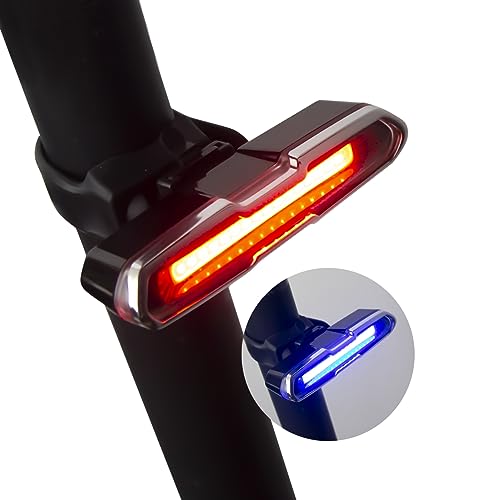
The silicone-strap is the distinguishing feature: the maker says it can attach to a bicycle, helmet, or backpack. Five modes cover steady red, blue, and alternating red-blue output, plus two flashing patterns. The maker claims 168 lumens and describes the COB light as suitable for front or rear use. That broad mounting flexibility may help when a seatpost mount is not convenient.
Bottom line: Choose this if you want strap mounting beyond the bicycle frame.
USB Rechargeable Red + Blue + White Rear Light

The red, blue, and white color combination separates this rear light from the red-and-blue-only choices. It has a PC shell and an adjustable rubber fixing band, with five or six modes described by the maker. The maker also claims IP43 protection. This option suits a rider who wants a white setting as well as colored output; confirm the selected mode and that the light is mounted facing rearward before riding in traffic.
Bottom line: Choose this if a white option alongside red and blue is useful.
ROCKBROS 7-Mode Red-Blue-Green Light

Seven selectable modes give this red, blue, and green light the broadest mode count among these exact matches. Its 35 lamp beads and 90-degree adjustability are described by the maker, which says USB charging takes 2–3 hours. The adjustable angle can help direct the beam toward traffic behind rather than upward. The green color also makes this a less conventional rear-light choice than a red-only lamp.
Bottom line: Choose this if mode variety and an adjustable angle are priorities.
How to choose a red-blue bicycle tail light
Choose a rear light by color, mount, and the amount of time you need it to stay lit. A steady beam is easy to identify, while a flashing pattern can draw attention; switching patterns does not replace a rear-facing position. Red is the familiar rear signal color, so keep the lamp aimed behind you and avoid using a blue setting where local rules restrict blue vehicle lighting. For rides longer than the maker’s claimed runtime, select a light with a known runtime or bring a charged backup. A light with an adjustable angle can help keep the beam visible to following traffic without pointing it directly upward.
Mounting and aiming bicycle tail lights
Mount a tail light as high and unobstructed as your setup allows, typically on the seatpost or rear rack, with the lens facing behind the bicycle. Bags, jackets, and rack cargo can block a low-mounted lamp; if an object covers more than a small part of the lens, move the light or use a second visible position. Strap mounts are convenient but should be snug enough that the lamp cannot rotate over bumps. Check the mount before each ride and after removing a light for charging. Do not angle a bright rear lamp toward eye level; a visible beam should not dazzle someone riding or driving behind you.
USB charging and runtime planning
USB tail lights recharge from a USB power source, but charge time and useful runtime are separate measurements. The model claiming 2–6 hours of operation also gives a 1–2 hour charge time; the other exact matches do not provide a runtime in these specifications. Treat a maximum runtime as a best-case estimate because flashing pattern, battery age, and temperature can affect time between charges. For any ride that may outlast the operating window, charge before leaving and carry a backup lamp. Keep the charging port dry, and allow a wet light to dry fully before connecting its cable.
Red, blue, and flashing-light choices
Use a rear light primarily to make the bicycle visible from behind, not as a substitute for a reflector or required equipment. U.S. bicycle lighting requirements vary by state and locality, so check the rule where you ride, especially before choosing a blue setting. A red-only mode is the most conventional choice for rear use, while blue or alternating colors can be less familiar to motorists and may be restricted. Mode count matters less than whether the chosen pattern remains visible and the battery lasts for the full ride. Riders sharing paths should also avoid rapidly changing bright patterns that make distance and movement harder to judge.
Frequently Asked Questions
How long should a bicycle tail light last on one charge?
A useful runtime depends on the mode, battery condition, and temperature, so plan around the maker’s figure rather than the brightest setting alone. One option here claims 2–6 hours; recharge before a ride that could exceed the lower end.
Should a bicycle tail light stay on steady or flash?
Either pattern can help others notice a bicycle, but a steady red mode gives following traffic a stable point to judge position. Choose a visible pattern and keep a separate backup if the ride may exceed the light’s runtime.
Where should I mount a bicycle rear light?
Mount the lamp at the rear where bags and clothing do not cover its lens, commonly on a seatpost or rack. Aim it backward and keep it from pointing directly into another road user’s eyes.
Can I use a blue light on the back of my bicycle?
Blue bicycle lighting rules can vary by state and locality, and blue can be confused with vehicle signals. Check your local requirements and use a red rear setting when in doubt.
Can a USB bicycle light work in the rain?
Water resistance varies by model, so do not treat every USB light as suitable for heavy rain. One option claims IP43 protection; keep the charging port dry and disconnect the cable before riding.