
Best Chimney Cleaning Kit: 5 Kits Compared by Reach

The VEVOR Chimney Sweep Kit suits most buyers who need extra reach and varied brush options, with a 33-foot maximum extension and dual brush heads. Choose a 30-foot kit instead if that length is sufficient and you prefer a simpler nylon brush setup.
A chimney cleaning kit uses connected rods and a brush to dislodge deposits inside a flue; matching the brush to the flue shape and material matters.
We earn a commission if you buy through links on this page. As an Amazon Associate I earn from qualifying purchases. Products are compared on manufacturer specifications, not hands-on testing.
- Best overall: VEVOR 33-Foot Dual-Head Kit – Its 33-foot reach and dual brush heads offer the longest extension and more brush options here.
- Best for extra reach: Sealegend 33-Foot, 10-Rod Kit – It reaches 33 feet and uses 10 flexible rods.
- Best for a 30-foot nylon setup: Sealegend 30-Foot, 9-Rod Kit – It combines a 30-foot reach with nine rods and a nylon brush head.
| Product | Best for | Maximum reach | Rod count | Brush bristles | Shop |
|---|---|---|---|---|---|
| VEVOR 33-Foot Dual-Head Kit | Longer flues | 33 ft | — | Nylon and steel wire | Check Price on Amazon |
| Sealegend 33-Foot, 10-Rod Kit | Extra reach | 33 ft | 10 | Nylon | Check Price on Amazon |
| Sealegend 30-Foot, 9-Rod Kit | Basic nylon setup | 30 ft | 9 | Nylon | Check Price on Amazon |
| Morinoli 30-Foot, 9-Rod Kit | Flexible rods | 30 ft | 9 | Nylon | Check Price on Amazon |
| Bluesea 30-Foot Ergonomic Kit | Thirty-foot reach | 30 ft | 9 | Nylon | Check Price on Amazon |
Chimney cleaning kits
Compare maximum reach, rod count and brush setup to match the kit to your flue and cleaning approach.
VEVOR 33-Foot Dual-Head Kit

The VEVOR kit is the only option here with dual brush heads, pairing nylon and steel wire bristles on an aluminum alloy brush head. Its flexible nylon rod extends up to 33 feet and is designed to bend over 90 degrees, which may help it navigate bends in a flue. The kit is described as suited to square, rectangular and arch chimneys, and includes goggles. Its added brush materials and head design make it less straightforward than a single nylon brush kit; check that its brush configuration suits your flue before use.
Bottom line: Pick this if you need up to 33 feet of reach and want two brush types.
Sealegend 33-Foot, 10-Rod Kit

The Sealegend 33-foot kit offers longer reach than the four 30-foot options, using 10 flexible rods and a nylon brush head. Its button-lock connections are made for attachment and removal, and the brush can be connected to an electric drill for rotary cleaning. The kit is also presented for dryer vent duct cleaning, although that is a different task from cleaning a chimney flue. It does not offer the dual brush materials of the VEVOR kit, so buyers who want wire bristles alongside nylon should consider that difference.
Bottom line: Choose it for a 33-foot nylon setup with 10 rods.
Sealegend 30-Foot, 9-Rod Kit

The Sealegend 30-foot kit pairs nine rods with a pointed rectangular nylon brush head, making it a simpler option than the longer or dual-head kits. The maker says the brush can attach to an electric drill for rotation and move up and down the flue. Chrome-plated button connections are designed for assembly and removal. Its maximum reach is three feet shorter than the 33-foot options, so choose another kit if your flue requires more extension; its nylon brush also lacks a second bristle material.
Bottom line: Pick this when 30 feet and a single nylon brush are enough.
Morinoli 30-Foot, 9-Rod Kit
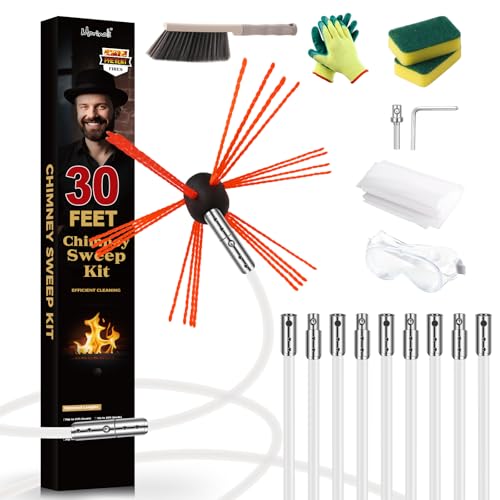
The Morinoli kit uses nine nylon rods and a nylon-string brush with a sharp-edged rectangular shape, while retaining the 30-foot reach shared by several options. The maker describes its chrome-button locking system as secure for clockwise and counterclockwise rotation, and says the rods are 39.3 inches long. Nylon rods are identified as elastic and chemically resistant. This package shares its basic reach and nylon brush approach with other 30-foot kits, so its distinguishing detail is the rod material; it does not provide the additional steel-wire bristle option found on the VEVOR.
Bottom line: Choose this if you want 30 feet of reach with nylon rods.
Bluesea 30-Foot Ergonomic Kit
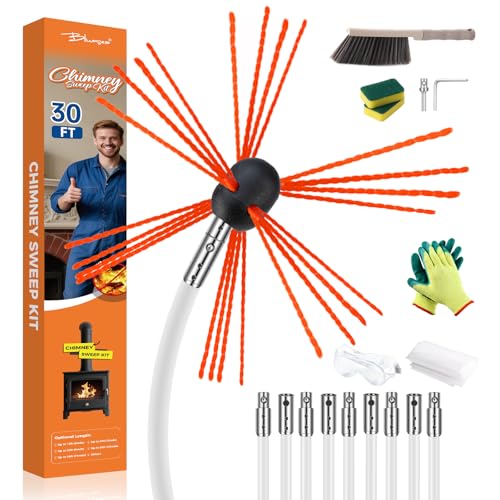
The Bluesea kit has a 30-foot maximum reach and nine flexible rods, with chrome-button connections designed for clockwise or counterclockwise rotation. Its nylon-string brush has a pointed rectangular shape, and the maker says each rod is 39.3 inches long. The kit’s 30-foot reach makes it a shorter alternative to the two 33-foot kits, while its single nylon brush is less versatile in bristle type than a dual-head arrangement. It fits buyers whose flue can be reached within 30 feet and who want a familiar rod-and-brush setup.
Bottom line: Pick this for a 30-foot flue reach and a single nylon brush.
How to choose a chimney cleaning kit
Choose by flue shape, interior size, and the maximum reach you need, not by rod count alone. A chimney brush should fit the flue closely enough to contact deposits without forcing the head around bends. Round, square, rectangular, and oval flues can require different brush shapes; measure the interior before choosing. For a straight run within 30 feet, a 30-foot kit may be adequate; if the cleaning path exceeds that reach, select a longer kit. Nylon bristles are commonly used for metal flues because they are less abrasive than wire. Confirm brush compatibility with the flue material before rotary cleaning.
Chimney brush materials and flue fit
Brush material matters because chimney liners are not all alike. Stainless-steel liners can be scratched by an overly aggressive brush or unsuitable wire bristles; masonry flues generally call for a brush matched to the liner and deposit condition. Nylon is a less abrasive choice, but that does not make every nylon brush suitable for every liner. Measure the flue’s inside width and shape, and compare it with the brush head before assembling the rods. A brush that is too small may miss deposits along the walls; one that is too large can bind. Stop if a brush catches rather than forcing the rods.
| Need | Consider | Reason |
|---|---|---|
| Flue has a liner requiring gentle contact | Nylon bristles | Less abrasive than wire |
| Want a second bristle material option | Dual-head configuration | Offers nylon and steel wire heads |
| Flue run is longer than 30 feet | 33-foot maximum reach | Provides three extra feet of extension |
Using a rotary chimney sweep safely
Use a rotary chimney kit only with the drill and rod connection secured, and keep the drill at a controlled speed; high speed can whip flexible rods or cause a brush to bind. Sweep from the correct access point for your chimney design, keeping rods aligned and adding sections only as the brush advances. Soot and creosote can fall into the firebox, so close room openings and protect the work area before cleaning. Wear eye protection and a suitable respirator, and keep people away from falling debris. Chimney brushes remove deposits but do not replace an inspection; glazed creosote or damaged masonry needs professional assessment.
Creosote buildup and cleaning intervals
Creosote is combustible residue produced when wood smoke cools, and it can accumulate in stages from flaky soot to hard, glazed deposits. The National Fire Protection Association recommends an annual inspection of chimneys, fireplaces, and vents; cleaning is needed when deposits or damage are found. Burning seasoned wood and maintaining a hot, well-ventilated fire can reduce conditions that promote buildup, but neither eliminates inspection needs. A home rotary kit is for reachable deposits and is not a remedy for a blocked flue, structural damage, or glazed creosote. Stop using the fireplace if smoke spills into the room or you see signs of a chimney fire, and arrange a qualified inspection.
Frequently Asked Questions
How often should a chimney be inspected?
Have chimneys, fireplaces, and vents inspected at least once a year. Cleaning depends on what the inspection finds, including deposits, obstruction, or damage.
Can a nylon brush scratch a chimney liner?
Nylon is less abrasive than steel wire, but brush fit and liner material still matter. Match the head to the measured flue and stop if it binds.
How much chimney rod reach should I buy?
Choose a kit whose maximum reach covers the flue’s cleaning path; the options here reach 30 or 33 feet. Measure the run rather than assuming the chimney height equals the required rod length.
Can I use a chimney brush with a power drill?
Some rotary kits are designed to connect to an electric drill, but flexible rods can whip or bind at excessive speed. Use controlled rotation, secure each connection, and stop if the brush catches.
Will a chimney cleaning kit remove glazed creosote?
A basic rotary brush should not be treated as a solution for hard, glazed creosote. That deposit can resist brushing, so stop using the fireplace and arrange a qualified chimney inspection.