
MTB Lock-On Grips: Five Options Compared by Fit

For most riders, PNW Loam Regular 30 mm is a versatile MTB lock-on grip choice because its 30 mm profile pairs a palm-supporting pattern with a slimmer feel than the 34 mm XL. Choose PNW Loam XL 34 mm if you want more grip volume for larger hands; riders seeking a half-waffle texture or an explicit 131 mm length should consider ODI Elite Pro 130 mm or GPMTER Single-Lock 131 mm.
Lock-on grips secure to the handlebar with a clamp, reducing the chance of rotation compared with friction-fit grips.
We earn a commission if you buy through links on this page. As an Amazon Associate I earn from qualifying purchases. Products are compared on manufacturer specifications, not hands-on testing.
- Best overall: PNW Loam Regular 30 mm – The 30 mm diameter offers a relatively slim profile with a mixed traction pattern.
- Best for larger hands: PNW Loam XL 34 mm – Its 34 mm XL diameter provides more grip volume than the 30 mm Regular.
- Best for half-waffle texture: ODI Elite Pro 130 mm – The half-waffle front pattern is intended to add control when riding behind the saddle.
- Best for a stated length: GPMTER Single-Lock 131 mm – Its 131 mm length is specified alongside a 22.2 mm handlebar fit.
| Product | Best for | Grip diameter | Length | Clamp style | Shop |
|---|---|---|---|---|---|
| PNW Loam Regular 30 mm | Slim trail feel | 30 mm | — | Single clamp | Check Price on Amazon |
| PNW Loam XL 34 mm | Fuller grip volume | 34 mm | — | Single clamp | Check Price on Amazon |
| GPMTER Single-Lock 131 mm | Known grip length | — | 131 mm | Single clamp | Check Price on Amazon |
| ODI Elite Pro 130 mm | Half-waffle texture | — | 130 mm | Lock-on | Check Price on Amazon |
| ODI Vans V2.1 Checker | Waffle pattern | — | — | Single clamp | Check Price on Amazon |
MTB Lock-On Grips
Compare these grips by profile, length, surface pattern and clamp details to match your hands and riding preferences.
PNW Loam Regular 30 mm
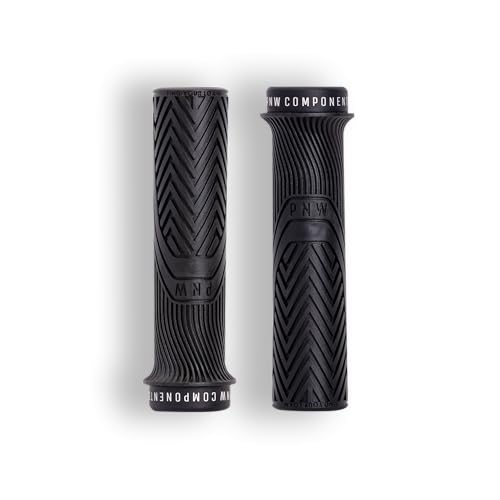
The 30 mm profile makes this the slimmer PNW Loam option, while its textured surface combines thin horizontal strips with a thicker palm-support pattern. PNW says the tacky rubber compound absorbs vibration and maintains traction in wet conditions. A single-clamp lock-on design fits standard 22.2 mm mountain bike handlebars, and the closed end protects the grip edge. This option suits riders who want a relatively narrow grip with a varied texture. Its smaller diameter provides less grip volume than the 34 mm XL, which may matter to riders who prefer a fuller hold.
Bottom line: Choose this if you want a slimmer trail grip with a mixed traction pattern.
PNW Loam XL 34 mm

The 34 mm diameter sets this XL apart from the 30 mm Regular and gives it more grip volume for larger hands or riders who want a fuller hold. The dual-pattern surface pairs thin horizontal traction strips with a thicker palm-support area. PNW says its tacky rubber compound absorbs vibration and enhances traction in wet conditions. The single-clamp lock-on system fits standard 22.2 mm mountain bike handlebars, and the grip has a closed end. The larger profile is the key tradeoff: riders who prefer a minimal feel may find the 30 mm size a better match.
Bottom line: Pick this if you want more grip volume or have larger hands.
GPMTER Single-Lock 131 mm
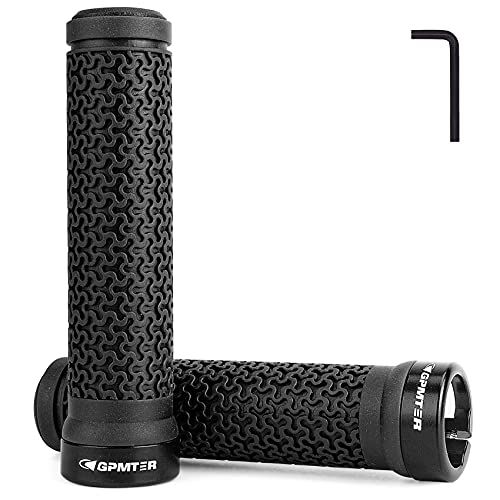
The 131 mm length and 22.2 mm handlebar fit are the clearest sizing points on this grip, which uses a single aluminum-alloy clamp. Its non-slip rubber surface has an extra gel layer, and the maker says the high-friction rubber provides grip in all weather. The fit covers mountain bikes as well as BMX, cruisers, scooters and folding bikes, so this is a broad-use option rather than a trail-only design. Choose it when the measured length and clamp arrangement suit your cockpit. The grip diameter is not given, so confirm the available space at the bar ends before buying.
Bottom line: Choose it if its 131 mm length and 22.2 mm bar fit match your setup.
ODI Elite Pro 130 mm
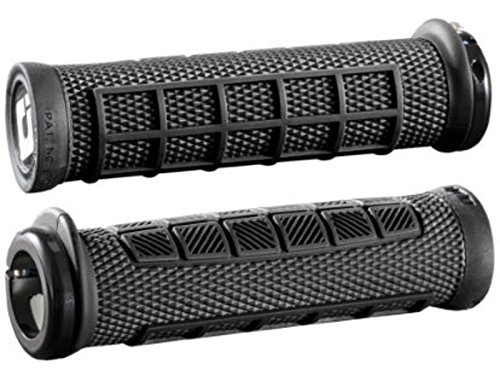
The half-waffle pattern on the front distinguishes this 130 mm grip, with ODI saying it adds control when a rider is positioned behind the saddle. Its ergonomic shape is designed to place padding where needed without feeling bulky, while alternating smooth and sharper knurl textures add traction. The model name identifies it as a lock-on grip, and the 130 mm length gives a useful point of comparison with the 131 mm GPMTER. This suits riders who want a half-waffle surface and a defined length.
Bottom line: Pick this for a half-waffle front and a 130 mm length.
ODI Vans V2.1 Checker
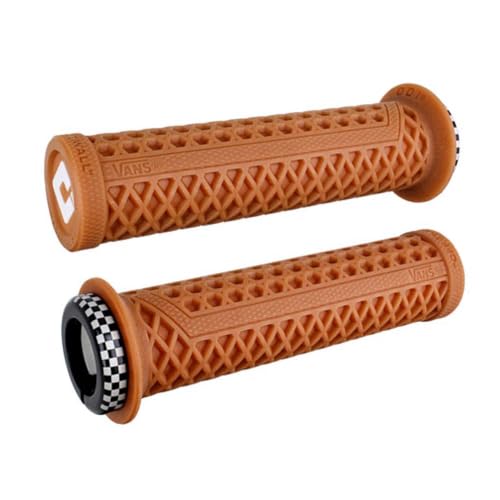
The updated Vans waffle pattern is the defining feature of this ODI grip, offering a different surface from the mixed strip-and-palm pattern on the PNW Loam models. ODI’s V2.1 single-clamp system is designed for a secure fit, and the small flange is intended to protect the hands without interfering with nearby handlebar components. Soft TPE ends add comfort at the outer edges. This model suits riders who prefer a waffle surface and a minimal flange.
Bottom line: Choose this if the Vans waffle surface and small flange suit your cockpit.
How to choose MTB lock-on grips
Start with hand fit, then compare pattern and clamp layout. Mountain-bike grip diameters commonly run about 30 to 34 mm; a smaller diameter feels less bulky, while a larger one fills more of the hand. This is a preference, not a universal comfort rule. Standard MTB handlebars use a 22.2 mm grip area, so verify that fit when a grip is intended for multiple bike types. For a slim profile, choose 30 mm; for more volume, choose 34 mm. Surface shapes also differ: waffle patterns add raised texture, while mixed patterns can place a smoother or thicker area under the palm. Match grip length to the straight handlebar section and space available beside controls.
How lock-on grips fit the handlebar
Lock-on grips use a clamp to secure the grip around the handlebar rather than relying only on friction. Most mountain-bike grip areas are 22.2 mm in diameter, but the shifter, brake lever and bar-end space determine how much usable length remains. Measure the straight section between the controls and bar end before selecting a grip length; a 130 mm grip needs at least that much clear bar space. For one-piece or unusual handlebars, check the bar maker’s compatibility guidance. Tighten clamp bolts evenly to the grip maker’s specified torque, using a calibrated torque wrench when a torque figure is provided. A grip that can rotate or slide is unsafe to ride on; stop and secure it before riding.
Grip patterns and profiles compared
Grip diameter and surface shape change how a grip meets the hand. A 30 mm grip has less volume than a 34 mm one, while waffle, knurl and palm-support patterns distribute raised texture differently. Choose by the hand position and feel you prefer rather than assuming one pattern suits every trail.
| Riding preference | Grip feature to prioritize | What to compare |
|---|---|---|
| Less bulky hold | Smaller diameter | 30 mm versus 34 mm |
| More grip volume | Larger diameter | Whether 34 mm suits your hand |
| Raised front traction | Waffle pattern | Pattern placement and flange shape |
| Palm support | Thicker palm zone | Mixed-pattern layout |
Choose the measurable profile first, then narrow the options by texture and length.
Installation and grip safety
Install lock-on grips on a clean, dry handlebar so the clamp can seat securely. Keep the brake levers and shifters in their intended positions, then check that each grip sits fully on the straight bar section and that its end does not obstruct a bar end or plug. Clamp count varies: single-clamp designs use one securing point, so align that clamp as directed by its maker and tighten to its specified torque. Never ride with a grip that twists under hand pressure; a moving grip can compromise steering control. Recheck grip security after installation and after any impact or adjustment, and replace a grip if its rubber tears or the clamp is damaged.
Frequently Asked Questions
What diameter are standard MTB handlebars?
Most mountain-bike grip sections use a 22.2 mm diameter. Confirm that measurement at the grip area, especially on bikes with unusual or nonstandard handlebars.
How do I choose MTB grip diameter?
Common MTB grip diameters are about 30 to 34 mm. Choose 30 mm for a slimmer feel or 34 mm for more volume, then consider hand size and preference.
How much handlebar space do grips need?
A 130 mm grip needs at least 130 mm of clear straight bar space. Measure between the controls and the bar end before selecting a length.
Can lock-on grips still twist while riding?
A properly secured lock-on grip should not rotate, but loose or damaged clamps can allow movement. Do not ride if a grip twists under hand pressure; secure or replace it first.
What is the difference between waffle and knurled grips?
Waffle grips use raised blocks, while knurling uses repeated ridges or texture. Pattern placement and sharpness affect the feel, so compare the front and palm areas rather than pattern names alone.