
Help With Putting Socks On: 5 Sock Aids Compared

A sock aid can help with putting socks on without bending; Easy Sock Ox Adjustable Sock Aid stands out for adjustable cradle width and length plus a built-in sock remover and shoehorn. Choose a simpler sock aid if you only need help pulling on regular socks, and check fit limits before choosing.
A sock aid is a dressing tool that holds a sock open so you can guide your foot into it while seated.
We earn a commission if you buy through links on this page. As an Amazon Associate I earn from qualifying purchases. Products are compared on manufacturer specifications, not hands-on testing.
- Best overall: Easy Sock Ox Adjustable Sock Aid – Adjustable width and length combine sock application, removal, and a long-handle shoehorn.
- Best for sock removal: RMS Sock Aid Kit – Includes a separate sock remover with its foam-handle sock aid.
- Best for a wide tube: Jellas 4-Inch Sock Aid Kit – The shell has a 4-inch tube and the assembled remover is 18.5 inches long.
| Product | Best for | Foot-width fit | Handle or reach | Included tools | Shop |
|---|---|---|---|---|---|
| Easy Sock Ox Adjustable Sock Aid | Adjustable routines | Adjustable | Three lengths | Sock remover, shoehorn | Check Price on Amazon |
| RMS Sock Aid Kit | Sock removal | Up to 5 in. | Foam handle | Sock remover | Check Price on Amazon |
| RMS Deluxe Sock Aid | Simple sock application | Up to 5 in. | Foam handles | Sock aid | Check Price on Amazon |
| Jellas 4-Inch Sock Aid Kit | Wide tube opening | — | 4-in. tube | 18.5-in. assembled remover | Check Price on Amazon |
| CAidRE 3.93-Inch Sock Aid | Narrower foot fit | Up to 4.2 in. | Foam handles | Sock aid | Check Price on Amazon |
Sock Aids for Help With Putting Socks On
Compare the fit limits, handling style, and added tools to find a sock aid suited to your routine.
Easy Sock Ox Adjustable Sock Aid
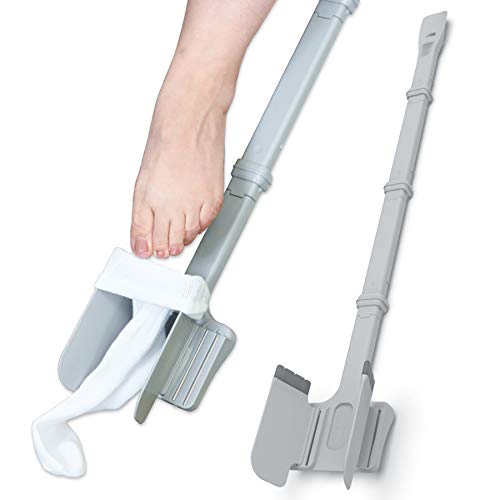
Adjustable cradle width and three reach lengths distinguish this sock aid from the fixed-shell options. Its rigid cradle guides the sock onto the foot, while the same tool includes a long-handle shoehorn and a hook for sock removal. The removable extensions can be taken apart for packing, making this a fit for people who want one tool for several dressing steps. The limitation is its 13-ounce weight, which is more than the lighter foam-handle aids; that may matter if you have difficulty lifting or positioning a tool.
Bottom line: Choose this if adjustable reach and multiple dressing functions matter more than a lightweight design.
RMS Sock Aid Kit
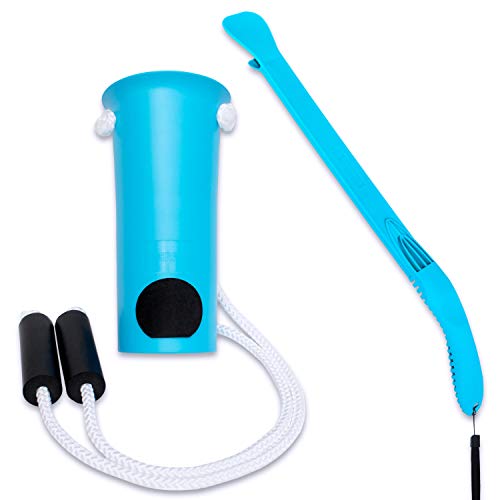
A separate sock remover is the main distinction of this two-piece kit. The soft, flexible sock shell has a foam handle and is designed for users with weak hand strength; the kit also includes a remover for regular socks or stockings. The shell suits foot widths up to 5 inches and common everyday sock types such as athletic, dress, ankle, and calf-length socks. It is not intended for compression socks or stockings, so people who wear those garments should choose a purpose-designed donning aid instead.
Bottom line: Choose this if you want a foam-handle sock aid and a separate tool for taking socks off.
RMS Deluxe Sock Aid

The flexible contoured shell and foam handles make this a straightforward option for putting on regular socks. The shell is intended for users with weak hand strength, and its 5-inch maximum foot width is broader than the 4.2-inch limit given for the CAidRE option. It accommodates everyday styles including ankle, knee, athletic, and dress socks. This is a sock-application aid only, rather than a kit with a separate remover; buyers who also need help taking socks off should consider a model that includes that function.
Bottom line: Choose this if you need a flexible aid for regular socks and your foot is no wider than 5 inches.
Jellas 4-Inch Sock Aid Kit

The 4-inch-wide tube and an assembled 18.5-inch sock remover distinguish this kit. To put on a sock, slide it over the plastic shell, place your foot into the opening, and pull the aid upward. The remover is assembled from two parts; leaving off the reinforcing nails makes it easier to take apart for storage or carrying. This option may suit someone who wants a wider tube and a removable tool for taking socks off. The sock aid description cuts off before giving a full compatibility range, so confirm the opening and sock fit before ordering.
Bottom line: Choose this if the 4-inch tube and removable two-part remover fit your storage and dressing needs.
CAidRE 3.93-Inch Sock Aid

The 4.2-inch foot-width limit makes this the narrower-fit choice among the aids with a maximum width. Its 3.93-inch tube, extended lip, and non-slip foam pad are intended to keep a regular sock in place while you pull it on. It is designed for everyday socks such as ankle, knee, athletic, and dress styles, not tight compression garments or extremely thick stockings. Because the fit limit is narrower than the 5-inch options, measure your foot across its widest point before choosing this model.
Bottom line: Choose this if your foot is 4.2 inches wide or less and you wear regular socks.
How to Choose a Sock Aid
Choose a sock aid by matching its opening and handling style to your foot and sock. A flexible shell can be easier to load when hand strength is limited, while a rigid cradle may hold its shape and offer adjustable fit. Check the maker’s maximum foot width: a 5-inch limit gives more width allowance than a 4.2-inch limit. Sock aids are generally intended for regular socks; compression garments often need a separate donning aid because their tight fit resists sliding over a standard shell. If the package describes only a tube width, do not assume that measurement is the same as the maximum foot width. Check the lift range before ordering if reaching down is difficult.
How to Use a Sock Aid While Seated
Load the sock fully over the shell before guiding your foot into the opening. Smooth the heel and toe portions over the aid so fabric does not bunch beneath the foot; a twisted sock can create pressure points after dressing. Sit on a stable chair, keep the tool centered, and pull its handles or cords evenly rather than jerking. Stop if the device slips, the sock catches, or you feel pain, and reposition the fabric instead of forcing it. A sock aid reduces the need to bend, but it does not replace balance support: do not stand on one foot while pulling the tool. People with reduced sensation should check that the sock lies flat around the toes and heel.
Regular Socks and Compression Garments
Regular socks are the intended match for most basic sock aids, including ankle, athletic, dress, and calf-length styles. Tight compression socks are a different dressing task: their firm fabric can be difficult to stretch over a standard shell, and these products explicitly exclude compression use. Compression garments commonly have a prescribed compression level, so use a donning aid made for that garment and ask the prescribing clinician or fitter which method is appropriate. Thick socks can also be harder to load because added fabric reduces the room in the shell. A practical decision rule is to use a basic sock aid only when the sock slides onto its shell without excessive stretching; if you have to force the fabric, choose a compatible aid rather than pulling harder.
Fit and Storage Checks Before Buying
Measure the widest part of your foot across the forefoot and compare it with the tool’s fit limit; leave some ease rather than choosing a shell at the exact edge of your measurement. Shell width and allowable foot width are different measurements, so do not substitute one for the other. Consider where you will use the aid: longer handles can reduce the reach needed from a chair, while extension pieces may make storage less compact. A multi-function tool may consolidate dressing steps, but simpler aids are easier to understand when you only need sock application. Keep removable parts together and inspect foam pads, cords, and shell edges for wear; a slipping or cracked aid should not be used until repaired or replaced.
Frequently Asked Questions
Can a sock aid work with compression socks?
Most basic sock aids are intended for regular socks, not compression garments. Use a donning aid designed for your compression garment, since tight fabric may not slide over a standard shell.
How do I measure my foot for a sock aid?
Measure across the widest part of your forefoot and compare it with the maker’s maximum foot-width limit. For example, a 4.2-inch limit will not fit a foot wider than 4.2 inches.
Can I use a sock aid from a wheelchair?
A sock aid can be used while seated, including from a wheelchair, if you can position your foot and pull the handles safely. Keep the wheelchair stable and avoid leaning or standing on one foot to finish dressing.
Why does my sock bunch up on the aid?
A sock can bunch when it is not pulled fully and evenly over the shell before use. Smooth the heel and toe over the aid, then guide your foot in without twisting the fabric.
How often should I replace a sock aid?
Replace or stop using a sock aid if its shell cracks, a cord frays, or a foam grip slips; those are signs it may no longer hold or pull reliably. No fixed replacement interval applies to every device.