
Flex Focus Glasses: Adjustable Readers Compared

PUDOEN Flex Focal Dial Glasses is the closest match for shoppers seeking flex focus glasses because its two side dials adjust from 0D to +3.50D. Choose another pair if you want photochromic lenses, a specified fit, or a narrower power range; these are over-the-counter readers, not a replacement for prescription eyewear.
We earn a commission if you buy through links on this page. As an Amazon Associate I earn from qualifying purchases. Products are compared on manufacturer specifications, not hands-on testing.
- Best overall: PUDOEN Flex Focal Dial Glasses – Its two adjustment dials cover the widest range: 0D to +3.50D.
- Best for outdoor transitions: Vision Pro Photochromic Smart Focus, 2-Pack – The maker describes photochromic lenses that darken outdoors and clear indoors, with a +1.50D to +2.50D range.
- Best for specified fit: SHUNXI Dial Vision Readers – It gives lens dimensions of 55 mm wide by 38 mm high and 140 mm temples.
| Product | Best for | Power range | Frame or lens material | Shop |
|---|---|---|---|---|
| PUDOEN Flex Focal Dial Glasses | Wide dial range | 0D to +3.50D | — | Check Price on Amazon |
| SHUNXI Dial Vision Readers | Measured fit | +0.50D to +2.50D | Polycarbonate frame; PC lens | Check Price on Amazon |
| Auto Focus Blue-Light Glasses | Blue-light filter | — | Resin and PC frameless structure | Check Price on Amazon |
| Vision Pro Photochromic Smart Focus, 2-Pack | Outdoor transitions | +1.50D to +2.50D | HD resin lenses | Check Price on Amazon |
| yayaboqu Auto Focus Flexible Readers | Flexible frame | +0.50D to +2.50D | Polycarbonate frame | Check Price on Amazon |
Flex Focus Glasses Compared
Compare adjustment range, fit measurements and lens construction before choosing a pair for close work.
PUDOEN Flex Focal Dial Glasses
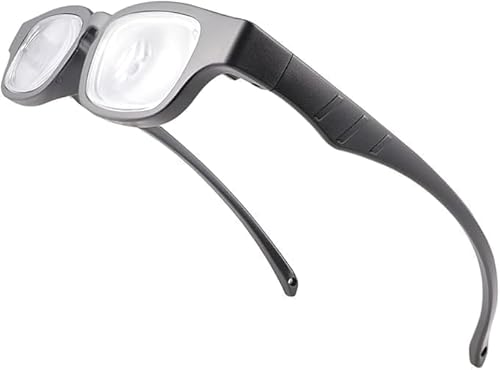
PUDOEN Flex Focal Dial Glasses stands apart with a 0D to +3.50D adjustment range and a separate dial on each side. The maker says turning the dials changes focus, so this style suits someone who wants manual adjustment rather than a fixed reader strength. The black pair is identified as unisex in its name. Its key limitation is that choosing a power by dial is not the same as receiving a prescription: people who need astigmatism correction or different prescriptions in each eye should use advice from an eye-care professional instead.
Bottom line: Choose this pair if you want the broadest manual adjustment range.
SHUNXI Dial Vision Readers

SHUNXI Dial Vision Readers is the measured-fit option, with 55 mm lens width, 38 mm lens height and 140 mm temples. Its polycarbonate frame and PC lenses distinguish it from options that provide no frame material or lens dimensions. That limitation matters most to anyone selecting glasses around a known prescription or a narrow reading-power need.
Bottom line: Choose it if the dimensions are important to your frame fit.
Auto Focus Blue-Light Glasses

Auto Focus Blue-Light Glasses is the only option here that pairs an auto focus claim with a blue-light filter and a color-change appearance. The maker claims up to 95% blue-light blocking and automatic focus adjustment; those are performance claims rather than prescription specifications. The frameless structure combines resin and PC, and the size is described as one size fits most. No diopter range is given in the specifications, so verify its usable power before buying if you need a particular reader strength; shoppers who need predictable correction should favor a known prescription.
Bottom line: Choose it only if its lens power suits you and the filtering feature matters.
Vision Pro Photochromic Smart Focus, 2-Pack

Vision Pro Photochromic Smart Focus, 2-Pack is the photochromic choice and comes as two pairs, with a stated +1.50D to +2.50D smart multi-focus range. The maker says its lenses darken outdoors under UV light and clear indoors, while also claiming up to 95% blue-light blocking. That narrower power window makes it a poor match for someone needing less than +1.50D or more than +2.50D; the power guide specifically directs higher-power needs to fixed-power options. Consider it for near and intermediate tasks only when your required strength falls in range.
Bottom line: Choose it for the power window and light-adaptive tint.
yayaboqu Auto Focus Flexible Readers

yayaboqu Auto Focus Flexible Readers combines a stated +0.50D to +2.50D auto-adjust range with a flexible polycarbonate frame and spring hinges. The maker describes liquid-crystal lenses that adapt focus without manual tuning, positioning the pair for small print, screens and close work. The maker gives a 22 g weight; prioritize that feature if low frame weight matters to you.
Bottom line: Choose it if you want a flexible frame within the power range.
How to Choose Flex Focus Glasses
Start with the correction you need, not the phrase “auto focus”: reader strength is measured in diopters, and higher positive numbers provide more near magnification. The products here span stated ranges from +0.50D to +2.50D or 0D to +3.50D, while one option gives no usable power range. Match your current reading prescription when available; if you have never had an eye exam, persistent blur, headaches, or different clarity between eyes are reasons to arrange one rather than keep increasing reader strength. These glasses are not a substitute for prescription lenses that correct astigmatism or unequal prescriptions. Verify the usable power of Auto Focus Blue-Light Glasses before buying if strength matters.
What Adjustable Focus Means
Adjustable readers use a lens or mechanism intended to change the viewing focus, but the term does not guarantee that every pair behaves like a custom progressive prescription. A diopter is reciprocal focal length in meters, so +2.00D corresponds to a nominal 0.5-meter focal distance before accounting for eye-to-lens position and viewing needs. A dial-adjusted pair asks the wearer to turn controls; “auto focus” products claim to adjust without that step. The lens descriptions here do not establish optical performance or prescription equivalence. For tasks requiring dependable distance vision, especially driving, use appropriate prescription eyewear instead of relying on adjustable readers.
Fit and Power Range Matter
Frame fit affects whether the optical centers sit comfortably in front of your eyes. SHUNXI Dial Vision Readers provides a 55 mm lens width, 38 mm lens height and 140 mm temple length; those measurements help compare frame proportions, though they do not alone guarantee fit. Use your current glasses’ printed frame measurements as a starting point, and check bridge fit and temple pressure in person when possible. For power, choose a range that actually covers your measured near correction: a range beginning at +1.50D cannot serve someone needing +1.00D. A decision rule: if you rely on a prescription for astigmatism or unequal eye powers, choose properly prescribed lenses rather than adjustable readers.
Using Readers Safely
Readers are for near tasks, not for walking around or driving when they blur distance vision. Keep a separate distance prescription available if you need one, and remove readers before moving through stairs or traffic whenever distance is unclear. Blue-light filtering claims do not establish that glasses prevent eye strain or protect eye health; screen comfort also depends on breaks, lighting and viewing distance. A practical screen habit is the 20-20-20 approach: about every 20 minutes, look roughly 20 feet away for 20 seconds. Stop using a pair that causes persistent blur, eye discomfort or headaches, and seek an eye examination to identify the cause rather than increasing magnification by guesswork.
Frequently Asked Questions
Can adjustable readers replace prescription glasses?
No, adjustable readers do not replace a prescription for astigmatism, unequal correction between eyes, or distance vision. If blur persists with the correct reading strength or affects one eye more than the other, arrange an eye exam.
What does +2.00 diopters mean for reading?
+2.00D is a positive near lens strength with a nominal focal distance of about 0.5 meter. The useful reading distance also depends on your eyes, lens position and task, so the number is not a guaranteed working distance.
Are auto focus glasses safe for driving?
Do not drive in readers that blur distance vision. Use the distance correction prescribed for driving, and stop if road signs or other objects are not clear.
How do I choose a reader strength?
Use the near power from a current prescription or an eye-care professional’s guidance rather than selecting by age alone. If you need different correction in the two eyes, have astigmatism, or have persistent blur, standard over-the-counter readers may not fit your needs.
Do blue-light lenses prevent screen eye strain?
A blue-light blocking percentage does not prove that lenses prevent eye strain. For screen comfort, take regular distance-viewing breaks, reduce glare and keep the screen at a comfortable viewing distance.