
Takane Quartz Clock Movement: 3 Models Compared

Takane Mini Quartz Movement Kit is a practical starting point if you want a complete Takane mini quartz clock movement kit and can choose the shaft size for your clock. Choose Takane Mini Movement, Medium Shaft or Takane Quartz Movement, Selectable Hands instead when their dial-thickness limits or hand options better match your repair.
A quartz clock movement is the battery-powered mechanism that drives the clock hands; matching its shaft to the dial is essential for mounting.
We earn a commission if you buy through links on this page. As an Amazon Associate I earn from qualifying purchases. Products are compared on manufacturer specifications, not hands-on testing.
- Best overall: Takane Mini Quartz Movement Kit – The mini movement kit includes mounting hardware and offers a choice of size and hands upon request.
- Best for thicker dials: Takane Mini Movement, Medium Shaft – Its 7/16-inch threaded shaft is specified for dials up to 3/8 inch thick.
- Best for selected hands: Takane Quartz Movement, Selectable Hands – The kit lets you select hands and specifies a 7/16-inch threaded shaft for dials up to 1/4 inch thick.
| Product | Best for | Threaded shaft | Maximum dial thickness | Hands | Shop |
|---|---|---|---|---|---|
| Takane Mini Quartz Movement Kit | Size choice | Choose a size | — | Free hands on request | Check Price on Amazon |
| Takane Mini Movement, Medium Shaft | Thicker dials | 7/16 in | 3/8 in | Hour and minute on request | Check Price on Amazon |
| Takane Quartz Movement, Selectable Hands | Hand selection | 7/16 in | 1/4 in | Selected hands; gold second | Check Price on Amazon |
Takane Quartz Clock Movements
Compare shaft and dial fit first, then choose the hand arrangement that suits your clock.
Takane Mini Quartz Movement Kit

Takane Mini Quartz Movement Kit stands apart by offering a choice of size in a complete mini movement kit. Its case measures 2 1/8 by 2 1/8 by 5/8 inches, and the shaft diameter is 5/16 inch. The maker says it can run hands up to 6 inches; mounting hardware is included, and hands are free if requested with the order. This suits a repair where the buyer wants to select a shaft size rather than start with one fixed length. The configuration identifies a 7/16-inch threaded shaft, so verify the shaft choice against the dial before ordering.
Bottom line: Choose this kit when size selection and hands on request matter most.
Takane Mini Movement, Medium Shaft

Takane Mini Movement, Medium Shaft is the clearest fit for a thicker dial among these options: its 7/16-inch threaded shaft is specified for dial thickness up to 3/8 inch. The total shaft length is 11/16 inch, and the kit includes mounting hardware and a metal wall hanger. Hour and minute hands are included upon request, while the sweep hand is sold separately. That makes this a useful choice when the dial is within its limit and the buyer needs the mounting hardware. It is less suitable when a sweep hand must come in the kit.
Bottom line: Pick this option for a dial no thicker than 3/8 inch.
Takane Quartz Movement, Selectable Hands
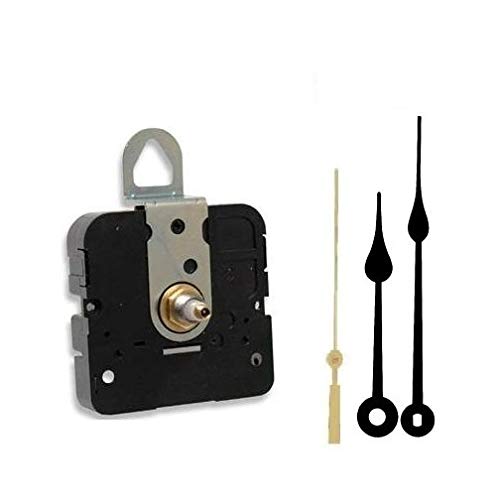
Takane Quartz Movement, Selectable Hands differs by letting the buyer select hands, with the configuration identified as H hands with a gold second hand. Its 7/16-inch threaded shaft is intended for dials up to 1/4 inch thick, and the complete kit includes mounting hardware and a wall hanger. The maker says the movement includes a one-year guarantee. This configuration suits a thinner dial when the selected hand style is the priority. Its thickness limit is lower than Takane Mini Movement, Medium Shaft’s, so it is not the right choice for a dial thicker than 1/4 inch.
Bottom line: Choose this configuration for a dial up to 1/4 inch thick and selected hands.
How to choose a Takane quartz movement
Start with the dial thickness at the movement mounting hole, then match the threaded shaft length to that measurement. The threaded section passes through the dial and needs enough exposed thread for the washer and retaining nut; total shaft length and threaded shaft length are different measurements. A shaft sized for a thinner dial can leave too little thread on a thicker face. Also check the hand arrangement: hour and minute hands are distinct parts, and a sweep second hand may be separate. Measure the dial and note which hands your clock needs before choosing among these movements.
Clock hands are not universal across movement models. The hand attachment must match the movement’s shafts, so retain the old hands as a visual reference, but do not assume they will fit a replacement.
Measure dial thickness and shaft fit
A caliper gives a direct dial-thickness measurement; measure the face at the mounting point rather than relying on the clock’s overall depth. Compare that value with the movement’s maximum dial thickness. For example, a dial between 1/4 and 3/8 inch is beyond the limit of Takane Quartz Movement, Selectable Hands but within the limit of Takane Mini Movement, Medium Shaft. Allow room for the washer and nut to engage the threaded shaft, and account for any spacer or raised bezel that changes the mounting stack.
Do not confuse the shaft’s threaded length with its total length. The thread is the portion used to secure the movement through the dial, while the total shaft can include a longer unthreaded section.
Choose hands that match the movement
Clock hands need to match both the movement’s hand shafts and the clock face’s scale. A hand’s reach is measured from its center attachment to its tip; minute-hand length is commonly judged against the dial’s minute track, while the hour hand is shorter and points toward the hour markings. If an old hand is bent or missing, use the dial dimensions and marking layout rather than estimating from the overall case size.
Confirm whether hour and minute hands are included or must be requested, and whether a sweep second hand is separate. A clock can operate without a second hand if the movement and design permit it, but a hand that does not fit its shaft should not be forced onto it.
Install a replacement clock movement carefully
Remove the battery before opening or working on a quartz clock. Take off the hands and retaining hardware in order, then note how the old movement sits against the dial; this helps keep the replacement aligned. When installing the new mechanism, tighten the retaining nut enough to hold the movement without crushing or bowing a thin dial.
After fitting the hands, rotate them through a full cycle by hand to check that they do not touch each other, the dial, or the glass. If the hands collide or bind, remove and realign them rather than powering a jammed mechanism. Use a fresh battery of the type required by the movement; battery type is not specified for these options, so confirm it before ordering.
Frequently Asked Questions
How do I measure a clock dial for a replacement movement?
Measure the dial thickness where the movement shaft passes through, not the clock’s full case depth. Compare that measurement with the movement’s maximum dial thickness and leave enough threaded shaft for the retaining hardware.
Is threaded shaft length the same as total shaft length?
No. Threaded shaft length is the portion that can be secured through the dial, while total shaft length can include unthreaded portions. Check the threaded measurement against dial thickness and mounting hardware needs.
Can I reuse my old clock hands with a new movement?
Only if the hands fit the replacement movement’s shafts and clear the dial and one another. Hand fittings are not universal, so do not force an old hand onto a mismatched shaft.
How much clearance should clock hands have?
Clock hands must clear each other, the dial markings and the glass through a full rotation. Check the full sweep by turning the installed hands by hand before inserting a battery.
Should the retaining nut be tightened firmly on a clock dial?
Tighten the retaining nut enough to hold the movement in place without bending or crushing the dial. Thin or soft dial materials need particular care because excessive pressure can bow the face.