
Artist Proportional Scale Divider: Materials and Fit

For a drawing tool with a solid brass body, steel point and storage box, start with Professional Brass 9-Inch Divider; its 9-inch length and materials set it apart from the other options. Choose 10-Inch Divider with Leather Sleeve instead if you need an adjustable 1:1 to 5:1 scale, or Pixiss 10-Inch Divider and Art Aids if you want a divider bundled with value and color guides.
A proportional divider is a pivoted measuring instrument that transfers relative distances between a subject and a drawing. Match the adjustment range and working length to your drawing scale and available workspace.
We earn a commission if you buy through links on this page. As an Amazon Associate I earn from qualifying purchases. Products are compared on manufacturer specifications, not hands-on testing.
- Best overall: Professional Brass 9-Inch Divider – Solid brass and a steel point distinguish this 9-inch tool, and it includes a wooden storage box.
- Best for adjustable ratios: 10-Inch Divider with Leather Sleeve – Its scale adjustment ranges from 1:1 to 5:1.
- Best for bundled art aids: Pixiss 10-Inch Divider and Art Aids – The divider comes with a gray-scale finder, color wheel guide and view catcher.
| Product | Best for | Length | Shop |
|---|---|---|---|
| Professional Brass 9-Inch Divider | Brass construction | 9 in | Check Price on Amazon |
| Accurasee Artist Proportional Divider | Locking adjustment | — | Check Price on Amazon |
| Pixiss 10-Inch Divider and Art Aids | Art aid bundle | 10 in | Check Price on Amazon |
| 10-Inch Divider with Leather Sleeve | Ratio range | 10 in | Check Price on Amazon |
Artist Proportional Scale Dividers
Compare the working length, construction and adjustment information to find a divider that suits your drawing process.
Professional Brass 9-Inch Divider
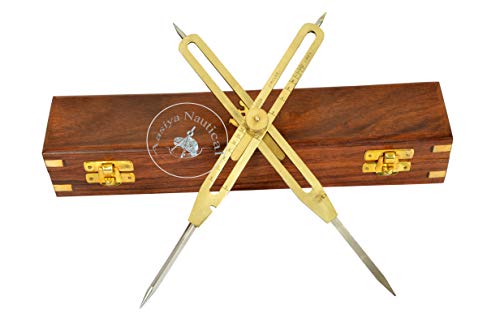
Solid brass construction and a steel point distinguish this 9-inch divider from the other options. The tool is intended to divide a subject into proportional sections for transferring or resizing measurements in artwork, design, drafting or model making. A wooden box provides a place to store and carry the instrument. Its shorter 9-inch length may suit a compact drawing setup, though artists who need an adjustable ratio range should compare it with a model that specifies one. Keep the pointed end covered during storage and handling.
Bottom line: Choose this if brass construction and a wooden storage box matter more than a ratio range.
Accurasee Artist Proportional Divider

A locking device and a claim of 30% more proportion choices distinguish this divider. The maker describes aligning the smaller end with the subject and transferring the larger end’s spacing to the drawing surface; locking the setting helps preserve a chosen relationship while you work. It is aimed at drawing, painting, sketching and drafting. The product name calls it 11 inches, while its dimensions give a length of about 10 inches, so confirm the tool’s actual length before ordering if your workspace has a strict limit.
Bottom line: Choose this if a locking setting and expanded proportion choices are your priority.
Pixiss 10-Inch Divider and Art Aids
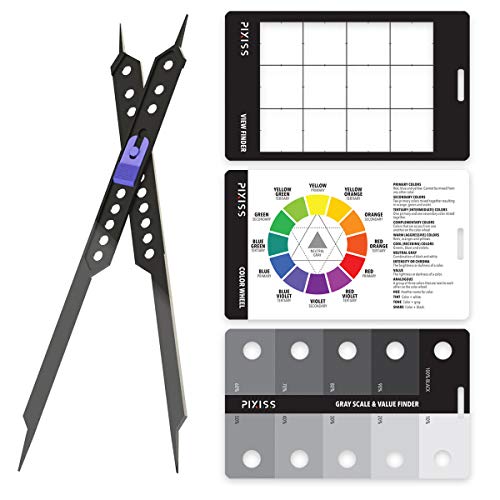
The accessory bundle makes this 10-inch proportional divider different: it includes a gray-scale value finder, a color wheel guide and a view catcher alongside the tool. The divider transfers subject proportions to paper or canvas and can increase, decrease or measure a subject. The guides support separate tasks, including comparing tonal values, identifying color relationships and framing a scene. This is the clearest choice for someone wanting several art aids together; someone who only needs a divider may prefer a simpler tool.
Bottom line: Choose this if you want value, color and composition aids alongside a proportional divider.
10-Inch Divider with Leather Sleeve

An adjustable scale from 1:1 to 5:1 sets this 10-inch divider apart for artists who need to transfer at different proportions. The maker positions it for art, architecture and engineering, and a protective leather sleeve is included. The range spans equal-size transfer through enlargement up to five times, so decide the intended ratio before setting the instrument and compare corresponding points consistently. Its ratio range is the main basis for choosing it over the others.
Bottom line: Choose this when a 1:1 to 5:1 adjustment range is the deciding need.
How proportional scale dividers transfer measurements
A proportional divider transfers the distance between two points by using pivoted arms set to a chosen relationship. Place one pair of points on the subject and use the corresponding pair to mark the drawing; reversing which end touches the subject changes whether the drawing is enlarged or reduced. Work from stable landmarks such as corners or intersections, rather than estimating the middle of a soft edge. For a 2:1 enlargement, a 1-inch subject span should map to a 2-inch drawing span; check a second span before continuing so an incorrect setup does not carry through the composition. A divider transfers distances, not perspective or contour, so complex shapes still need repeated measurements and visual judgment.
Choosing length and adjustment range
Choose a divider length that can span the measurements you take comfortably without crowding the page or subject. The options here range from 9 to 10 inches in the dimensions, while one product name says 11 inches despite a dimension near 10 inches; verify that length if workspace clearance is tight. A 1:1 to 5:1 range supports equal-size transfer through fivefold enlargement, while another model emphasizes more proportion choices but does not give numerical ratios. If you need a specific ratio, select a tool with that range explicitly stated rather than assuming that more settings include it. Smaller sketches may require multiple transfers when the subject span exceeds the divider’s reach.
Setting a ratio without losing accuracy
Set the divider from a known span before transferring the rest of the drawing. For example, if a feature measures 2 inches on the subject and should appear 4 inches on paper, use a 2:1 relationship and confirm the setting with a second 1-inch span that should transfer to 2 inches. Keep the pivot and points steady while measuring; a shifted joint or slipping tip changes the relationship. A locking device can help hold a setting, while a tool without a lock needs careful handling between measurements. Avoid pressing pointed ends into delicate paper or skin, and store points covered or in a case when not in use.
Divider-only tools versus accessory bundles
A divider-only tool focuses on transferring proportions, while an accessory set adds separate aids for tonal, color or composition decisions. The Pixiss package combines a divider with a gray-scale finder, color wheel and view catcher, so it covers several studio tasks in one set. Those aids do not replace the divider’s measurement function: a view catcher frames a scene, and a gray-scale guide helps compare values. A wooden box or leather sleeve instead emphasizes carrying and protecting the instrument. Choose accessories based on the work you actually do, and keep the transfer tool’s ratio and reach as the primary fit test when scaling accuracy is the main goal.
Care and safe handling
Protect the divider’s points and pivot to preserve repeatable measurements. A bent point can shift the contact location, and loose pivot movement can make a setting less reliable; check both before a precision transfer. Wipe metal tools dry after handling and avoid forcing a stiff joint, which can damage alignment. Use the wooden box or sleeve where available, and keep sharp points away from children and loose fabric. When measuring on a canvas or paper, rest the tip lightly rather than puncturing the surface. For long-term storage, keep the instrument closed or secured so the points cannot snag other tools.
Frequently Asked Questions
How do I use a proportional divider for enlargement?
Set the tool to the enlargement ratio, then measure a subject span with one end and transfer the matching span with the other. At 2:1, a 1-inch subject distance should become 2 inches on the drawing; verify another span before mapping the full image.
Can a proportional divider reduce a drawing?
Yes, a divider can transfer measurements in the smaller direction when oriented accordingly. For a half-size drawing, a 2-inch subject span should map to 1 inch, so check that relationship on a second measurement before continuing.
What does a 1:1 divider setting mean?
A 1:1 setting transfers a distance at the same size, so a 3-inch span remains 3 inches. It is useful for copying measurements without enlargement or reduction, but does not itself preserve perspective or shape.
How do I check a divider setting accurately?
Measure a known span and compare its transferred distance with a ruler marked in inches. For example, at 5:1, a 1-inch span should transfer as 5 inches; use a second known span to catch a slipped point or pivot.
How should I store pointed drawing dividers?
Cover the points or place the instrument in a case so they cannot snag or puncture nearby materials. Keep pointed tools out of children’s reach and inspect the points and pivot before precision work.