
Under-Eye Red Light Therapy: 4 Devices Compared

For under-eye red light therapy, BAOONG Eye Therapy Glasses comes first because it is specifically designed as glasses for the eye area and includes three modes. Choose a broader face mask or a device adding vibration, warmth, or neck coverage if those features matter more than an eye-focused form.
We earn a commission if you buy through links on this page. As an Amazon Associate I earn from qualifying purchases. Products are compared on manufacturer specifications, not hands-on testing.
- Best overall: BAOONG Eye Therapy Glasses – Eye-focused glasses combine red light with a choice of three modes.
- Best for neck coverage: Red Light Eye and Neck Mask – The extended mask uses 43 LEDs and reaches the neck.
| Product | Best for | Coverage | Light | Added features | Shop |
|---|---|---|---|---|---|
| BAOONG Eye Therapy Glasses | Eye-focused routine | Eye area | 7 colors; 630 nm red | Microcurrent; 3 modes | Check Price on Amazon |
| Red Light Eye and Neck Mask | Neck coverage | Eyes and neck | 660 nm red; 850 nm NIR | 43 LEDs; rechargeable | Check Price on Amazon |
| USB-C Under-Eye Eye Massager | Compact massage | Under-eye | Red LED | Vibration; warmth; 4 modes | Check Price on Amazon |
| 650 nm Red Light Therapy Glasses | Microcurrent massage | Eye area | 650 nm red | Microcurrent; 3D contour | Check Price on Amazon |
Under-Eye Red Light Therapy Devices
Compare each device’s treatment area and extra functions to match your routine.
BAOONG Eye Therapy Glasses

BAOONG Eye Therapy Glasses is the eye-specific glasses option, with 630 nm red light among seven LED colors and three modes. The maker describes the colors as serving different skincare purposes, including red for wrinkles, blue for purifying, yellow for brightening, and green for balancing skin tone. Microcurrent has three adjustable intensity levels. This suits someone who wants several light-color choices in a wearable eye-area format. The feature set does not give a session length or charging method, so shoppers who need a timed or cordless routine should confirm those before choosing.
Bottom line: Choose this if eye-area glasses and multiple color modes are the priority.
Red Light Eye and Neck Mask

Red Light Eye and Neck Mask differs by extending coverage from the eyes to the neck and combining red light with near-infrared light. Its 43 LEDs use 660 nm red and 850 nm near-infrared wavelengths, and the flexible silicone construction is designed to fit around both areas. The maker recommends a 10-minute daily routine. This option suits someone who wants one device for a wider treatment area rather than eye-only glasses. The extended shape is less targeted than a compact eye massager, so it may not suit a routine focused on keeping the device small.
Bottom line: Pick this when treating the eye area and neck with one mask matters.
USB-C Under-Eye Eye Massager

USB-C Under-Eye Eye Massager stands out as a compact, rechargeable massager with red LED light, vibration, and warming massage rather than multiple wavelengths. At 1.6 oz, it is designed for portability, and its four massage modes and three intensity levels allow comfort adjustment. The maker says each session runs for 10 minutes before automatic shutoff; the silicone surface is wipe-clean. It fits buyers who prioritize a short, portable massage routine. Its single red LED approach offers fewer light options than multi-color or red-plus-near-infrared devices.
Bottom line: Pick this for a lightweight eye-area massage with automatic 10-minute sessions.
650 nm Red Light Therapy Glasses
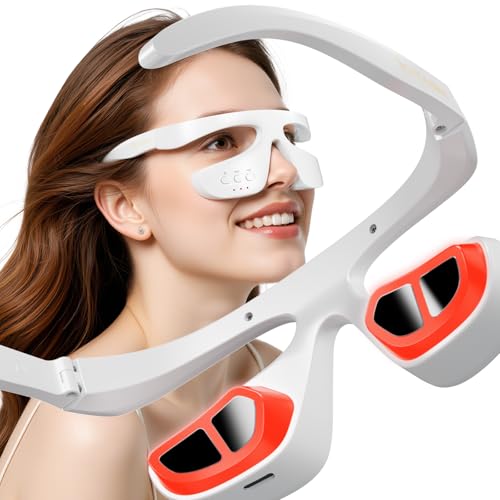
650 nm Red Light Therapy Glasses combines 650 nm red light with microcurrent in a contoured glasses format. The maker describes a 10-minute daily session and says the design follows the eye-area contours, which distinguishes it from the massage tools emphasizing vibration or warmth. It suits buyers seeking a focused red light and microcurrent combination.
Bottom line: Choose this for an eye-focused 650 nm and microcurrent combination.
How to choose under-eye red light therapy
Choose by treatment area first, then compare wavelengths and extras. Red LED devices commonly use visible red light around 630 to 660 nm; near-infrared devices add wavelengths such as 850 nm, which are not visible to the eye. A face mask, eye glasses, and an eye-and-neck mask cover different amounts of skin, so a broader device is not automatically a better match. For a focused routine, select an eye-area format; choose extended coverage only if you intend to use it on the neck too. Cooling, microcurrent, warmth, and vibration are separate features, not synonyms for red light.
Wavelengths and treatment area
Visible red light and near-infrared are distinct parts of the spectrum: red wavelengths appear as light, while near-infrared is beyond visible vision. Product wavelengths can help distinguish devices, but they do not establish how much light reaches the skin; output and distance also matter. Eye-area glasses and massagers concentrate their form around the under-eye region, while face masks cover a larger area and extended masks can include the neck. Use a device only as intended around the eyes, and do not stare into active LEDs; use eye protection if the manufacturer requires it. If eye sensitivity or a medical condition is a concern, ask a clinician before use.
LED device features compared
These formats differ most in coverage and the features paired with their light sources. Use this table to narrow the form before weighing convenience or adjustability.
| Format | Typical purpose | What to compare |
|---|---|---|
| Eye glasses or massager | Under-eye area | Fit, modes, comfort features |
| Face mask | Face plus under-eye area | Cooling, treatment modes |
| Extended mask | Eyes and neck | Coverage, flexibility, session length |
Using and caring for an eye-area device
Keep each session within the maker’s duration; a 10-minute automatic shutoff is one common control on compact massagers, while other products may use a different routine. Clean skin-contact surfaces after use according to the device’s care guidance, and do not use a damaged or wet electrical device. For masks that touch the eye region, secure a comfortable fit without pressing on the eyeballs, and stop if discomfort occurs. Rechargeable tools need a compatible charging connection, while flexible silicone surfaces should be kept clean and dry before storage. Before choosing a wearable device, compare its coverage and fit with the area you actually plan to treat.
Frequently Asked Questions
Can red light therapy be used near the eyes?
Eye-area LED devices are designed to sit around the eyes, but users should not stare into active LEDs. Follow the maker’s eye-safety directions and stop use if irritation or discomfort occurs.
What wavelength is used for under-eye red light?
Visible red light devices commonly use wavelengths around 630 to 660 nm. Near-infrared options such as 850 nm are beyond visible vision and are a separate wavelength band.
How long should an under-eye LED session last?
Session length depends on the device; a 10-minute routine is common among compact eye tools. Use the duration and automatic shutoff specified for the individual device rather than extending a session.
Should an eye mask include near-infrared light?
Near-infrared is an optional feature, not a requirement for every under-eye routine. Compare the intended coverage and wavelengths, such as a device pairing 660 nm red with 850 nm near-infrared.
How do I clean a wearable eye massager?
Wipe the skin-contact surface after use and let it dry before storage. Keep charging ports dry, and avoid immersing an electrical device unless its maker explicitly allows it.