
12V Water Pump: 5 Models Compared by Flow and Pressure

For most RV freshwater systems, SEAFLO 55 Series 5.5 GPM is a strong fit because it combines 5.5 GPM flow, 60 PSI shutoff pressure, and a 9-foot suction lift. Choose a lower-flow pump for a smaller system, or a 7 GPM model when multiple fixtures may run together and your plumbing can handle the higher flow.
A 12V diaphragm demand pump draws from a tank and switches on when pressure falls, then shuts off at its pressure setting.
We earn a commission if you buy through links on this page. As an Amazon Associate I earn from qualifying purchases. Products are compared on manufacturer specifications, not hands-on testing.
- Best overall: SEAFLO 55 Series 5.5 GPM – Its 5.5 GPM flow, 60 PSI shutoff pressure, and 9-foot suction lift suit higher-demand setups.
- Best for moderate demand: SEAFLO 33 Series 3.0 GPM – The 3.0 GPM flow and 45 PSI shutoff pressure fit a more modest freshwater system.
- Best for lower noise: Gidrox 4.0 GPM 45 PSI Pump – It has a 40 dB noise rating and a vibration-damping base.
- Best for high flow: Upgraded 12V 7 GPM Five-Chamber Pump – Its 7 GPM flow and 70 PSI maximum pressure serve systems needing more capacity.
| Product | Best for | Flow | Shutoff pressure | Suction lift | Shop |
|---|---|---|---|---|---|
| SEAFLO 55 Series 5.5 GPM | Higher demand | 5.5 GPM | 60 PSI | 9 ft | Check Price on Amazon |
| Upgraded 12V 7 GPM Five-Chamber Pump | Maximum flow | 7 GPM | 70 PSI | — | Check Price on Amazon |
| Gidrox 4.0 GPM 45 PSI Pump | Quieter operation | 4.0 GPM | 45 PSI | 10 ft | Check Price on Amazon |
| SEAFLO 33 Series 3.0 GPM | Moderate flow | 3.0 GPM | 45 PSI | 6 ft | Check Price on Amazon |
| 12V Five-Chamber Pump 7 GPM 70 PSI | High flow | 7 GPM | 70 PSI | — | Check Price on Amazon |
12V Water Pumps Compared
Compare flow, shutoff pressure, and suction lift against your fixtures and plumbing before choosing.
SEAFLO 55 Series 5.5 GPM

With 5.5 GPM flow and 60 PSI shutoff pressure, this SEAFLO model offers more capacity than the 3.0 and 4.0 GPM options. It uses a built-in bypass and pressure switch, and the maker specifies a 9-foot suction lift, 17A maximum draw, and intermittent duty. The 1/2-inch MNPT ports and EPDM valves with a Santoprene diaphragm help identify the fittings and wetted materials you need to match. It suits larger RV or cabin systems with several fixtures. Its 17A maximum draw means the 12V circuit must be sized for the pump’s electrical load.
Bottom line: Pick this for a higher-demand system that can support its 17A maximum draw.
Upgraded 12V 7 GPM Five-Chamber Pump

The 7 GPM flow and 70 PSI maximum pressure put this five-chamber pump at the high-capacity end of the group. Its pressure switch cycles the pump automatically as water demand changes, and the maker describes it as suitable for showers, sinks, and other freshwater appliances. It is a candidate for a system where several fixtures may run at once, provided the plumbing and electrical supply are compatible. The maker does not give a suction-lift figure, so buyers whose tank sits below the pump should confirm the required lift before choosing it.
Bottom line: Choose this when flow capacity matters more than a documented suction-lift figure.
Gidrox 4.0 GPM 45 PSI Pump

The Gidrox combines a 4.0 GPM rating with a 10-foot self-prime figure and 100-foot head pressure, offering a middle ground between the 3.0 and 5.5 GPM models. The maker gives a 40 dB noise rating, cites vortex noise reduction, and describes a rubber vibration-damping base. It also has 158°F overheating protection and an adjustable pressure setting around its 45 PSI preset. This configuration suits RV or boat owners who value lower reported noise without stepping up to the group’s highest flow. The 4.0 GPM capacity is below the two 5.5 and 7 GPM choices.
Bottom line: Pick this for a mid-flow setup where reported noise level is a priority.
SEAFLO 33 Series 3.0 GPM

At 3.0 GPM and 45 PSI, this SEAFLO is the lowest-flow option here, making it a better match for modest fixture demand than a multi-fixture setup. Its three-chamber diaphragm uses EPDM valves and a Santoprene diaphragm; the ports are 1/2-inch-14 MNPT, and the maker specifies a 6-foot suction lift. The package includes a filter and two straight pump fittings. It suits a compact RV or boat system where the lift distance falls within that range. Its 3.0 GPM rating is the main limitation for buyers who expect several outlets to run at the same time.
Bottom line: Choose this for moderate water demand and a suction lift no greater than 6 feet.
12V Five-Chamber Pump 7 GPM 70 PSI
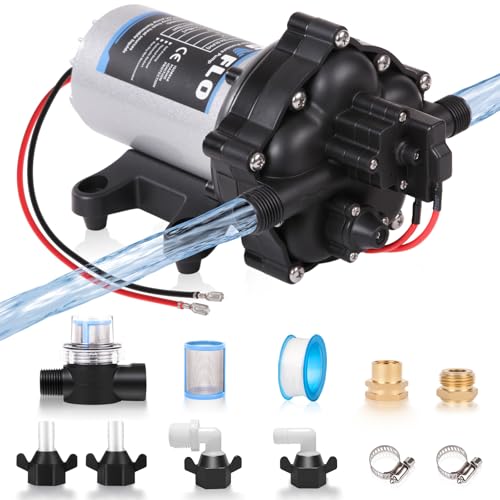
This version shares a 7 GPM flow rating and 70 PSI maximum pressure with the other five-chamber option, while its name identifies a heavy-duty pressure switch and strainer. The maker says the pressure switch turns the pump on and off as demand changes, and the product is intended for off-grid and marine use as well as RVs. Its 9-inch length and 5-inch width may help when checking installation space. It suits buyers seeking high flow and a bundled strainer.
Bottom line: Pick this for high flow when the strainer and stated dimensions match your installation.
How to Choose a 12V Water Pump
Match rated flow to the number of fixtures you expect to use at once, then check pressure and electrical demand. A 3.0 GPM pump is aimed at moderate demand; choose a 5.5 or 7 GPM model when simultaneous use needs more flow, but only if the plumbing and supply can support it. Shutoff pressure is not the same as delivered flow: a pump’s pressure switch stops it at a set pressure, and actual flow depends on plumbing resistance and fixture demand. Compare the pressure setting with the limits of your hoses, filters, water heater, and faucets. For a 12V installation, check the pump’s maximum current and follow its required fuse and wiring guidance; longer wire runs generally need a larger conductor to limit voltage drop.
Check Suction Lift and Installation Fit
Measure the vertical distance from the water source to the pump inlet before selecting a model. The lifts range from 6 to 10 feet for three pumps, while two high-flow options have no lift figure here; confirm the required lift for those before ordering if the tank sits below the pump. Install a pump close to the tank when practical, use compatible inlet fittings, and keep the inlet path free of restrictions. A strainer helps catch debris before it reaches the pump, but it also needs periodic cleaning because a clogged screen can reduce flow. Leave room to access fittings and service components, and use flexible connections where suitable to reduce vibration transfer.
Compare Pump Flow and Pressure
Flow and shutoff pressure separate these models more clearly than their shared 12V diaphragm design. The table shows the pump ratings; the values are not a promise of the flow a faucet will receive after plumbing losses.
| Need | Relevant rating | Model |
|---|---|---|
| Moderate demand | 3.0 GPM, 45 PSI | SEAFLO 33 Series 3.0 GPM |
| Mid-range flow | 4.0 GPM, 45 PSI | Gidrox 4.0 GPM 45 PSI Pump |
| More fixture capacity | 5.5 GPM, 60 PSI | SEAFLO 55 Series 5.5 GPM |
| Highest rated flow | 7 GPM, 70 PSI | Upgraded 12V 7 GPM Five-Chamber Pump or 12V Five-Chamber Pump 7 GPM 70 PSI |
Use the lower-flow choice if your system has modest demand and you want to avoid selecting capacity you cannot use. A 7 GPM rating does not mean every faucet will deliver 7 GPM; pipe size, fittings, filters, and elevation all affect delivery.
Use and Maintain a Diaphragm Pump
A demand diaphragm pump cycles when system pressure drops and stops when pressure reaches its switch setting. That on-and-off operation is normal, but frequent cycling with no fixture open can point to a leak, a pressure-side problem, or a switch setting issue. Inspect hose connections and the strainer regularly, and clean the strainer when debris accumulates. Keep the pump within its temperature and duty limits: the SEAFLO 55 is specifically marked intermittent duty, and its maximum recommended temperature is 140°F. Protect 12V connections from moisture and use the fuse and wire sizing appropriate to the pump’s current draw and circuit length. Never run a pump dry unless its manufacturer permits it.
Frequently Asked Questions
How much flow does an RV water pump need?
A modest RV setup may use a 3.0 to 4.0 GPM pump, while several fixtures used together can justify 5.5 to 7 GPM. Choose based on simultaneous demand and plumbing capacity, not the pump’s maximum rating alone.
What does a water pump pressure switch do?
A pressure switch starts the pump when system pressure falls and stops it at its shutoff setting. A pump rated at 45 PSI should be matched to fixtures and plumbing that can tolerate that pressure.
Can a 12V water pump run dry?
Do not run a diaphragm pump dry unless its manufacturer explicitly allows it. Dry operation can overheat or damage pump components, so keep the inlet supplied and stop the pump if the tank empties.
How often should I clean a pump strainer?
Inspect the strainer at least before a trip and whenever flow drops or the pump cycles unusually. Clean it sooner when the source water contains debris, since a blocked inlet screen restricts flow.
Why does my water pump keep cycling with taps closed?
Repeated cycling with all taps closed commonly indicates a pressure-side leak or a pressure-control issue. Check visible connections and fixtures first; even a small leak can lower system pressure enough to restart the pump.