
Temporary Tooth Replacement Kits: 3 Options Compared

For a single missing tooth, Instant Smile Temporary Tooth Kit is the clearest match because it includes customizable replacement teeth in four shades and tools for trimming. Choose another option if you want moldable beads, a product aimed at chips or gaps, or material you can reheat and reshape.
DIY temporary tooth kits are cosmetic aids, not permanent dental restorations; arrange dental care for a missing or damaged tooth and avoid chewing with a loose cover.
We earn a commission if you buy through links on this page. As an Amazon Associate I earn from qualifying purchases. Products are compared on manufacturer specifications, not hands-on testing.
- Best overall: Instant Smile Temporary Tooth Kit – Made to replace one upper or lower missing tooth, with four shades and shaping tools.
- Best for multiple DIY teeth: Temptooth Moldable Bead Kit – The kit is designed to make up to 10 replacement teeth from moldable beads.
| Product | Best for | Intended use | Shaping method | Shade options | Shop |
|---|---|---|---|---|---|
| Instant Smile Temporary Tooth Kit | One missing tooth | Single missing tooth | Trim and shape teeth | 4 enhanced shades | Check Price on Amazon |
| Temptooth Moldable Bead Kit | Several DIY teeth | Up to 10 replacement teeth | Moldable polymer beads | — | Check Price on Amazon |
| 3-Shade Thermal Bead Repair Kit | Missing or broken tooth | Missing or broken tooth | Moldable thermal beads | 3 shades | Check Price on Amazon |
Temporary tooth replacement kits
Compare each kit by the kind of tooth coverage it is intended to provide and how its material is shaped.
Instant Smile Temporary Tooth Kit
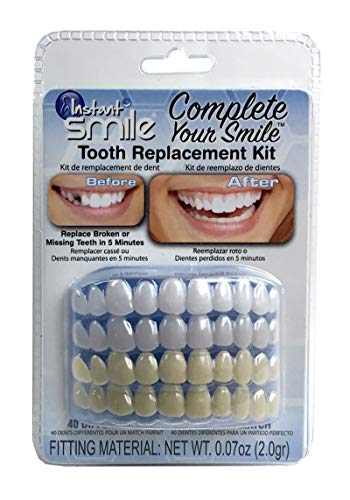
For a single missing upper or lower tooth, this kit differs from the bead-based options by supplying customizable teeth rather than asking you to sculpt a tooth from loose material. The kit includes four enhanced shades and trimming and shaping tools; the maker says each tooth can be shaped for fit. Its 40-piece assortment is intended for one replacement tooth, not a full-mouth veneer. The limitation is that a cosmetic replacement does not restore a natural tooth or bite, so it suits someone seeking temporary visible coverage while arranging dental care, not a chewing substitute.
Bottom line: Choose this if you want a purpose-made cosmetic replacement for one missing tooth.
Temptooth Moldable Bead Kit
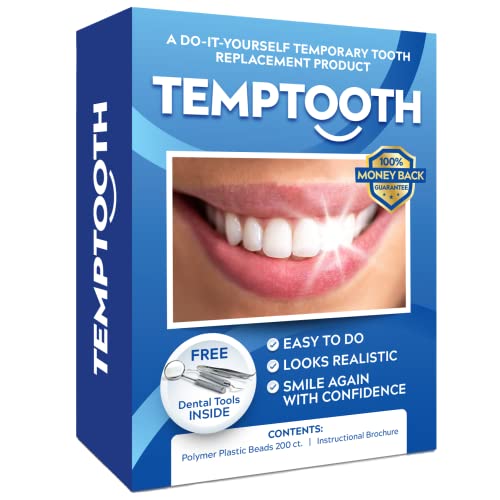
Unlike kits with customizable teeth, this option uses moldable polymer beads that you sculpt into a replacement tooth or crown. The maker says one kit can make up to 10 teeth, which may suit someone wanting material for several temporary shapes. Forming a tooth from beads takes more shaping than trimming a tooth. This is a do-it-yourself cosmetic stopgap, not a substitute for dental care or a permanent implant; that limitation matters if you need a dependable chewing surface.
Bottom line: Pick this if you prefer sculpting beads and want material for multiple temporary shapes.
3-Shade Thermal Bead Repair Kit

This kit is framed for either a missing or broken tooth, while some alternatives focus more narrowly on a single missing tooth or surface-level cosmetic coverage. It uses moldable thermal beads and offers three shades; the maker says the material can address minor surface imperfections and that the kit includes instructions. That broader stated use may appeal when the concern is a gap or a damaged-looking tooth. The limitation is that the available shade count is three, so someone trying to match a particular tooth should be prepared for a visible mismatch.
Bottom line: Consider this for a temporary cosmetic attempt involving a gap or damaged-looking tooth.
How to choose a temporary tooth replacement
Choose by the dental problem first: a missing tooth, a chipped edge, and a small gap call for different kinds of coverage. A cosmetic tooth kit changes appearance; it does not replace the tooth root, restore normal bite strength, or treat the cause of damage. Temporary teeth made for a single gap differ from thermoplastic bead products that are molded by hand. If the tooth is painful, loose, broken below the gumline, or the area is swollen, skip a DIY cover and contact a dentist. A practical rule: if you need a tooth-shaped piece for one empty space, select a kit explicitly made for a missing tooth; if you are covering only a chip, consider a product whose use includes chips. Do not use a loose piece while eating or sleeping.
What temporary tooth kits can and cannot do
Temporary tooth kits are cosmetic, removable aids rather than bridges, dentures, or implants. A dental bridge is supported by neighboring teeth, while an implant is anchored in the jaw; neither is equivalent to a bead molded at home. A removable temporary cover can hide a visible space, but it cannot reliably restore the forces of chewing or protect an injured tooth. Fit also matters: a piece that rocks, pinches gum tissue, or changes how the teeth meet is not a safe fit to keep wearing. This distinction is especially important for a missing tooth, because a cosmetic cover does not replace dental assessment. Seek professional care for a broken or absent tooth, and use a temporary cover only as appearance aid rather than functional repair.
Match the material to the kind of gap
Supplied customizable teeth and moldable beads solve the shaping problem differently. A customizable tooth starts with a tooth form that can be trimmed, while beads require softening and sculpting into a shape; reheatable thermoplastic allows another attempt after it cools. Shade counts are not directly comparable to a custom dental color match, and natural teeth vary in color across the same smile. Use this decision guide to narrow the type before considering shade:
| Need | Material approach | Tradeoff |
|---|---|---|
| One missing tooth | Purpose-made customizable tooth | May need trimming for fit |
| Several temporary shapes | Moldable beads | Requires sculpting |
| Chip or small cosmetic gap | Thermoplastic cover | Not a functional restoration |
Choose the simplest shaping method you can control without making a cover tight or unstable.
Safe use and common fitting mistakes
A temporary tooth should not interfere with closing your teeth or irritate the gums. Heat-softened material can burn if handled before it cools, so use care around hot water and never put hot material directly against oral tissue. Do not make a piece so large that it catches on neighboring teeth, and do not keep wearing a cover that shifts or comes loose. Loose oral appliances can be swallowed or inhaled, and chewing adds force that can dislodge them. A DIY kit also cannot diagnose decay, a fracture, or gum problems; persistent pain, swelling, bleeding, or a damaged tooth warrants prompt dental attention. Keep cosmetic use separate from eating, and arrange a dentist visit rather than extending temporary coverage indefinitely.
Frequently Asked Questions
Can a temporary tooth replacement kit replace a dentist visit?
No; a cosmetic kit can cover appearance but cannot diagnose or permanently repair a missing or damaged tooth. Arrange dental care, especially when pain, swelling, or a fracture is present.
Can I eat while wearing a temporary tooth?
Avoid eating with a removable DIY tooth because chewing can dislodge it or place force on damaged teeth. Remove any loose cover rather than risking swallowing or inhaling it.
Are moldable beads or a pre-shaped tooth easier to fit?
A pre-shaped customizable tooth starts with a tooth form that may need trimming, while beads must be softened and sculpted by hand. Choose based on whether you prefer trimming a shape or forming one yourself.
How do I choose a shade for a temporary tooth?
Compare the shade with the neighboring teeth in natural daylight, since indoor lighting can change how color appears. A shade count cannot guarantee an exact match to your natural tooth.
What should I do if the temporary tooth feels loose?
Stop wearing a loose temporary tooth because it can shift or come free. A cover that moves, pinches, or changes your bite is not a secure fit, and a dentist can assess the gap or damaged tooth.