
Men’s Walking Shoes With Velcro Closures Compared

Avia Avi-Union II Strap is the strongest match for most shoppers seeking men’s walking shoes with Velcro closures because its two adjustable straps pair with slip-resistant tread. Choose Reebok Rapid Strike KC for its wide sizing, or New Balance 577 V1 if you want a leather upper and heel cushioning.
Hook-and-loop closures use adjustable straps instead of laces, making them useful when you want to fasten or loosen a shoe without tying it.
We earn a commission if you buy through links on this page. As an Amazon Associate I earn from qualifying purchases. Products are compared on manufacturer specifications, not hands-on testing.
- Best overall: Avia Avi-Union II Strap – Two adjustable straps and slip-resistant tread suit walking that overlaps with work use.
- Best for wide sizing: Reebok Rapid Strike KC – Offered in a wide size and has adjustable hook-and-loop straps.
- Best for leather upper: New Balance 577 V1 – Combines a leather upper with heel cushioning and a hook-and-loop closure.
| Product | Best for | Upper | Cushioning | Fit | Shop |
|---|---|---|---|---|---|
| Avia Avi-Union II Strap | Work and walking | — | Removable memory foam liner | Medium, 10.5 | Check Price on Amazon |
| Reebok Rapid Strike KC | Wide-size comfort | Synthetic | — | Wide, 11.5 | Check Price on Amazon |
| New Balance 577 V1 | Leather and cushioning | Leather | ABZORB heel cushioning | Extra-wide, 11 | Check Price on Amazon |
Men’s Walking Shoes With Velcro Closures
Compare closure, upper and cushioning details to find a pair suited to your fit and daily routine.
Avia Avi-Union II Strap

Two adjustable straps and slip-resistant tread distinguish this pair for shoppers who walk in work settings. The shoe has a removable memory-foam sock liner, and the maker says its tread was tested in accordance with ASTM F2913. The maker also describes the liner as designed to respond to foot contours and relieve pressure points. This option suits someone who wants a strap closure and a shoe positioned for restaurant or food-service work. Its size is medium width, so shoppers who need a wide or extra-wide fit should consider another option.
Bottom line: Choose this pair if you want two straps and slip-resistant tread for walking that includes work.
Reebok Rapid Strike KC
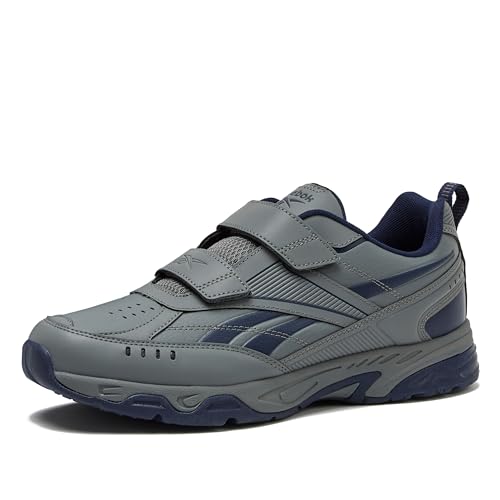
A wide-size option and synthetic upper set this model apart from the other picks. Its hook-and-loop straps adjust without laces, and the maker positions it for walking, training and everyday wear. That mix makes it a fit for someone who wants a broad-use sneaker with a strap closure rather than a leather shoe or a work-focused tread design. The size here is 11.5 wide, so it is not the right choice if that size or width does not match your foot. The features do not identify a particular cushioning system.
Bottom line: Pick this if wide sizing and a synthetic upper matter more than a specified cushioning feature.
New Balance 577 V1
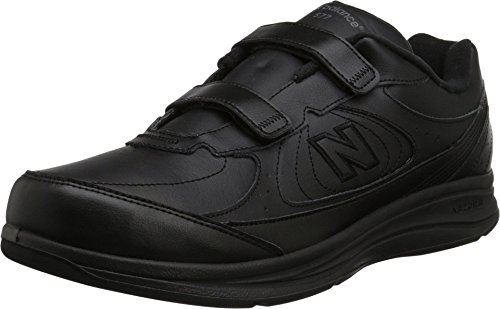
A leather upper, extra-wide sizing and ABZORB heel cushioning make this pair distinct from the synthetic-upper and work-oriented options. The shoe also has a polyurethane midsole for stable cushioning and reflective accents designed to catch light. Its weight is 13.6 ounces, or 385 grams. This option suits shoppers who want an extra-wide hook-and-loop shoe with cushioning features identified in the product specifications. Its size is 11 extra-wide, which may not work for someone who needs a different length or a narrower fit.
Bottom line: Choose this if you need an extra-wide fit and prefer a leather upper with heel cushioning.
How to choose men’s walking shoes with Velcro
Start with fit, then compare the closure and cushioning that match your routine. Measure both feet while standing near the end of the day, when feet may be slightly larger, and fit to the longer foot. Leave about ½ inch between your longest toe and the shoe’s end; toe shape and sock thickness can change the feel. Hook-and-loop straps let you adjust the hold across the top of the foot, but they cannot make an incorrectly sized shoe fit properly. For frequent walking, check that the heel feels secure and the forefoot can bend comfortably. Pick a work-oriented tread only if the walking surface calls for it; a strap closure alone does not establish slip resistance.
How to get the right shoe size and width
Try shoes with the socks you expect to wear, and check length and width while standing. A comfortable fit leaves roughly ½ inch of toe room and avoids pressure along the sides; foot shape and the shoe’s shape affect how much room feels right. Width labels such as wide and extra-wide are not interchangeable, so compare the marked width to your usual fit rather than assuming a larger length will solve tightness. Walk a few steps indoors to check for heel slipping, toe contact or strap pressure. If you use an orthotic, check whether the sock liner can be removed and whether the shoe has enough depth; only one pick here identifies a removable liner.
Hook-and-loop walking shoes compared by use
Choose a shoe by the feature that matters most for your routine, rather than treating all strap-closure pairs as identical. A work-oriented option highlights tread; another gives a synthetic upper and wide size; the third pairs a leather upper with heel cushioning and extra-wide sizing. Hook-and-loop closures are convenient for adjusting the fit, but the upper, width and underfoot construction still determine whether a shoe feels suitable for extended walking. The table separates these use cases at a glance. Confirm that the size and width suit your foot before choosing, especially when the marked width is wide or extra-wide.
| Need | Feature to prioritize | Option |
|---|---|---|
| Walking that includes work | Slip-resistant tread claim | Avia Avi-Union II Strap |
| Wide-size synthetic sneaker | Synthetic upper, wide fit | Reebok Rapid Strike KC |
| Extra-wide leather shoe | Leather upper, heel cushioning | New Balance 577 V1 |
When to replace walking shoes
Many walking shoes are replaced after roughly 300 to 500 miles, but body weight, walking surface, gait and shoe construction can shorten or lengthen that range. Watch for compressed cushioning, uneven outsole wear or a sole separating from the upper; visible wear can matter more than mileage alone. Shoes used mostly on pavement generally experience different wear from pairs used on soft paths. Rotating between pairs can give cushioning materials time to recover between walks, though it does not repair worn tread or damaged construction. For a work shoe, replace it when the tread no longer provides the grip you need on your regular surfaces.
Frequently Asked Questions
How much toe room should walking shoes have?
Aim for about ½ inch between your longest toe and the shoe’s end while standing. Check the fit in your usual walking socks, since sock thickness and toe shape can affect comfort.
Are hook-and-loop shoes adjustable enough for swelling?
The straps can be loosened or tightened across the top of the foot, which allows some fit adjustment. They do not replace choosing the correct shoe length and width, and substantial or changing swelling may require professional advice.
How often should walking shoes be replaced?
A common guideline is around 300 to 500 miles, with walking surface, gait, body weight and construction affecting wear. Replace them sooner if cushioning feels compressed or the outsole is unevenly worn.
Can I use walking shoes for restaurant work?
A shoe with slip-resistant tread may suit restaurant floors better than one without that feature.
Should walking shoes feel tight across the toes?
No; leave roughly ½ inch of space ahead of the longest toe and avoid side pressure while standing. Try the shoes with your walking socks and check that the heel stays secure as you walk.