
Best Monk Fruit Sweetener: 5 Types Compared

For a monk fruit sweetener that measures 1:1 like sugar in baking and dissolves in drinks, choose Monk Fruit In The Raw Allulose Sweetener; its allulose blend fits both uses. Choose Morning Pep Pure Monk Fruit Extract Powder or Monk Fruit Drops 15X instead if you want pure extract without erythritol, or NOW Foods Organic Monk Fruit Liquid for a liquid sweetener.
Monk fruit sweeteners combine extract with other ingredients or come as concentrated liquids, so the format and blend determine how to measure and use them.
We earn a commission if you buy through links on this page. As an Amazon Associate I earn from qualifying purchases. Products are compared on manufacturer specifications, not hands-on testing.
- Best overall: Monk Fruit In The Raw Allulose Sweetener – The allulose blend measures 1:1 like sugar and is described for baking and beverages.
- Best for pure powder: Morning Pep Pure Monk Fruit Extract Powder – It contains pure monk fruit extract and no erythritol or other sugar alcohols.
- Best for coffee and tea: Monk Fruit Drops 15X – The concentrated drops are intended for beverages, with six drops equaling a teaspoon of sugar sweetness.
| Product | Best for | Format | Sweetener blend | Size | Shop |
|---|---|---|---|---|---|
| Monk Fruit In The Raw Allulose Sweetener | Baking and drinks | Granulated | Monk fruit, allulose | 16 oz | Check Price on Amazon |
| Lakanto Classic Monk Fruit Sweetener | Large-batch baking | Granulated | Monk fruit, erythritol | 80 oz | Check Price on Amazon |
| Morning Pep Pure Monk Fruit Extract Powder | Pure extract powder | Powder | Pure monk fruit extract | 5 oz | Check Price on Amazon |
| Monk Fruit Drops 15X | Sweetening beverages | Liquid drops | Monk fruit extract | 1.7 fl oz | Check Price on Amazon |
| NOW Foods Organic Monk Fruit Liquid | Organic liquid sweetener | Liquid | Organic monk fruit | 2 fl oz | Check Price on Amazon |
Monk Fruit Sweeteners Compared
Compare the blend and format first, then match the sweetener to how you plan to use it.
Monk Fruit In The Raw Allulose Sweetener

For recipes that call for sugar by volume, this granulated monk fruit and allulose blend is the only option here described as measuring 1:1 like sugar. The maker says it dissolves easily and works in baking, sauces, coffee and tea, so it suits cooks who want one sweetener for several uses. It is also identified as keto certified and Non-GMO Project Verified. The 16-ounce bag is smaller than the 5-pound option, so frequent bakers may prefer a larger format.
Bottom line: Choose this for a sugar-style measure in both baking and drinks.
Lakanto Classic Monk Fruit Sweetener

The 80-ounce bag sets this apart for households that use a granulated sweetener often. It combines monk fruit with erythritol and is presented as a white-sugar substitute for baking, cooking, coffee and tea. The maker says it dissolves in liquids and has a texture and taste similar to white sugar. Its larger format may be less convenient if you only sweeten occasional drinks, and the features do not give a sugar-equivalent measuring ratio for recipes.
Bottom line: Pick this if you want a large bag of granulated monk fruit and erythritol.
Morning Pep Pure Monk Fruit Extract Powder
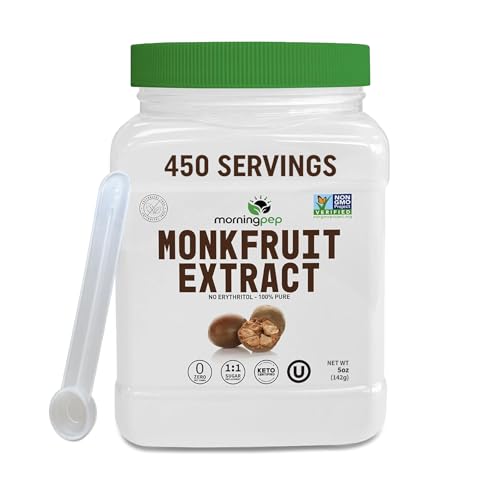
Unlike the blended granulated options, this is a powder made exclusively with monk fruit extract, with no erythritol or other sugar alcohols. That makes it a match for buyers specifically avoiding those ingredients. The maker identifies it as zero-calorie and Non-GMO Project Verified, and the package is 5 ounces.
Bottom line: Choose this if avoiding erythritol matters more than sugar-style measuring.
Monk Fruit Drops 15X

These drops offer a liquid alternative to powders and granulated blends, particularly for coffee and tea. The maker says six drops provide sweetness equivalent to one teaspoon of sugar and describes the product as 15 to 20 times sweeter than sugar. It contains monk fruit extract without erythritol, alcohol or added water, according to the features. A concentrated liquid is less suited to recipes that rely on sugar for bulk or texture, so reserve it for uses where a few drops are practical.
Bottom line: Pick these for measured sweetness in coffee, tea and other drinks.
NOW Foods Organic Monk Fruit Liquid

This is the only option in the group identified as organic, and it comes as a 2-fluid-ounce liquid. The maker says monk fruit can be up to 200 times sweeter than sugar and recommends starting with 5 to 8 drops to sweeten foods and beverages, then adjusting to taste. It is also described as vegan and zero-calorie. Because drop strength is unlike a granulated 1:1 blend, this format is not a direct volume-for-volume replacement in baking.
Bottom line: Choose this if you want an organic liquid for drinks or foods.
How to Choose a Monk Fruit Sweetener
Start with the recipe: a granulated 1:1 blend is easiest when replacing sugar by volume, while concentrated extract is meant to add sweetness without bulk. Monk fruit products commonly pair extract with a carrier or another sweetener; here, the blends use either erythritol or allulose. Compare the ingredient blend if you avoid a particular sugar alcohol, and look for a measuring ratio before using a product in a recipe. For drinks, drops or a small amount of powder can be practical, but concentrated sweeteners need gradual adjustment. A useful rule is to select a product that explicitly says 1:1 when a recipe depends on cup-for-cup sugar substitution.
Granulated Blends and Pure Extract Compared
Granulated blends are closer to table sugar in recipe handling because they provide more volume than a concentrated extract. Pure monk fruit extract powder and drops focus on sweetness, so they are generally better for adjusting beverages than replacing sugar’s bulk in cakes or cookies. Allulose and erythritol behave differently in recipes: allulose can promote browning, while erythritol may recrystallize as baked goods cool. The amount of browning or texture change depends on the full recipe, including moisture and baking time. Use this guide to choose by task rather than assuming every product labeled monk fruit is interchangeable.
| Need | Format to consider | Recipe implication |
|---|---|---|
| Cup-for-cup substitution | Granulated blend explicitly marked 1:1 | Designed for volume-based sugar replacement |
| Sweetness without sugar alcohols | Pure extract powder or drops | Concentrated; measure carefully |
| Sweetening a drink | Liquid drops or powder | Adjust gradually to taste |
How to Measure Monk Fruit Extract
Concentrated monk fruit extract is much sweeter than sugar, so a small measuring error can noticeably change a drink or recipe. Follow a product-specific drop or serving guide when available; for example, one option here gives a six-drop teaspoon-of-sugar comparison, while another recommends beginning with 5 to 8 drops. These are product-specific directions, not universal conversions. Add less than the target amount first, taste, and increase gradually. For baking, sweetness alone is not enough: sugar contributes volume and browning, so a liquid or pure extract may not reproduce the structure of sugar in a recipe.
Storage and Use Considerations
Keep powdered and granulated sweeteners dry and tightly closed; moisture can make fine powders clump and can affect how easily they pour. Liquid sweeteners should be measured with the dropper or bottle directions rather than substituted by spoonfuls for granulated sugar. When trying a concentrated sweetener, start with a small amount and adjust, since the maker-provided drop equivalences differ by product. In cooking or baking, use a recipe designed for the specific blend when possible, especially when the recipe depends on sugar for bulk, browning or texture. People with dietary restrictions should check the blend ingredients and any individual certification that matters to them.
Frequently Asked Questions
Can monk fruit sweetener replace sugar in baking?
A granulated blend marked 1:1 is the simplest starting point for a recipe measured by volume. Pure extract and liquid drops add sweetness but not the same bulk, and allulose or erythritol can affect browning and texture differently.
Does pure monk fruit extract contain erythritol?
Pure monk fruit extract does not have erythritol as an added blend ingredient, while some granulated monk fruit products combine the extract with erythritol. Check the ingredient blend if avoiding sugar alcohols is important.
How many monk fruit drops equal a teaspoon of sugar?
The conversion depends on the product. One option gives six drops as equivalent to a teaspoon of sugar sweetness, while another recommends starting with 5 to 8 drops; use the specific product’s guidance and adjust gradually.
Why do monk fruit sweeteners use other ingredients?
Some blends pair monk fruit extract with another sweetener or ingredient to make a granulated product for cooking or baking. Pure extract and drops are more concentrated, so they generally require smaller amounts and do not replace sugar’s bulk.
Can liquid monk fruit sweetener work in cookies?
Use a recipe formulated for a liquid sweetener or a granulated blend, particularly when texture and browning matter.