
Best Shock Collar for Two Dogs: 4 Options Compared

Bousnic 2-Dog Training Collar suits most people because it combines two-dog control, a 3,300-foot claimed range, and an IP67 waterproof receiver. Choose another option if you need separate real-time controls, a longer claimed range, or a flashlight and strobe.
Remote training collars send a signal to a receiver worn by each dog. Because electrical stimulation can cause pain or fear, start with reward-based training and avoid using stimulation as a substitute for teaching a behavior.
We earn a commission if you buy through links on this page. As an Amazon Associate I earn from qualifying purchases. Products are compared on manufacturer specifications, not hands-on testing.
- Best overall: Bousnic 2-Dog Training Collar – Pairs two-dog use with a 3,300-foot claimed range and an IP67 waterproof receiver.
- Best for separate controls: Next Gen Dual-Control Training Collar – Its maker describes independent dual-channel controls and a dual-dog display.
- Best for night visibility: BLACKDOG Military 2-Dog Collar – Includes a remote flashlight and collar-mounted strobe light.
| Product | Best for | Remote range | Weight range | Shop |
|---|---|---|---|---|
| Bousnic 2-Dog Training Collar | General yard training | 3,300 ft | 5–120 lb | Check Price on Amazon |
| AI 2-Dog Training Collar | Lockable controls | 3,300 ft | 10–120 lb | Check Price on Amazon |
| Next Gen Dual-Control Training Collar | Independent dog controls | 4,200 ft | — | Check Price on Amazon |
| BLACKDOG Military 2-Dog Collar | Night visibility | 4,200 ft | 5–150 lb | Check Price on Amazon |
Shock collars for two dogs
Compare the range, waterproof rating, and weight fit before choosing a collar for your dogs.
Bousnic 2-Dog Training Collar
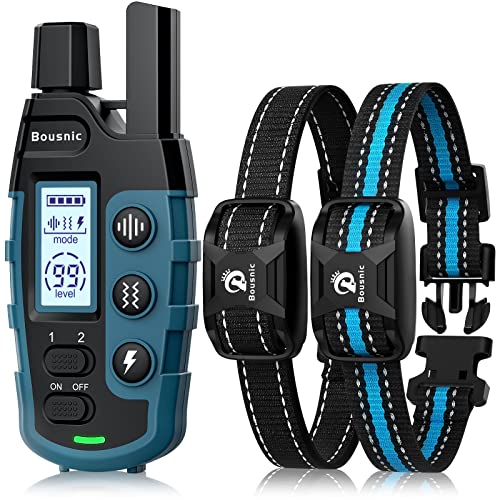
The Bousnic combines a two-dog setup with three adjustable modes, so it suits owners who want beep and vibration options alongside stimulation. The maker says the remote reaches 3,300 feet and the receiver has an IP67 waterproof rating. Its weight range is 5–120 pounds, covering a broad range of dog sizes.
The limitation is that the maker does not explain how the remote selects between the two dogs. Confirm the channel controls and receiver fit for both dogs before ordering; range can also be reduced by obstacles and terrain.
Bottom line: Pick this if the 5–120-pound range and IP67 rating suit both dogs.
AI 2-Dog Training Collar

The AI collar stands out for its keypad lock and a remote described as supporting two collars at once. Its maker gives a 3,300-foot range, an IPX7 receiver rating, and a 10–120-pound fit range. Beep and vibration are available alongside stimulation; the remote also has a light for walking after dark.
This range starts at 10 pounds, so it may not fit a smaller dog within the intended weight range. The feature description is inconsistent about the number of modes, so confirm the exact controls and how the remote switches channels before choosing it.
Bottom line: Choose this if keypad locking matters and both dogs weigh at least 10 pounds.
Next Gen Dual-Control Training Collar

The Next Gen model is distinguished by independent controls for each dog rather than a single shared control layout. Its maker describes separate mode and intensity adjustments, a dual-column display, and a 4,200-foot range. Four modes are named: beep, vibration, safety shock, and light; the receiver is rated IPX8.
Confirm receiver fit and the channel-selection process before use, especially if you need to change settings quickly while supervising both dogs.
Bottom line: Pick this if independent controls are more important than a weight range.
BLACKDOG Military 2-Dog Collar

The BLACKDOG pairs two-dog use with visibility features for low-light outings: its maker describes a remote flashlight and a collar-mounted strobe. It also gives a 4,200-foot range, an IP67 waterproof rating, and a 5–150-pound fit range. Four training modes are included according to the product name.
The military-grade durability and crush-force figures are maker claims, not a reason to expose a dog to rough handling. This option may suit outdoor use, but its extra lights are less relevant for indoor training; check that the collar fit works for each dog.
Bottom line: Choose this if the weight range and night-visibility features suit your outings.
How to choose a shock collar for two dogs
Choose a two-dog collar by checking independent channel control, receiver fit, and the mode you intend to use. A remote that supports two receivers does not necessarily adjust both dogs at the same time; confirm whether you must switch channels before every command. Match each receiver to the dog’s neck and weight, and make sure the contact points sit against the skin rather than resting on thick fur. Range claims are maximum conditions, not a guarantee through walls, trees, or uneven ground. If you cannot reliably tell which dog is selected at a glance, choose a control layout that makes the active channel unmistakable, or use separate training sessions.
Electrical stimulation can cause pain, stress, or fear, so reward-based training is the safer starting point for teaching recall and other cues. Do not use a remote collar to punish a dog for behavior you have not trained an alternative for.
How to compare range and waterproof ratings
Remote range and water resistance answer different questions: range describes signal reach under favorable conditions, while an IP rating describes protection against dust or water under defined tests. A 3,300- or 4,200-foot claim should not be treated as a dependable working distance in a yard with buildings, vegetation, or terrain between the remote and receiver. Keep training within a distance where you can see and supervise each dog.
For water exposure, IP67 indicates a dust-tight enclosure and protection during temporary immersion under test conditions; IPX7 indicates immersion protection but the “X” means a dust rating is not specified by that code. Neither rating means a collar should be worn during every water activity. Use the device only within its maker’s limits, and dry charging contacts before charging.
This table helps separate the features by intended need rather than treating the longest range as automatically best.
| Need | What to prioritize | Options |
|---|---|---|
| Distinct settings for each dog | Independent channels | Next Gen Dual-Control Training Collar |
| Low-light visibility | Remote light or collar strobe | AI 2-Dog Training Collar or BLACKDOG Military 2-Dog Collar |
| Fit for a dog under 10 pounds | Stated minimum weight of 5 pounds | Bousnic 2-Dog Training Collar or BLACKDOG Military 2-Dog Collar |
Fit and safe training for two dogs
A collar should fit securely without being tight: you should be able to slide two fingers between the strap and the dog’s neck. Check the skin under the receiver regularly for redness or irritation, and remove the collar if irritation appears. Contact points need to reach the skin; a loose receiver or thick coat can make contact inconsistent.
Train one dog at a time when introducing a new cue or remote control. This reduces confusion about which dog is being signaled and lets you reward the correct behavior promptly. Begin with a familiar, low-distraction setting and use praise or treats to reinforce the cue. Do not activate stimulation when the dog is frightened, in pain, or unable to understand what behavior earns a reward; ask a qualified trainer or veterinarian for help if training is not progressing safely.
Frequently Asked Questions
Can one remote control two dogs at once?
Some remotes support two receivers, but they may require you to select a channel rather than send a command to both dogs simultaneously. The Next Gen model is described as having independent dual-dog controls; check the channel selection before training.
What does IP67 mean on a dog collar?
IP67 combines dust-tight protection with protection against temporary immersion under test conditions. It does not establish that the collar is suitable for every swimming situation, so keep use within the maker’s limits.
How tight should a dog training collar be?
A collar should be snug enough to keep the receiver from shifting while allowing about two fingers between strap and neck. Check the skin regularly and remove the receiver if redness or irritation develops.
How far away should I train with a remote collar?
Stay close enough to see and supervise both dogs, even if the remote claims a range of thousands of feet. Buildings, trees, and uneven terrain can reduce signal reach, and distance makes it harder to deliver a timely reward.
Should I use stimulation to teach a recall?
Reward-based practice is the safer starting point for recall because electrical stimulation can cause pain, stress, or fear. Build the cue in a controlled setting with rewards before adding distance or distractions.