
30 Degree Angle Sleep Wedges Compared by Fit

For a 30-degree sleep wedge, 34.2-Inch 30-Degree Wedge is the clearest fit for adults wanting longer support: its maker specifies a 34.2-inch length and 30-degree incline. Choose JJ CARE 23.6-Inch Curved Wedge for a shorter curved wedge, or TEXSTEAD 30-Degree Wedge with Bolster if you want a triangular headboard-style cushion with an extra bolster.
A bed wedge is an angled foam support, but a pillow alone should not be relied on to prevent pressure injuries or manage a medical condition.
We earn a commission if you buy through links on this page. As an Amazon Associate I earn from qualifying purchases. Products are compared on manufacturer specifications, not hands-on testing.
- Best overall: 34.2-Inch 30-Degree Wedge – Its 30-degree incline and 34.2-inch length offer the longest support among these options.
- Best for shorter curved support: JJ CARE 23.6-Inch Curved Wedge – Its curved 30-degree positioning shape measures 23.6 inches long.
- Best for head elevation: TEXSTEAD 30-Degree Wedge with Bolster – Its 30-degree triangular wedge is designed for bed or headboard use and includes an extra bolster.
| Product | Best for | Angle | Length | Shape or design | Shop |
|---|---|---|---|---|---|
| 34.2-Inch 30-Degree Wedge | Longer side support | 30° | 34.2 in | R-shaped wedge | Check Price on Amazon |
| JJ CARE 23.6-Inch Curved Wedge | Shorter curved support | 30° | 23.6 in | R-shaped, curved | Check Price on Amazon |
| TEXSTEAD 30-Degree Wedge with Bolster | Headboard lounging | 30° | 20 in | Triangle with bolster | Check Price on Amazon |
| Blue 20-Inch Side-Sleeping Wedge | Compact positioning | 30° in name | 20 in | Wave surface | Check Price on Amazon |
30 Degree Angle Sleep Wedges
Compare the angle, length and shape to find a wedge that fits your bed and positioning needs.
34.2-Inch 30-Degree Wedge
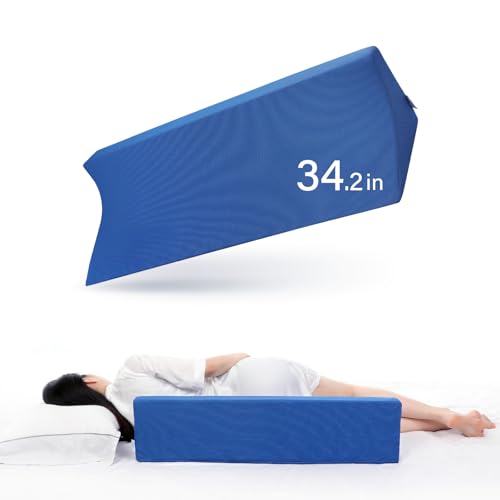
34.2-Inch 30-Degree Wedge stands out for its 34.2-inch length, compared with the shorter wedges here. Its maker says the 30-degree R-shaped foam support extends from shoulders to hips for most adults, and the blue cover is machine washable. The length may suit someone who wants support along more of the torso rather than a compact pillow. The specifications do not give the wedge’s rise or foam firmness, so buyers who need a precise elevation should confirm those measurements before choosing; angle alone does not tell you the height.
Bottom line: Choose this if longer torso support matters more than compact storage.
JJ CARE 23.6-Inch Curved Wedge

JJ CARE 23.6-Inch Curved Wedge is a shorter curved option, measuring 23.6 inches long and 7.87 inches wide. Its maker describes high-density foam, a polyester mesh fabric and a non-skid bottom, distinguishing it from the longer R-shaped wedge. The compact length can work when a full shoulder-to-hip support surface is unnecessary or bed space is limited.
Bottom line: Pick this for a compact curved shape and a non-skid base.
TEXSTEAD 30-Degree Wedge with Bolster

TEXSTEAD 30-Degree Wedge with Bolster differs from the body-positioning wedges with its 20-by-20-inch triangular cushion and extra bolster. The maker describes sponge filling and a scuba-fabric cover, and positions it for bed or sofa lounging as well as sleep. That square footprint may suit someone seeking upper-body support near a headboard rather than a long side-positioning surface. The maker’s relief language is not a guarantee of a medical outcome. The specifications do not establish the incline height or bolster dimensions, so check those measurements if exact elevation or spacing is important.
Bottom line: Choose this for a triangular upper-body cushion with a separate bolster.
Blue 20-Inch Side-Sleeping Wedge

Blue 20-Inch Side-Sleeping Wedge is the smallest-dimension option here at 20 by 10 by 5 inches, with a wave-shaped surface and blue finish. Its name identifies a 30-degree incline and side-sleeping positioning, while its compact size may suit a localized support need or a smaller bed area. The specifications also show a height entry that conflicts with its 5-inch size, so the actual incline height is not clear. Buyers who require a specific rise should verify the physical dimensions before selecting it rather than infer height from the angle in its name.
Bottom line: Pick this when a compact wave-shaped support is the priority, after confirming height.
How to choose a 30-degree sleep wedge
Start with the body area you need to support, then compare the usable length and width rather than choosing by angle alone. A wedge angle describes the slope, but its rise also depends on the horizontal run: at 30 degrees, rise is about 0.58 times the run. For example, a 10-inch run would produce about 5.8 inches of rise in a simple triangular wedge. Curved or contoured products may not follow that geometry across their whole surface. For torso support, measure from the shoulder area to the hip area; for localized support, check the surface width and where the slope begins. If a clinician has prescribed a specific elevation, verify the actual rise before use.
Wedge size and bed fit
Measure the bed area and the sleeper’s intended contact area before choosing a wedge. A 20-inch cushion takes less room than a 34.2-inch model, but a short wedge may not support the torso along its full length. Mattress width, headboard clearance and the wedge’s base depth affect whether it stays in the intended position. For a triangular wedge, the relationship between run, angle and rise matters; for an R-shaped contour, the maker’s outside length does not tell you how much flat support is available. Keep pillows and bedding from blocking breathing or creating an unstable stack, and avoid placing a wedge where it can slip into a gap between mattress and bed frame.
Side positioning and pressure injury safety
A positioning wedge can help hold a body position, but it does not by itself prevent pressure injuries. Pressure injury risk depends on factors such as mobility, skin condition and overall health; people who cannot reposition themselves need an individualized repositioning plan from their care team. Common care plans use position changes around every two hours, but the right interval varies with the person and support surface. Check skin regularly, especially over bony areas such as hips and ankles, and make sure the wedge is not creating a concentrated pressure point. For post-surgical use, ask the treating clinician which positions and elevation are appropriate before using a wedge.
Choosing between wedge shapes
Shape determines how a wedge supports the body: long curved wedges are intended to span more of the torso, compact waves occupy less space, and triangle cushions provide a broad sloping face that can support the upper body. A separate bolster adds another support surface but also needs room and should not be allowed to shift into an unsafe position. This table maps common needs to a shape, not to a medical outcome.
| Need | Shape to consider | Fit check |
|---|---|---|
| Support over a longer torso area | Long curved wedge | Measure shoulder-to-hip distance |
| Localized support in limited space | Compact wave wedge | Confirm width and actual rise |
| Upper-body support near a headboard | Triangular wedge | Check base depth and bolster placement |
Frequently Asked Questions
Does a 30-degree wedge mean a five-inch lift?
No; the lift depends on the wedge’s horizontal run as well as its angle. A straight 30-degree slope rises about 0.58 inches for each inch of run, so a 10-inch run is about 5.8 inches high.
How long should a side-sleeping wedge be?
Choose length based on the area you want supported: shoulder-to-hip support requires more length than support at one body area. Measure that area on the sleeper rather than relying on a general adult size.
Can a positioning wedge prevent bedsores?
No wedge alone can guarantee prevention of pressure injuries. People with limited mobility need a care plan that includes appropriate repositioning and skin checks, with timing set for their individual condition.
Can I use a sleep wedge after surgery?
Only if the treating clinician approves the position and elevation for that procedure. Restrictions can differ by surgery, and a wedge that changes pressure or joint position may not be appropriate.