
Comb to Thin Hair: Razor and Styling Combs Compared

For thinning and texturizing hair with a razor comb, Facón Swift Razor Comb is the closest match because it includes 12 replacement blades; it is the named product type in this comparison. Choose a regular fine- or wide-tooth comb instead if your goal is grooming, detangling, or parting rather than removing bulk.
We earn a commission if you buy through links on this page. As an Amazon Associate I earn from qualifying purchases. Products are compared on manufacturer specifications, not hands-on testing.
- Best overall: Facón Swift Razor Comb – A razor comb with 12 replacement blades is designed for thinning and texturizing.
- Best for a multipack: Soft ‘N Style Double-Ended Razor Comb, 3-Pack – Three double-ended razor combs combine a trimming side with a regular comb side.
- Best for sectioning: Kolavia Carbon-Fiber Comb Set, 6-Piece – The six-comb set includes wide- and fine-tooth styles and rat-tail combs.
| Product | Best for | Type | Count | Length | Shop |
|---|---|---|---|---|---|
| Facón Swift Razor Comb | Razor texturizing | Razor comb | 1 comb; 12 blades | 5 in | Check Price on Amazon |
| Soft ‘N Style Double-Ended Razor Comb, 3-Pack | Multipack trimming | Double-ended razor comb | 3 combs | — | Check Price on Amazon |
| Kolavia Carbon-Fiber Comb Set, 6-Piece | Parting and detangling | Wide/fine-tooth set | 6 combs | 9 in | Check Price on Amazon |
| Goody Ace Bobby Pocket Comb | Pocket grooming | Fine-tooth comb | 1 comb | 5 in | Check Price on Amazon |
| Soft ‘N Style Hair Care Comb, 4-Pack | Basic daily combing | Plastic comb set | 4 combs | 5 in | Check Price on Amazon |
Combs to Thin Hair
Choose a razor comb for blade-assisted texturizing; ordinary combs are better suited to grooming, detangling, and styling.
Facón Swift Razor Comb

Facón Swift Razor Comb is the only option here that pairs a razor comb with a supply of 12 replacement blades, making it the most directly suited to thinning or texturizing. Its 5-inch body is compact, and the maker says it is intended for salon or home use and for trimming split ends. The limitation is that razor-assisted cutting removes hair rather than simply arranging it, so choose a regular comb if you only want to detangle or smooth strands. Keep the blade away from skin and store replacements safely.
Bottom line: Pick this if you want a razor comb with replacement blades for controlled texturizing.
Soft ‘N Style Double-Ended Razor Comb, 3-Pack

Soft ‘N Style Double-Ended Razor Comb, 3-Pack stands apart by providing three double-ended combs, each with a pointed blade side and a regular comb side. The maker describes them for trimming, thinning, cutting, and styling across different hair textures. This setup can suit someone who wants both combing and razor-assisted work in one tool, with additional combs available for separate grooming routines. The trade-off is that the package does not give a usable overall length, so shoppers who need a specific handle size should choose a measured option instead. Use the blade side cautiously and avoid pulling it across the scalp.
Bottom line: Choose this if you want several dual-purpose razor combs rather than one tool.
Kolavia Carbon-Fiber Comb Set, 6-Piece
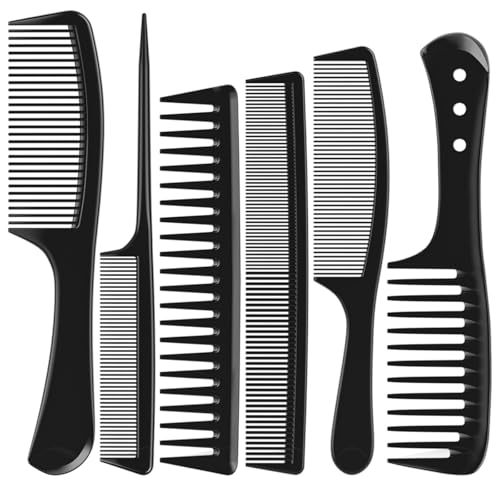
Kolavia Carbon-Fiber Comb Set, 6-Piece is a styling set rather than a razor-thinning tool, and its six combs are the broadest assortment here for parting, detangling, teasing, and cutting preparation. The maker identifies carbon fiber as the material and describes wide- and fine-tooth rat-tail styles. At 9 inches, the set is longer than the pocket combs in this group, which can be useful for sectioning hair. Its limitation is fundamental: without a razor blade, it will not remove bulk in the way a razor comb can. Choose it for grooming and sectioning, not blade-based thinning.
Bottom line: Pick this if sectioning and detangling matter more than razor thinning.
Goody Ace Bobby Pocket Comb

Goody Ace Bobby Pocket Comb is a straightforward fine-tooth pocket comb, unlike the blade-bearing tools intended for texturizing. Its 5-inch size and fine teeth suit compact grooming and styling for thin to medium hair, according to the maker. This makes it a reasonable choice for smoothing or arranging hair without cutting into it. The limitation is that it has no thinning blade, so it cannot perform razor-assisted texturizing. For a buyer looking to remove bulk, select a razor comb instead; for routine grooming on the go, this compact format is the simpler fit.
Bottom line: Choose this for portable fine-tooth grooming, not cutting or thinning.
Soft ‘N Style Hair Care Comb, 4-Pack

Soft ‘N Style Hair Care Comb, 4-Pack provides four flexible plastic combs rather than a razor or specialist sectioning set. Each measures 5 by 1 inches, making them compact options for basic everyday grooming. The maker describes the combs as flexible and intended for general styling across hair types. Their plain-tooth design is useful for arranging hair but does not offer the blade function needed to thin or texturize. Buyers seeking a cutting tool should look at a razor comb; this pack is better suited to keeping simple combs available for routine use.
Bottom line: Pick this for a small set of basic combs for everyday grooming.
How to choose a comb for thinning hair
A razor comb is the relevant tool when you want to remove some bulk or add texture, while a standard comb only separates and arranges strands. Razor-comb teeth hold a blade behind a guard or between teeth; the exposed edge and technique determine how much hair comes away. For basic grooming, fine teeth help align shorter or finer strands, while wider spacing is gentler through knots and wet hair. A measurable decision rule: if you want hair cut or textured, choose a blade-bearing razor comb; if you only want to part, detangle, or smooth hair, choose a non-bladed comb. Facón Swift Razor Comb and Soft ‘N Style Double-Ended Razor Comb, 3-Pack are razor combs; Soft ‘N Style Hair Care Comb, 4-Pack, Goody Ace Bobby Pocket Comb, and Kolavia Carbon-Fiber Comb Set, 6-Piece are not.
| Need | Tool type | What to look for |
|---|---|---|
| Texturize or remove bulk | Razor comb | Blade-backed teeth |
| Smooth or groom | Fine-tooth comb | Compact, closely spaced teeth |
| Detangle or section | Wide-tooth or rat-tail comb | Wide spacing or pointed tail |
Razor combs versus regular combs
Razor combs cut hair as they pass through it, whereas regular combs do not cut. That difference matters more than color or pack size: a razor comb can change length and texture, while a comb with no blade is limited to grooming and sectioning. Hair-cutting razors are generally used on damp or dry hair depending on the desired finish and the tool design; a razor can snag or produce uneven results if pushed through tangled hair. Detangle first, work on a small section, and remove less than you think you need. Avoid using a razor comb near the scalp or on a knot, and keep replacement blades covered and out of reach of children.
How comb size and tooth spacing affect use
Comb length affects control and portability, but tooth spacing should match the task. Fine teeth gather strands closely for smoothing and detail work; wide teeth pass through more easily when detangling or handling curls. Rat-tail combs use a narrow pointed handle to create clean sections, not to thin hair by themselves. A compact comb around 5 inches can fit a pocket or small kit, while a longer 9-inch comb gives more reach for parting sections. Choose the shortest size that still gives a comfortable grip, and use wide teeth before fine teeth when working through tangles to reduce pulling.
Safe use and care for hair-cutting combs
Sharp replacement blades can cut skin, so handle a razor comb by its grip and keep fingers away from the blade path. Work slowly on small, fully detangled sections; do not scrape the blade against the scalp, and stop if the comb catches. Keep blades dry between uses and replace a blade that feels dull or pulls hair rather than cutting smoothly. A guarded design reduces direct contact but does not make a razor comb risk-free. Store loose blades in a closed container away from children, and do not share a blade between people. For routine trimming or a major change in shape, a trained stylist can help avoid removing too much length at once.
Frequently Asked Questions
Can a regular comb thin hair without a blade?
No, a regular comb separates and arranges hair but does not cut it. Choose a razor comb if you want blade-assisted texturizing or bulk removal.
Should I use a razor comb on wet or dry hair?
Either can be appropriate, but damp hair is easier to section and dry hair shows the texture change as you work. Start with a small section and remove a little at a time because a razor comb cuts rather than merely detangles.
How do I avoid taking off too much hair?
Work in small sections and make a light pass before deciding whether to remove more. Do not begin at the root or run the blade through a tangled section, where it can catch or remove more length than intended.
What comb tooth spacing is best for detangling?
Wide teeth are generally the better starting point for detangling, especially on curls or wet hair. Use fine teeth afterward for smoothing or detail styling rather than forcing them through knots.
How often should I replace a razor comb blade?
Replace a blade when it feels dull, snags, or pulls rather than cutting cleanly; there is no reliable calendar interval for every user. Keep spare blades dry and covered between uses.