
Best Paint for Faux Leather: 4 Options Compared

For most faux leather projects, Angelus 12-Color Acrylic Paint Kit is the best fit because its 12 mixable colors cover custom work across shoes, furniture and other items. Choose a single-color option for a black or dark-brown refresh, or a kit with prep supplies if you want those materials included.
We earn a commission if you buy through links on this page. As an Amazon Associate I earn from qualifying purchases. Products are compared on manufacturer specifications, not hands-on testing.
- Best overall: Angelus 12-Color Acrylic Paint Kit – Twelve colors can be blended, and the paint is intended for shoes, furniture and more.
- Best for color variety: FansArriche 28-Color Acrylic Kit – The kit includes 28 colors plus preparer, deglazer and finisher.
- Best for black touch-ups: Angelus Black Acrylic Leather Paint, 4 fl oz – A single 4 fl oz black bottle suits projects needing one color.
| Product | Best for | Color count | Paint volume | Shop |
|---|---|---|---|---|
| Angelus 12-Color Acrylic Paint Kit | Mixed-color projects | 12 | 12 fl oz | Check Price on Amazon |
| FansArriche 28-Color Acrylic Kit | Largest color range | 28 | 20 ml each | Check Price on Amazon |
| Artecho 12-Color Acrylic Set | Starter color palette | 12 | 1 oz each | Check Price on Amazon |
| Angelus Black Acrylic Leather Paint, 4 fl oz | Black color refresh | 1 | 4 fl oz | Check Price on Amazon |
Faux Leather Paint Options
Compare color range and kit contents against the size and surface of your project.
Angelus 12-Color Acrylic Paint Kit
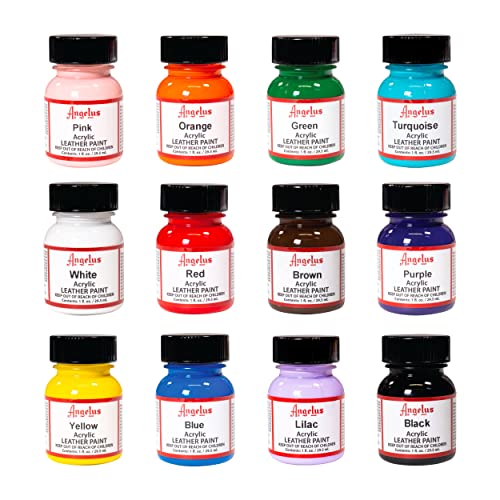
For custom shades across several projects, this kit stands out with 12 colors that can be blended together. Angelus acrylic paint is water-based, and the maker says properly applied paint will not crack, peel, fade or rub off. The uses include shoes, jackets, purses and furniture, so it suits small repairs as well as decorative work on faux leather. The kit is less focused than a single-color bottle if you only need a black refresh; you may not use most of its palette.
Bottom line: Choose this for multi-color work or when you want to mix custom shades.
FansArriche 28-Color Acrylic Kit

For buyers who want prep and finishing materials in the same kit, this option pairs 28 colors with a leather preparer and deglazer, an acrylic finisher, four brushes and an instruction manual. Each paint bottle contains 20 ml, and the maker describes the paint as suitable for smooth surfaces including shoes, bags, sofas and car seats. That broad palette suits detailed artwork and color matching. The tradeoff is smaller individual bottles than the 4 fl oz options, which may matter for large upholstery areas.
Bottom line: Pick this for varied colors and included surface-prep supplies.
Artecho 12-Color Acrylic Set

Artecho offers a 12-color palette in separate 1 oz squeeze bottles, making it a straightforward option for trying several shades without choosing a single-color container. The maker says its flexible acrylic resin is designed to move with leather and resist cracking or peeling; listed uses include shoes, bags, jackets and sofas. The paint is mixable, which helps create shades beyond the included colors. Unlike the FansArriche kit, no preparer, deglazer or finisher is identified among the included items, so surface preparation is a separate consideration.
Bottom line: Choose this for a dozen mixable colors in compact bottles.
Angelus Black Acrylic Leather Paint, 4 fl oz

A single 4 fl oz black bottle is the focused choice when a project needs one color rather than a palette. The paint is water-based and non-toxic, with easy cleanup noted by the maker; listed applications include boots, jackets, athletic shoes and purses. That makes it a practical match for black faux-leather pieces or accents. It does not offer multiple colors in the package, so choose a set instead if you need to blend shades or coordinate several colors.
Bottom line: Pick this when black is the only color your project needs.
How to Choose Faux Leather Paint
Match the paint format to the surface and the amount of color variety you need. Acrylic leather paints are sold in single colors and multi-color sets; a 12-color kit is useful when you need to blend shades, while one 4 fl oz bottle can make more sense for a one-color refresh. Smooth faux leather has a sealed surface, so clean off dirt and oils before painting and work in thin coats to limit brush marks. For a piece that flexes, prioritize a formula marketed for flexible leather use rather than ordinary craft acrylic. Test a small hidden area first to check adhesion and color after drying.
For large upholstery, calculate coverage from the maker’s instructions before starting; bottle volume alone does not tell you how many coats a surface will need.
Preparing and Painting Faux Leather
Clean faux leather with a mild cleaner and let it dry fully before applying paint; residue can interfere with adhesion. Many leather-paint workflows use a surface preparer or deglazer to remove coatings, but aggressive solvents can damage synthetic finishes, so test an inconspicuous spot first. Apply several thin coats rather than one heavy layer, allowing each coat to dry according to its label. Thin layers are less likely to pool in seams or obscure the surface texture.
Work with ventilation and keep wet paint away from children and pets. A small brush or sponge can help with seams and edges, while an airbrush is useful for even coverage when the product is suitable for that method.
Paint, Balm and Kit Differences
Acrylic paint is the better match for changing color or creating designs; a recoloring balm is aimed at refreshing a surface in its existing tone. Multi-color kits include a range for mixing, while single-color containers reduce unused shades when the target is black or dark brown. Prep and finish supplies vary by package, so compare what’s included before beginning.
| Project need | Format to consider | Key tradeoff |
|---|---|---|
| Custom colors | Multi-color acrylic set | More shades, smaller bottles per color |
| One-color refresh | Single-color acrylic paint or balm | Focused color, less flexibility |
| Prep materials included | Complete kit | More components to manage |
Common Faux Leather Painting Mistakes
The most common mistake is applying thick paint before checking how the surface flexes. Faux leather varies: polyurethane and PVC coatings can respond differently to solvents and abrasion, so do a hidden-area test rather than assuming every synthetic surface behaves the same. Another mistake is skipping cleaning, which can leave oils or polish under the paint. Avoid painting over peeling or cracking coating; new color cannot repair a failing substrate. For seats and other high-flex surfaces, confirm the paint is intended for flexible use and allow the full cure time on its packaging before regular handling.
Frequently Asked Questions
Can acrylic leather paint stick to faux leather?
Acrylic leather paint can be used on faux leather when the product is intended for flexible leather surfaces and the coating is clean and intact. Test a hidden spot first, since polyurethane and PVC finishes may react differently.
How many coats of faux leather paint should I apply?
Use thin coats and let each dry before adding another; two or more light coats are commonly needed for even color. The exact number depends on the starting shade and opacity, so stop when coverage is uniform rather than laying on one thick coat.
Should faux leather be sealed after painting?
A compatible acrylic finisher can add a protective top layer, but only use one made for the paint and surface. Let the color coats dry fully first and test the finish on an inconspicuous area.
Can I use regular acrylic craft paint on faux leather?
Regular craft acrylic is more likely to crack on a surface that bends because it is not necessarily formulated to flex with leather. Choose paint specifically made for flexible leather or faux-leather applications, especially on shoes and seats.
How do I prepare faux leather before painting?
Clean away dirt and oils, then let the surface dry completely before painting. If using a deglazer or solvent, test a hidden area first because some synthetic coatings can be damaged.