
Best Nori for Sushi: 5 Full-Sheet Options Compared

Dae Chun Gim Gold Grade Nori, 50 Sheets suits most sushi makers because its 50 full sheets are roasted twice and can cover repeated rolls and other wraps. Choose a smaller pack instead if you make sushi infrequently, or prioritize USDA Organic certification if that matters more than sheet count.
We earn a commission if you buy through links on this page. As an Amazon Associate I earn from qualifying purchases. Products are compared on manufacturer specifications, not hands-on testing.
- Best overall: Dae Chun Gim Gold Grade Nori, 50 Sheets – 50 sheets and a twice-roasted texture make it suited to frequent rolling.
- Best organic 50-sheet pack: ONE ORGANIC Premium Nori, 50 Sheets – USDA Organic certification with 50 full sheets.
- Best for occasional rolls: Kimnori Organic Nori, 10 Sheets – 10 sheets with USDA Organic and Non-GMO Project Verified claims.
- Best small resealable pack: Kindharvest Organics Nori, 12 Sheets – 12 sheets and a resealable pouch for limited batches.
| Product | Best for | Sheet count | Organic certification | Sheet dimensions | Shop |
|---|---|---|---|---|---|
| Dae Chun Gim Gold Grade Nori, 50 Sheets | Frequent sushi making | 50 | Not claimed | — | Check Price on Amazon |
| ONE ORGANIC Premium Nori, 50 Sheets | Organic bulk pack | 50 | USDA Organic | 7.5 × 8.5 in | Check Price on Amazon |
| Kimnori Organic Nori, 10 Sheets | Small organic pack | 10 | USDA Organic; Non-GMO Project Verified | 7.75 × 10 in | Check Price on Amazon |
| RSD Premium Seaweed Nori Gold, 50 Sheets | Multi-use large pack | 50 | Not claimed | — | Check Price on Amazon |
| Kindharvest Organics Nori, 12 Sheets | Small resealable pack | 12 | Not claimed | — | Check Price on Amazon |
Nori for sushi compared
Compare pack size, organic certification and sheet format to match nori to how often you roll.
Dae Chun Gim Gold Grade Nori, 50 Sheets

Dae Chun Gim Gold Grade Nori, 50 Sheets stands out for its 50-sheet pack and twice-roasted preparation, making it a practical choice for repeated sushi nights. The full sheets are also intended for kimbap, musubi and onigiri, so the pack can serve several kinds of seaweed wrapping. A resealable bag and desiccant sachet support storage after opening. The tradeoff is that USDA Organic certification is not among its attributes; choose another option if that certification is a deciding requirement.
Bottom line: Choose it for frequent rolling and a large pack; pass if organic certification is essential.
ONE ORGANIC Premium Nori, 50 Sheets
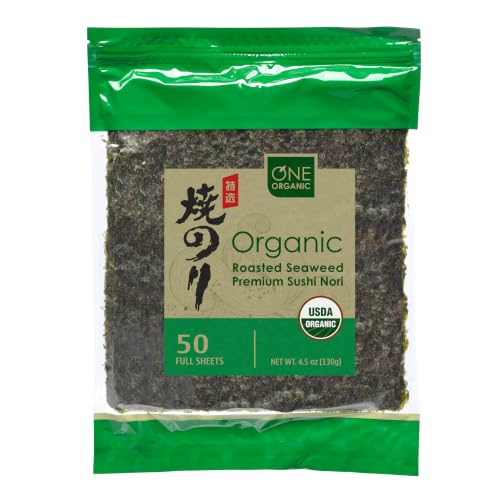
ONE ORGANIC Premium Nori, 50 Sheets pairs USDA Organic certification with a 50-sheet party pack, making it a direct alternative for buyers who want a larger supply with that certification. Each sheet measures approximately 7.5 by 8.5 inches, a useful reference when planning full rolls. It is roasted seaweed, and the pack size suits households making sushi in batches. The main limitation is that the product facts do not identify a roast count or resealable package, so buyers who prioritize those features should favor a product that explicitly offers them.
Bottom line: Pick it when USDA Organic status and a 50-sheet pack matter most.
Kimnori Organic Nori, 10 Sheets

Kimnori Organic Nori, 10 Sheets is the small-pack choice, with 10 full-size sheets measuring 7.75 by 10 inches. The product claims USDA Organic, Non-GMO Project Verified and gluten-free status, and it is roasted and packed in California. A claimed double roast is aimed at crispness and rolling structure. Its 10-sheet count limits how many rolls a single pack can cover compared with 50-sheet options, so it suits occasional sushi making or a trial batch better than a large gathering.
Bottom line: Choose it for a smaller batch with organic and Non-GMO claims.
RSD Premium Seaweed Nori Gold, 50 Sheets

RSD Premium Seaweed Nori Gold, 50 Sheets combines 50 full sheets with a 125-gram pack weight, and its uses include sushi rolls, onigiri and snacking. The roasted sheets are described as thin and crunchy, with a resealable bag intended to help retain freshness. That makes this a flexible option beyond sushi alone.
Bottom line: Pick it for a 50-sheet pack that also suits onigiri and snacks.
Kindharvest Organics Nori, 12 Sheets

Kindharvest Organics Nori, 12 Sheets offers 12 sheets in a resealable, moisture-resistant pouch, a modest quantity for a short sushi session. Its product claims a thin, crisp yet flexible texture and lists rolls, hand rolls, rice balls, musubi and kimbap as uses. The ingredients are described as pure roasted seaweed with no additives, salt, oil or sugar.
Bottom line: Choose it for a small batch and pouch resealing, not for certification.
How to choose nori for sushi
Choose sushi nori by sheet size, texture and pack count, not by terms such as “gold” or “premium” alone. A full nori sheet is commonly about 7.5 by 8.5 inches; longer formats can give more overlap for larger rolls. Dry, crisp sheets are easier to handle before filling, while moisture from rice softens them during rolling. A bamboo mat helps make an even cylinder, and keeping fillings modest reduces pressure that can split a sheet. For regular meal prep, a 50-sheet pack provides more batches; for a first or occasional attempt, 10 to 12 sheets limits leftovers. If certification is a requirement, look for an explicit USDA Organic claim rather than relying on grade language.
Full sheets and sushi roll fit
Full-size nori typically measures around 7.5 by 8.5 inches, though some sheets run longer, so check dimensions when roll size matters. A standard maki roll uses a full sheet or half sheet depending on the desired circumference; half sheets are often used for smaller hosomaki. Cut with kitchen scissors rather than tearing if you need a clean half-sheet edge. This comparison includes two products with dimensions, while the others are sold as full sheets without a measurement in their specifications. The following quick guide shows how to use stated measurements when planning a roll.
| Sheet format | Typical use | Practical choice |
|---|---|---|
| About 7.5 × 8.5 in | Standard full roll | Use whole for larger rolls or halve for smaller maki |
| Half sheet | Smaller maki | Cut a full sheet evenly if needed |
| Longer full sheet | More overlap at the seam | Match to the roll size you want |
Roasting, crispness and storage
Roasted nori is ready to wrap, and crisp sheets are easier to lift and position before they contact rice. Ambient humidity and steam from warm rice soften seaweed quickly, so prepare fillings first and roll soon after assembling. Keep unused sheets sealed and dry; resealable packaging can help limit moisture exposure, while a desiccant sachet helps absorb moisture inside a pack. Avoid storing opened nori beside a kettle, stove or other steamy area. If sheets lose their crisp snap, brief warming in a dry pan can revive texture, but watch closely because thin seaweed scorches in seconds. Do not confuse “double-roasted” with a guaranteed result; it is a product claim rather than a universal nori grade.
Choosing pack size and organic claims
Pack count is the clearest guide to how much sushi a package can cover: a 10- or 12-sheet pack suits a few rolls, while 50 sheets are better suited to recurring use or a larger gathering. Sheet count alone does not tell you whether every sheet will be used before exposure to humidity affects texture, so choose a quantity you can store sealed and dry. USDA Organic is a specific certification claim, while words such as “gold grade” describe a product category without establishing that certification. If organic status is a must-have, select a product that expressly claims USDA Organic; otherwise prioritize the sheet dimensions, package size and storage format that suit your routine.
Frequently Asked Questions
How many nori sheets do I need for sushi?
Plan on one full sheet per larger roll, with half sheets often used for smaller maki. A 10- to 12-sheet pack is enough for a small session, while 50 sheets provide more room for repeated batches.
Should sushi rice be hot when rolling nori?
Use rice that has cooled from steaming hot to warm or room temperature, since hot rice quickly softens nori and can make rolling awkward. Spread it gently, leaving a narrow strip bare at the far edge to seal the roll.
How do I keep opened nori crisp?
Keep nori tightly sealed in a dry place and away from steam, which softens thin seaweed. Resealable packaging and a desiccant can help manage moisture, but use sheets promptly after opening for best crispness.
Can I use sushi nori for kimbap?
Yes, roasted nori sheets are commonly used for both sushi and kimbap. Kimbap filling and seasoning can differ from sushi, but a full sheet provides a similar wrapper format.
What makes nori tear while rolling?
Excess filling, overly wet rice or a brittle sheet can contribute to tearing. Use a moderate layer of rice and filling, keep the sheet dry until assembly, and roll with steady pressure rather than squeezing.